You love the blog, so subscribe to the Beervana Podcast on iTunes or Soundcloud today!

Wednesday, March 28, 2012

How Breweries Serve Monks

The Sainte Marie du Mont des Cats abbey in France has played an interesting role in the history of brewing. In 1831, monks from Mont des Cats (which my mind really wants to translate "mountain of cats"--it's not) joined a hermit and founded Sint Sixtus in Wesvleteren. Fifty years later, fearing repression from the French government, the abbot sent an envoy to scout a possible location to land should they have to pack up and flee quickly. That monk located a sheep barn in Koningshoeven in the Netherlands that somehow struck his eye as ecclesiastical.

Add another six score and ten and look at those two monasteries and how they relate to brewing. In the case of La Trappe (Koningshoeven), the brewery is operated by a secular brewery (Bavarian, a Dutch company despite the name) inside the walls and is regularly derided (I think unfairly) as the most commercial Trappist. They were even booted from the club for awhile. On the other hand, at Westvleteren, the monks seem to do everything they can to inhibit sales. Customers have to go to the monastery but they are limited in the amount they can buy. Although the demand outstrips production by probably ten to one, the Westvleteren monks will not step up production.

In both cases, the monks subscribe to the same religion, the same order, and the same, strict, sub-order. They are monks, which means that even within the Church they have a particular orientation toward religious practice. And yet they have chosen nearly opposed models for the way the breweries will serve their missions. I realize I've wandered from beer here--it's the old religious studies major in me--but I find this fascinating. Trappist monks are a severe lot--they have chosen to remove themselves from society in order to focus on their relationship to God. Their order demands strict adherence to rules that are nearly 1500 years old and enforce the circumstances to support and protect this mission. Beer, on the other hand, is the most worldly of beverages. It's a social drink, a drink of the masses, a drink more than any other of the world. The reasons it made sense to brew in 850 AD are not so relevant now. (They don't grow their own barley, malt it, or need beer as a safe alternative to deadly water.) Yet here they are, brewing beer.

Monks are seriously on the decline. Twenty-somethings aren't signing up, and these famous monasteries house just a handful of monks. I wonder what the future holds, and how, if the monks fail to replenish their ranks, we may lose Trappist beer altogether. Anyway--


Update. Reviewing my notes for Orval, I was reminded of their system, which is slightly different than either Westvleteren or La Trappe. At the outset, the monks set up a private company to operate the brewery, but all the shares were held by the monks themselves. Indeed, the purpose was to help fund the construction of the monastery. They built the brewery within the monastery's walls, but they've never worked in the brewery (though they oversee all aspects of the business). The brewery is enormously profitable for them. They can take 45% of what they earn and wholly support maintenance of the abbey--the other 55% goes to support charitable organizations. The first brewer was a German, the second a Belgian with experience brewing in England, and the result is a dry-hopped mixed-fermentation beer of singular design.

Tuesday, March 27, 2012

Are You Afraid of Heights?

Then don't look at the trend line for craft beer growth--it's as steep as a Himalayan mountain. From the annual Brewers Association report:
Craft brewers saw volume rise 13 percent, with a 15 percent increase in retail sales from 2010 to 2011, representing a total barrel increase of 1.3 million. In 2011, craft brewers represented 5.68 percent of volume of the U.S. beer market, up from 4.97 in 2010, with production reaching 11,468,152 barrels. With 250 brewery openings and only 37 closings, the BA also reported that 1,989 breweries were operating in the U.S. in 2011—an 11 percent increase from the previous year.
A few things to add context:
  1. Craft beer is a narrow definition and does not include all good beer. The Craft Brewers Alliance is excluded, for example. It doesn't include good imports. It doesn't include non-lager beers like Blue Moon or Shock Top, which, however much you may dislike them, are not macro lite beers. So the BA numbers substantially low-ball a more expansive definition of the ascent of "good beer."
  2. Numbers like 13% growth are now routine, but keep in mind that 13% growth this year means more beer than 13% growth would have last year. Here's the absolute growth in barrels by year since 2005: 800,000, 900,000, 500,000, 600,000, 1,o00,000, 1,500,000. Craft brewing has nearly doubled in barrels since 2006.
  3. Overall beer sales declined 1.3% last year, which will hasten the exodus toward Shock Top-like brands. The US may not be a minority light-lager country in the next few years, but long term? It could easily happen.
  4. The BA reported 9,950,000 barrels last year and then revised the total up to 10.1 million. Could be that the growth has been even more pronounced.
The beer world, it is a'changin'.

Monday, March 26, 2012

The Beer Goddess Reports

I will confess that part of the reason I took the week off was because I was doing some work with a nonprofit over the weekend. While I was gone, Lisa Morrison ("the Beer Goddess (TM)") reported both the name of former Deschutes brewmaster Larry Sidor's new brewery (Crux Fermentation Project) as well as this bigger scoop:
Change is in the wind for Full Sail’s Portland-based brewmaster John Harris. Harris says on Monday, he told his Full Sail bosses, Irene Firmat and Jamie Emmerson — along with the other employee-owners of Full Sail — that he was leaving the brewing company to pursue his dream of opening his own brewpub in Portland. Harris says he will work at Full Sail through April.

Harris says he has raised “about half” of the money he feels he needs to set sail with his dream, already has found brewing equipment and is now looking for a space.
Harris is, of course, the brewer who started at McMenamins in their earliest years, was the founding brewmaster at Deschutes (Mirror Pond, Black Butte, Jubel), and then spent fifteen plus years at Full Sail.

Wow.

Monday, March 19, 2012

Toxic Beer Syndrome

It is Sunday night as I write this, and barring some remarkable incident, I expect to hit "post" tomorrow morning. I'm taking the week off. I've had to spend too much time thinking about beer lately. For the first time in six years writing this blog, I am just tired of it. I may actually enjoy a beer in the next week--I hope to--but I won't blog about it.*

Meantime I'll leave you a picture of Portland's diviest of dive bars (more here if you're in a mood), the Pirate's Cove on Sandy Blvd. (Click to enlarge, which I recommend for the full experience.) It was originally called the Sandy Jug because, if you shape your pub like a moonshine jug, you're pretty much not into subtlety. When I stopped by to snap this pic, a guy tried to sell me scratch lottery tickets out front. I declined, and for good measure, waited for him to disappear back into the tavern before I took the shot. It's wrong to judge people, but he didn't look like the kind of guy who wanted his picture taken. I believe it does a nice job of capturing toxicity, so.


See you next week--

______________
*Unless, of course, I do. Bloggers are shifty and unreliable, so I wouldn't trust this statement if I were you.

Thursday, March 15, 2012

Newsy Bits

Great news from the New School: Double Mountain is expanding and will be bottling by the end of summer:
The building next door is 5,000 sf, and the plan we're working on calls for about 25% of it to be dedicated to extra taproom seating, along the windows on Fourth Street. We'll also convert our garage space into full-time taproom space, and expand our kitchen, too. The other 75% of the new building will be used for packaging and warehousing. We've put money down on a new 12-valve bottle filler from GAI that will be arriving from Italy in a month or two, and we're getting an automated keg line as well. Our goal is to have the expansion/remodel and new equipment installation completed by the beginning of the summer tourist season, with bottles to follow sometime later in the summer.
Very good news indeed. Incidentally, the Double Mountain fifth anniversary bash is this Saturday at the brewery. They somehow scored the Meat Puppets as musical guests, which is an amazing blast from this geezer's past.

A competing event that looks mighty fine happens at Occidental on Saturday:
This is a bit last minute, but we're having an event to release our barrel-aged doppelbock this Saturday, for which we're also smoking a whole pig that was raised on our spent grains. We'll be pouring the barrel-aged Lucubrator and our regular beers. $15 bucks gets you a glass of the limited edition Doppelbock and a pork sandwich. 6635 N. Baltimore Ave., Portland, OR 97203. 1-6 pm.
Finally, I alert you to an event you can't go to--unless you live in the Bay State or nearby. It's called "The Artisans" and the idea is to feature small breweries from around the world. Looks like the Portland/Seattle International Fests, but the selection is, top to bottom, really impressive. It's sort of the "beer geeks greatest hits" fest. Wish I could go.

Wednesday, March 14, 2012

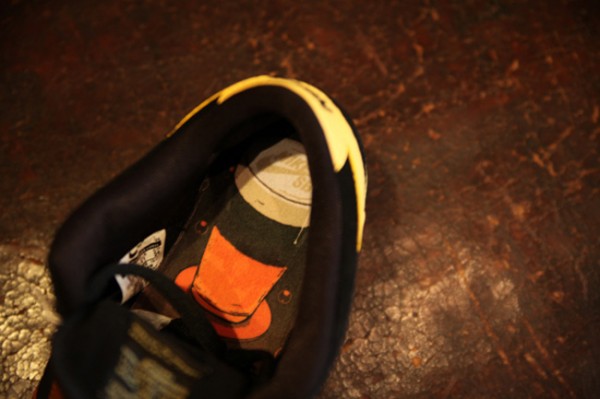
Nike Fails to Do a Google Search; Makes Guinness Shoes

Well, this is embarrassing--the home town shoe company seems to have committed an international gaffe:
The athletic apparel behemoth is releasing a new version of its SB Dunk Low, a popular casual shoe. It is black and tan-colored. And since we're getting close to Saint Paddy's Day, the shoe has a nickname that is apparently beer-inspired - the Black and Tan.

Brian Boyd [of the Irish Times]: "It has certain historical associations. The Black and Tans were a ruthless auxiliary force of the British army before we became independent in the 1920s. They were responsible for wide-scale massacres, butchering of people. You would not - we don't even - for example, in the U.S. you may go into a bar and asked for a drink called a Black and Tan."
The whole thing is wonderful and strange. First off, the idea of doing a beer-inspired athletic shoe is psychedelic. I have to think that the local beer culture seeped into the Nike campus and infected the minds of the shoe designers there. But that's not all: Nike has a version of the shoe with a tie-in to Guinness. It is, predictably, black, brown, and head-colored (what, beige?). The ultimate in cross-marketing, pulling in beer drinkers, sporty types, and holiday celebrants. Throw in March Madness and you've got the superfecta. I'm not sure whether to be proud or embarrassed. (Actually, I think they're pretty righteous sneaks. "Righteous sneaks"--is that what the kids still call them?)

By the way, while I would fault Nike for being boneheaded enough to let this shoe go out without having done a Google search to find out if "black and tan" meant what they thought it meant, I am going to exonerate them on the following point, voiced by that Irish Times reporter:
It's how the Americans view Saint Patrick's Day and view Irish culture and history. And it's the very fact that some people are saying that these are beer-themed sneakers, that the only way to celebrate a national holiday of a country with a very rich culture and a very rich history and literature, et cetera, is to pour massive amounts of alcohol down your body.
Look, Americans are culpable for an almost infinite number of sins of ignorance against other countries. We regularly insult vast swathes of the globe and should be held to account. But we get to celebrate St. Patrick's Day however we wish. St. Patrick's Day is now, as celebrated in America, fully American. Every culture gets mangled when it comes into the American melting pot, but that is our culture--a hodgepodge of reinterpreted traditions from around the world. So no dice on the you're-doing-it-wrong argument.

Tuesday, March 13, 2012

More Synchronicity

Last night, Sally and I shared one of the last bottles of beer I toted back from Europe--Worthington White Shield. Unless you read English blogs, there's little chance you've heard of this beer (though I did write about it once). I love this beer and I've been reluctant to drink it, but I was also determined not to let it go stale--a character flaw of mine.

The occasion was a screening of The Sweeney, a television show you're even less likely to have heard of. Sally and I were turned onto it after watching the English original of Life on Mars. (Which, if you haven't seen it, I can't recommend highly enough. The first season--sorry, series--I would place among the ten best ever made for broadcast.) The character Gene Hunt, one of the indelible figures in television, was modeled on DI Jack Regan. Both are boozing, corrupt, manly figures who seemed to have completely died out by about 1983. In any case, Netflix finally made a few discs available, and it seemed like a nice pairing.

And then, about half-way through the episode, there's a bar fight and the shot flashes on Regan (it's a little convoluted to explain why he's standing in a bathrobe in the middle of a bar fight--but it does give you a sense of the show's flavor) standing in front of ... a Worthington mirror. Amazing.


So anyway, today I'm thinking very deeply about money and later I'm going to go buy a lottery ticket.

Monday, March 12, 2012

On Flavor

It seems like the world operates on a freaky kind of synchronicity such that when I am thinking deeply about a subject, it seems like others are, too. More likely, it's just that I happen to notice when other people are talking about the same things I've been thinking.

Today's synchronicity: flavor. Let us begin with a wonderful book published in December called Neurogastronomy by Gordon Shepherd. Shepherd is neurobiologist at the Yale School of Medicine and an oenophile foodie. This book collects together the scientific thinking to date on the way humans process and construct flavor from what turns out to be a staggering variety of inputs. (Shorter Shepherd: flavor is mostly retronasal smell, humans have evolved, perhaps uniquely to appreciate flavor--we're born foodies--and our sense of flavor is modified by emotional cues, color, hunger, and mood. Our brains are highly evolved to detect and process scent, and it's inaccurate to think of this sense as subservient to sight.)

Every well-read beer geek should have a dozen or so titles in her collection like Tasting Beer, Brewing With Wheat, Amber, Gold and Black, Good Beer Guide to Belgium, and so on. I would place Neurogastronomy on this short list.

On cue, Alan McLeod broaches the topic from another angle, taking the idea of food and beer pairings to task:
One of the main reasons I don't like the idea of matching and pairing is that everything pretty goes with pretty much everything else in the right combination.
This is less a declaration than a paradox: how can everything go with everything else in the right combination? They are interchangeable or they require the right combinations, seems like. But never mind. What's more interesting is the resulting discussion thread, which includes our own Ben Edmunds, and you should go have a look.

Food and beer pairings are my white whale, a topic I intend to pursue maniacally in the coming year. I harbor the idea that it's possible to come up with a system that allows diners to select appropriate beers for their meals. I further harbor the idea that the key has nothing to do with styles and everything to do with flavor elements in beer. Texture, effervescence, attenuation, strength, and taste/scent compounds--somehow these should line up with food flavors. It will never be as simple a prescription as red-wine-with-red-meat (at least a partial fraud, by the way), but it could at least be consistent. Maybe.

Thursday, March 08, 2012

Friday Flick(s): Full Sail and Guinness

Today in Flicking, I offer you two good ones. Both are essentially ads, but extremely well-done. In the first, Full Sail has put together a little promo vid about their barrel-aging process (one I discussed here). It's clearly not an objective documentary, you get a nice sense of the brewery. For fans of Barney's ESB, you also get to see the brewer behind the beer.

(Incidentally, when I was at the brewery, Jamie Emmerson slipped me four beers from their personal stash of aging porters/stouts. A few nights back, we tried the '08 Top Sail and '06 Black Gold--both aged in bourbon barrels. These beers age beautifully. The Top Sail was remarkably fresh--not a trace of oxidation--and the flavors had sharp, clear edges. But the '06 was insane. Again, very little evidence of age except in a melding of elements along with the tiniest hint of vinous tartness. If you're buying these for the cellar, you're in for a future treat.)

The Art & Science of Bourbon Barrel Aged Beer from Full Sail Brewing on Vimeo.


Next up, for St. Paddy's, we have a really funny Guinness ad produced, I assume for the English market. When sketch comedy works, it's surreal and sublime. This works. Also, geezers who remember ads from the '70s will appreciate what appears to be an homage to, or at least unintentional resonance with, those old Rainier ads Gordon Bowker put together.


The Most-Discussed Breweries? You Might Be Surprised

I was trying to track down some information on a brewery a couple days ago, and I could find next to nothing when I consulted the Google. This then reminded me of my post last month about New Belgium, wherein I commented on their social media strategy. And these two things together gave rise to a question: if I search for a brewery name, how many results will I get? The result doesn't give you a perfect snapshot of the amount of discussion happening about a brewery's beer (the amount of time a brewery's been kicking around matters, as does its distribution), but it ain't bad. And the results were fascinating. You've probably already scanned down, but if you haven't, stop to guess: which brewery did best?

Methodology. Brewery names are problematic. Kona, for example, gets you tons of results unrelated to Kona brewing. But putting the brewery name in quote marks "Kona Brewing" is also problematic because names like "Rogue Ales" may well never be used on pages discussing these beers. So to clarify things and make them roughly equivalent, I went with the common brewery name and beer and put them in quote marks under the assumption that any discussion about the brewery would include the word beer. So, "Kona beer," "Rogue beer," and so on.

Without further ado, here are the results for the largest craft breweries. A few comments follow.


That percentage in the far right column are the number of results of the max brewery's total. So Boston Beer has about half Widmer's total, Sierra Nevada a stunning four percent of the Brothers' total. Clearly, the correlation between brewery size and Google results is not great. Breweries like Redhook and Lagunitas could really improve getting their name on websites. And MacTarnahan's? Absolutely pathetic. "Beervana blog" gets you 2,400 results. Beervana blog!

More grist for the internet mill.

Tuesday, March 06, 2012

In Tasting, Advantage Beer

As the science of tasting becomes more well-understood, we must confront certain uncomfortable truths: in particular, we aren't so great at it. In blind taste tests, people perform no better than chance at distinguishing good expensive wine from rotgut. Hell, even experienced tasters can't distinguish whether a wine is red or white. So it's no surprise that a new study confirms that people stink at recognizing subtle flavors:
A new study by researchers at Penn State finds that when it comes to appreciating the subtleties of wine, experts can taste things many of us can't. "What we found is that the fundamental taste ability of an expert is different," says John Hayes of Penn State.
(The good news: scientists think this is mostly a matter of training and experience, not a function of faulty taste buds or olfactory nerves.) That quote is from NPR, who had a piece on the new study this morning. As I was listening to it, I was reminded of what a huge advantage beer has over wine in terms of flavor articulation. The difference between a poor-quality wine and a good wine (let's leave price out of it) are a cluster of very similar qualities. The clarity and balance of a pinot noir grape makes a good wine, but you still have to contend with pinot noir grapes.

In beer, the range is orders of magnitude bigger. Part of the thing that makes people lose confidence in wine (aside from the fact that they're gambling with thirty bucks a pop) is that they fear/know it all tastes pretty much the same. If someone suggests to you that there's some blackberry in the glass, sure, you can swish until you find it. It's difficult to feel like you're just faking it. The whole thing can feel like a game of three card monty. Or a modern art exhibit.

Beer, not so much. For one thing, style variation is tremendous. Is there any product with such an expansive range of flavors? But even within styles, tastes are usually pretty easy to distinguish. Put five IPAs in a blind flight and have people taste them, and they'll be able to tell the difference. In beer, blind tasting is heartening for this reason. Unlike wine, the flavors are different enough that even a rank novice would be able to tell. (And trying to conceal a stout among them--good luck with that.) Not every style is as easy, but I don't think anyone would argue that beer is a lot more obvious than wine.

Plug. By the way, you could buy my Tasting Toolkit if you wish to test this hypothesis. It's educational and fun for the whole family. You could even test wine, too, just to see how much more distinctive beer is.

Monday, March 05, 2012

Ghosts of Breweries Past

The 1948 Jimmy Stewart movie Call Northside 777 was, remarkably, the first ever filmed in Chicago. It was based on a real murder case, and producers thought the verisimilitude of the actual Windy City would lend itself to the documentary feel. They were right. Chicago was a gritty, working-class town emerging from the stockyard past but nowhere near the shiny Sears Tower stage. At one point, Stewart's character, a reporter, has to go into the Polish part of town to find a shadowy figure who has gone into hiding. As he roams the real Chicago streets, ducking into bar after bar, he passes these two signs:
(That's him almost obscured in shadows entering the bar.)


As it turns out, Fox DeLuxe and Kingsbury were both real breweries. Fox was a Grand Rapids, MI brewery that survived for just 11 years, while Kingsbury had a much more illustrious life. Founded in Manitowoc, WI in 1847, it was one of those 700-odd breweries that managed to hang on through Prohibition, lasting until 1963 when Heileman gobbled it up. (The name had a zombie life, like so many other American brands, and apparently there's still a non-alcoholic beer that bears the name. Sad.)

As I watched the names flit by, I felt a dual wave of sadness: first that so many American breweries have vanished (I know, the virtuous churn of capital and all that), but second because, by using LA as a stand-in for all other American cities, we have lost these kinds of records. How many more signs might we have of flickering neon breweries if movies had been filmed in Pittsburgh, Cleveland, and Detroit?

Friday, March 02, 2012

Friday Flick: St. Bernardus (Plus One Events Item)

The Lucky Lab Beer Hall is where big beer fans want to be today and tomorrow for the annual Barleywine Big Beer Festival. Matt Wiater has the full run down.

Apropos of that event, I offer you a brewery-produced virtual tour of the St. Bernardus brewery in Watou, Belgium. It's a bit over-produced, but you get a sense of what a typical traditional brewery looks like. (Elements of it remind me of Rochefort, Dupont, and St. Feuillien.) The brasserie at Westvleteren is one of the most intensely loved by beer geeks, but for my money, St. Bernardus makes beer of equal quality and far greater breadth--and I would probably put Prior 8 in my list of top twenty beers in the world. And hey, it's a good brewery for Lent, too (though not for everyone).

Wednesday, February 29, 2012

Craft, History, and Widmer Broats

Last night, the Widmer Brothers hosted media to launch a new beer--Oatmeal Porter. I was not at that event, but you can read about it here and here. In the service of tying together three threads of conversation, let me tell you why this beer is interesting:
Joining the two year-round Series 924 offerings, Pitch Black IPA and Nelson Imperial IPA, this rich porter was brewed with custom-toasted oats made specifically for Widmer Brothers by Briess Malting of Chilton, Wis. The oats, which have appropriately been dubbed “Bro-Oats,” contribute to the beer’s velvety mouth feel and distinct nutty flavors.
Once upon a time, breweries used to malt their own barley. This had one or two virtues and many drawbacks, not the least of which is that half of them burned their breweries to the ground thanks to overheated kilns. The virtue, of course, was individuality. A brewery could malt barley however they wished, which in turn led to more variety. (Specialized malteries made far better, more consistent malt in the aggregate, and it is a far better system now.) Having maltings companies specially treat or malt grain is a fascinating return to some of the character of old.

That in turn got me thinking about this issue of "craft," which is the many-headed hydra of internet beer debates. Thanks to the history of American beer, the concept is tethered with a titanium chain to brewery size: big national lager breweries uncraft, little ale breweries craft. Easy peasy. (Proponents of the "handmade" argument of small breweries are, in the main, unfamiliar with how sophisticated brewing has become. We have come a long way from wood-fired kettles, baudelot coolers, coolships, and hand-cappers. Breweries are marvels of modern tech. But that's a different argument.) But this doesn't make sense.

To the extent we say anything at all about craft breweries, what we're talking about is the beer. The craft is in the attention to flavors and aromas rather than dollars and cents. If a brewery spends a lot of time thinking about an interesting recipe, testing it out, finding the right ingredients, and even having those ingredients specially (and I have to assume not cheaply) made, does it really matter what size of mash tun the beer is made on?

I have no idea whether this is a good beer, but I applaud the time and effort the Brothers (or rather their team of able brewers) put into it. They've raised the bar for what a brewery can to do add its own, unique stamp on a beer, and if we're very lucky, it will become a trend.

Tuesday, February 28, 2012

What To Do In the Event a Waiter Spills a Tray of Beer on You

German Chancellor Angela Merkel demonstrates:


Note the way she barely acknowledges the sensation of beer and glassware cascading down her back. A flip of the hair, a gracious smile. And then, soon after, a toast as if nothing untoward has affected the evening's fun. Perhaps the Greek debt crisis has inured her to petty distractions. In any case, well done.

Monday, February 27, 2012

That's a Lot of Beer

I still defend the use of "craft brewery" as applied to Boston Beer (Sam Adams), but "micro" it is surely not:
Now, Boston Beer is tied with Pennsylvania-based D.G. Yuengling & Son as the largest American-owned brewer. Both companies shipped about 2.5 million barrels last year.
It's always hard to wrap your head around brewery size, but here are few benchmarks. When it closed down, Henry Weinhard was making about a million barrels a year. The largest ale brewery in Britain, Greene King, makes about 700,000 US barrels. Brasserie Dupont made 12,500 US barrels in 2011. Boston Beer is brewing something like one in five of every craft beer made, depending on whom you include (Yuengling, for example, is generally not included.) All the breweries in Oregon brewed just over a million barrels in 2010. Boston Beer accounts for over 1% of all beer sales in the US--and there are 1700 breweries.

There's no reason to think it couldn't get ten times that big in the next two decades. The idea that a craft brewery must always remain small and that the macros will always have dominance--it's time to give that one up. Craft brewing is big business.

Sunday, February 26, 2012

If the Oscar Nominees Were Beers

Yet another time-killer while you listen to Julia Roberts babble to Ryan Seacrest. (Some movie descriptions stolen from Moviefone).

The Descendants
The movie's about a man who loses his wife while negotiating a deal that would turn over a huge parcel of pristine Hawaiian land to developers. George Clooney plays the lead, the descendant of an old land-owning Hawaiian family.

The beer: Primo, a brand that was originally brewed in Hawaii in 1897 but which has dubious Hawaiian credentials.

Extremely Loud and Incredibly Close
Moviefone: Based on the novel by author Jonathan Safran Foer, director Stephen Daldry's post-9/11 drama follows the journey of a nine-year-old boy as he attempts to solve a family mystery. Two years after his father is killed in the September 11th terrorist attacks, the curious boy discovers a mysterious key hidden in a household vase and begins an exhaustive search for the matching lock.

The beer: None. Nine-year-olds shouldn't be drinking beer.

Hugo
The story of a young boy trying to survive in a Victorian-era Parisian train station is hijacked by director Martin Scorsese's love of old movies.

The beer: Au Baron Cuvée des Jonquilles. A rough approximation of what the beer of the time would have tasted like--without the 18-hour boil times and coolships.

Midnight in Paris
Owen Wilson is a dreamy writer who finds a curious node of time travel that allows him to strike up friendships with Ernest Hemingway, F. Scott and Zelda Fitzgerald, and Salvador Dali in the 1920s. Gertrude Stein edits his novel and he falls in love (as one would) with Marion Cotillard, who pines for the Belle Epoque.

The beer. Absinthe.

The Help
Moviefone: "Based on one of the most talked about books in years and a #1 New York Times best-selling phenomenon, 'The Help' stars Emma Stone ('Easy A') as Skeeter, Academy Award-nominated Viola Davis ('Doubt') as Aibileen and Octavia Spencer as Minny--three very different, extraordinary women in Mississippi during the 1960s, who build an unlikely friendship around a secret writing project that breaks societal rules and puts them all at risk. From their improbable alliance a remarkable sisterhood emerges, instilling all of them with the courage to transcend the lines that define them, and the realization that sometimes those lines are made to be crossed--even if it means bringing everyone in town face-to-face with the changing times."

The beer. Foothills Sexual Chocolate, another product that makes you feel very uncomfortable about how race is being treated.

Moneyball
Brad Pitt plays Billy Beane, manager of the hapless Oakland A's as they try to build a competitive team from the money they find under couch cushions. Pitt relies on the brain of doughy Jonah Hill to deploy math and solve the problem.

The beer. Session Lager. A cheap, working-class beer that outperforms much more vaunted rivals and is tasty on a hot day at the ballpark.

War Horse
Moviefone: "From director Steven Spielberg comes 'War Horse,' an epic adventure for audiences of all ages. Set against a sweeping canvas of rural England and Europe during the First World War, 'War Horse: begins with the remarkable friendship between a horse named Joey and a young man called Albert, who tames and trains him. When they are forcefully parted, the film follows the extraordinary journey of the horse as he moves through the war, changing and inspiring the lives of all those he meets--British cavalry, German soldiers, and a French farmer and his granddaughter--before the story reaches its emotional climax in the heart of No Man's Land."

The beer: I don't know, but good god give me a lot of it so I can stomach this dog of a movie.

The Tree of Life
An incomprehensible, wandering epic from Terence Malick the critics were too embarrassed to admit they couldn't understand. After Brad Pitt raises him with koans of manlihood, Sean Penn heads out on a search for life's deeper truths.

The beer: Sierra Nevada/Dogfish Head Life and Limb.

The Artist
A nouveau silent film, no doubt just the first in Hollywood's latest trend, in which a French silent film star is laid low by the rise of the talkies.

The beer: It's 1929, so: a homebrew.

Friday, February 24, 2012

Taverns

As I labor on this @#&%! book, I have had time for little else. One thing I have been doing is getting out and taking brisk walks to clear my head. At a certain point on one of these walks, I happened to cruise past Vern on Belmont, which I paused to regard. There is something about taverns that really appeals to me--especially old taverns that pre-date craft beer. They are architecturally interesting buildings with distinctive personalities. In an age of chain restaurants, the corner tavern is as singular as the barfly sitting inside at the corner of the bar. Enormously evocative, they suggest cheeriness or desperation, community or loneliness--sometimes all at once. In a gentrified, boutique world, they are hardscrabble refuges for a cynics or romantics--or again, those who are both all at once.

I snapped a pic of the Vern* and put it through my iPhone app Camera+. It enhanced that impressionistic, evocative quality of the pub, and so then I had the idea of capturing more of them. As interesting as any one tavern is, taken together, they create a beautiful sense of place and time (neither of which do we seem to regularly inhabit). It's a good way for me to clear my brain before I get back to the computer.

I've got the initial set over here and I'll post some below, too.


_____________________
*For non-Portlanders, Vern or The Vern is a tavern properly called Hanigan's. Sometime in the 80s (I think), the lights illuminating the sign's "T" and "A" burned out, leaving "VERN" and thereafter charming all who saw it. The name stuck, and good luck finding people who know to call it Hanigan's. That's Vern in the first picture.

Thursday, February 23, 2012

Hey, PR People!

A genius primer as valuable in Portland, OR as it is in Cornwall, UK. Points 5d and 7 I endorse with special enthusiasm, and to point 7 I would add that New York restaurants should not invite me to their events unless they include plane fare.

Wednesday, February 22, 2012

New Belgium's Social Media Strategy Was Wise After All

Since I assume most of you (sanely) don't read the Facebook page to this blog, you may have missed the stiff rejoinders I received in response to yesterday's post. (Thumbnail: New Belgium's spending real money on a social media campaign, and I questioned its value.) Dave Selden, whom you know as the media titan behind 33 Beers wrote this:
I work in advertising and have for about 15 years. I have specialized expertise in digital marketing, so I feel pretty well-qualified to comment on this. I can tell you this is a perfectly reasonable and well-advised spend. A one-day shoot for a big beverage company (including beer) television commercial could easily cost $250K, and wouldn't include any actual media buy - just the cost of having cameras, crew, lights, permits, actors, a team of Clydesdales, writers, directors, etc. And then you've got post-production ... If you don't have that kind of money, TV is out, out, out (unless you're Old Milwaukee, but I digress ...).

Interactive as a medium is far more targeted (less wasteful) and in general, a cheaper buy. So if I didn't have a 7, 8 or 9 figure budget, I would definitely focus on the interactive medium, and Facebook as a channel would be at the top of my list. On a much more direct level, my beer-tasting books have been linked to from New Belgium's Facebook feed and I saw an immediate and very large spike in orders that I could quantify in dollars (but I won't for modesty's sake). It wasn't $250K but it wasn't 1K, either. That was from them linking to me from one post to ~70,000 fans. Imagine what the value of that hyper-targeted audience is over a week, or a month, or years. They don't sell beer online (which would allow them to directly tie spend to return), but $250K seems like a great investment from where I'm sitting.
Kari Chisholm, who has for a decade made a living trying to influence people on the internet (he was into social media before we had a term for it) agreed:
Yeah, I'm with Dave here. $250k should translate to roughly 250,000 fans on Facebook. Over the long term, that's much more valuable than $250k on TV ads, which could disappear in a whiff over a weekend. The advantage of Facebook is that once acquired, you can communicate long-term with those fans. And for beer specifically, it's such a whim-of-the-moment product, you really need to be top-of-mind every single day. If you can't advertise like Budweiser, then other tactics must be brought to bear.
After a bit of back-and-forth, Dave expanded his thesis
Well, a "like" is valuable to a marketer in a purely tactical sense, the consumer has agreed to be marketed to. Brands that I like start to appear in my news feed, just as yours do. So that $1 spend to get the customer is more like an investment. It allows me the marketer to talk to (and uniquely with Facebook, WITH) my current and prospective customers at will. I'm not bound to a magazine's publishing schedule or a TV budget.

I can literally talk as much as I want. As with a friendship, you generally want it to be two way, and make sure you're adding value to the relationship. Many brands use Facebook to invite people to exclusive events, give away schwag, etc. How does that all translate to dollars? We tend to spend more time (and money) with the people and businesses we have relationships with. Seeing a brand's messages mixed in with my friends helps humanize and strengthen those messages, and does so in a place I generally consider to be a safe place, in a way that TV or radio just aren't.
A day later, I'm more or less convinced: New Belgium has spent its money wisely. Perhaps a better lesson is for small brewers to whom ten grand is a king's ransom, but useless in traditional ad markets. By Dave and Kari's logic, it would be a good use of limited funds.

Tuesday, February 21, 2012

The Limits of Facebook

All of this just seems wrong:
According to Ad Age, Colorado's New Belgium Brewing recently commissioned a survey of its Facebook followers in which it determined the average New Belgium Facebook fan spends $260 per year on the brand. That translates to $50.7 million annually — or roughly half the brewery's sales each year.

Not a bad return on what New Belgium tells Ad Age was a $235,000 investment it made on its social-media presence last year "mostly dedicated to Facebook, including both app development and advertising."
Really? Over two hundred grand on Facebook--just to get a story in the USA Today confusing correlation with causality? It gets worse: New Belgium is planning on dumping another $200k into promoting a new beer launch on Facebook. And this is just sad:
New Belgium ... has managed to best the larger craft brewers with 211,000 fans. Not bad for a brew that is available only in 28 states and Washington, D.C.... Its fan base compares with 138,000 for Boston Beer's Sam Adams, and 134,000 for Sierra Nevada, both of which have national distribution.
Here's a real statement of causality: New Belgium has apparently spent over a dollar for every "like" on their Facebook page. No wonder they're leading the pack. But will any of this translate into actual beer sales--or even a big enough sales bump to justify the expense? Let's just say I find it implausible. (Even this morning I encountered yet another in a long line of studies showing the real-world limits of social media.) While it seems to make good sense to have an active social media presence for the small minority for whom that's important, "liking" a brewery on Facebook is not the same as selling beer. Just saying.

Monday, February 20, 2012

Toward Better Beer Taxonomy, or, a Fool's Errand

Alan McLeod has a post on that perennial question: are styles just more hassle than they're worth? (His actual words: " at what point do beer styles become so diversified as to be useless?") While recognizing right out of the gate that it's a question with no definitive answer (or twenty, take your pick), I'd like to piggyback on the question with a few thoughts.

I'm supposed to be writing a book, the structure of which is based on style. Actually, it didn't have to be, but the virtue of styles are evident the second you consider writing a book about beer based on something other than them. One could re-invent the wheel--group them by broad type or region--but then all the people who already use style would wonder what the hell you were talking about. And of course, breweries in most countries use style to sell their beers. For better or worse, we have to play the cards we're dealt.

I'd also put in a word in praise, too. Beer styles been around as long as beer has been around. Both the Sumerians and Egyptians had different types of beer, and I suspect that per-civilized proto-Sumerians probably distinguished between types of gruel-beer, too. Having something to name beers is really helpful. The difference between lambic and Flanders-style wood-aged beers is not incidental, even if they're both tart beers. Alan suggests that gradations can become too fine (agreed!), but they could obviously get too coarse, as well.

The difficulty is that styles shift and change over time, and sometimes, they're not well defined in the first place. I spent a fair amount of time trying to figure out what to do with saisons and biere de gardes. The fashionable trend is to group them in the genus Farmhouse ales. It's not a terrible decision--they were once a single style that branched, and the regions they're brewed border one another. Yet for the person arriving fresh and new to good beer, they don't appear to have anything in common. Biere de gardes are a lot more like Scottish ales or bocks than saisons. There are a bunch of other rustic-style ales that aren't saisons per se, either, but which have more apparent connection to them in terms of yeast character, rusticity, and so on. (I grouped saisons with other rustic beers and gave French beer its own chapter.)

Or take Irish ale, that poor, neglected style. It dates back 1,500 years--"red ales" were mentioned in the sixth century, no doubt quite a bit different, but part of a single lineage. Yet thanks to the success of stout, there are almost no commercial examples left. Among those that are, tell me exactly how they are distinguishable from other British session ales? Heritage isn't enough to sustain a style if it appears to have vanished in the wild.

I hate to say it, but Rodenbach-style red ales and oud bruins are also on serious life support, too. They've more or less been collapsed into a single style, and there are only a few breweries that still produce the style in the authentic barrel-aged fashion. If Rodenbach went out of business, could we say the style really still existed commerically?

The converse problem involves the proliferation of Frankenstein beers that glue borrowings of various styles together to make beers conforming to no style. Your IPAs made with saison yeast and peaches--that sort of thing. We shouldn't declare a new style every time the idea for a new beer crosses a brewer's mind. On the other hand, if everyone makes a black IPA, at a certain point we're just going to have to accept the damn thing.

Styles are provisional, like grammar. We have to try to keep a semblance of order and be a bit schoolmarmish about enforcement, beating back the worst offenses. But at a certain point, the barbarians will overrun the gates, and then we have to let it go. Businesspeak and imperializing we can resist, sentences beginning "hopefully" and black IPAs, probably not. So it goes.

I am willing to entertain your own style pet peeves, however, particularly if they're entertaining.

Friday, February 17, 2012

Coming to a Supermarket Near You: Austrian Trappist Ale

Thanks to a heads up by Jay Brooks, there's this fascinating news about a potential eighth Trappist monastery. He dug around a bit and found this info:
The monastery of Engelszell Stift has filed an application and expects to be notified of the ITAs decision in 4-5 weeks. According to Trappist-Beers.com, the Engelszell Stift monastery was “founded in 1293 and needs financial input to recover the old paintings, fresco’s and paintings” and has decided to start a small brewery to raise the necessary funds. It is located a little over 120 miles from Munich in Austria.
I did a bit more digging and came up with this (Google Translate at work, so):
The brewery plant has a capacity of 15 hectoliters (= 1500 liters) per brew. The only top-brewed [ie, ale] stout [strong ale, probably] reaches an alcohol content of seven to ten percent by volume and has an original gravity 18 to 22 degrees. Engelszell is brewed in the early light and dark Trappist beer.

Interesting. But especially interesting is this:
As the Trappist beer is extremely popular in America, a majority of the production will be packed in containers that go to the American market.
Most Americans are unaware of how dependent Belgian specialty ales are on exports. When I visited Dupont, De Struise, Rodenbach, and Cantillon, I was startled to learn how much of their production goes to foreign markets (a quarter to nearly all, in the case of De Struise). The US market is one of the most important--though with rising connoisseurship in places like China, maybe not for long.

In any case, it's remarkable that a monastery would look at this information and decide to build a brewery based on exports. We tend to think of Trappist monks as incredibly hidebound, making beer in a lineage that dates back to Carolingian Europe, when 600 monasteries brewed beer. But these aren't Lenten repast ales for the monks, they're purely commodities entering an international market. The function--to support the monastery--is the same as those monasteries in 800 AD, but the mode is far different.

Now, the real question: is the beer any good?

_______________
PHOTO: DE MORGEN

Thursday, February 16, 2012

Again, Opinions Differ

From the famed scientist Louis Figuier, from his famous 1860 Les merveilles de l'industrie, ou Description des Principales Industries Modernes (The marvels of industry, or Description of Key Modern Industries). Not so big on the lambics:
"Belgian beers [he was referring to "lambicks" here] do not have yeast pitched and are fermented spontaneously by the grace of God. Being left to themselves, a final, slow fermentation continues, not at a low temperature, as with German beers, but at ordinary temperatures, and are products of chance and the whim. If a few Belgian beers deserve their reputation, most are sour, the wort quickly turns from alcoholic fermentation to the acid fermentation, so that, when consumed, they have already lost much of their alcohol and changed into acetic and lactic acids. Let us therefore pray that the German method, that is to say bottom-fermentation, penetrates the Belgian brewery and reform its old processes."
Three things. First, this is a Google Translation, so the hinky language should not necessarily be blamed on Figuier. Second, Figuier had a strange sense of what happened to alcohol in wild fermentation. Third, his prayers were eventually answered, but fortunately, not completely. Belgium is awash in lagers, but a few breweries still depend on whim and chance.

It does raise one question: how did lambic survive? In 1860, Europe had dozens of styles destined for the memory hole. If you were to line them up and rank them based on likelihood of survival, lambic would surely have been very near the bottom. Lagers hadn't yet claimed the planet, but as Figuier's opinion demonstrates, lambic even then looked like a dinosaur. It has only been in the last three decades that lambic producers have managed to control the process well enough to put out fairly consistent examples. When I spoke to Frank Boon, he mentioned that the lambics of the 1970s were totally inconsistent.
“But I didn’t realize at the first time that there was a lot of flaws in his beers. Because he only gave us the best bottles. It’s like the old professor said, ‘these old lambic brewers, they sell gueuze like they sell pigs: everybody wants the best meat, but you have to sell the whole pig.’ When customers complained that there was no head on the beer, they said it was proof that there was no additives in it. If it was cloudy, they said see, it’s the proof that it’s unfiltered. If it was foamy, they waited until the winter to sell the beer.”
Yet somehow they remained commercially viable for 15 decades after Figuier wrote his condemnation. Belgium is not like other places.

Wednesday, February 15, 2012

An Apology to Pubs and Breweries

In the six years I've been writing this blog, I've done my best to pass along event information sent to me by breweries and pubs. I am choosey, but I have tended to highlight events on a regular basis. I've also tried to give public feedback on any beer sent my way.

At this point, I receive at least one email every weekday alerting me to an event or new beer--or new blog or some cool link, invitation to a cool event, or any manner of interesting missives. Perhaps you've sent me one. If you're wondering why I never post the info you've sent me, it's because I've run out of time. About the best I can do is put up a post--and as you've seen, the content tends to be tethered pretty firmly to whatever I happened to be working on that day. I've got a deadline for May 1 that is requiring huge gobs of time, and the blog is suffering (as is my ability to maintain even my incredibly low level of event-participation). Don't expect anything to improve until after May.

I do apologize--one of the joys of blogging is the interaction, of being part of a community of bloggers and beer fans. Things will be back to normal after the first of May.

Tuesday, February 14, 2012

So Close and yet ...

There's a French brewery called Brasserie au Baron a stone's throw from Belgium, southwest of Mons. And I mean that literally; it's about a hundred feet from Belgium. As is WAY too common among French breweries, Baron appeared to have no website* and therefore no way to be contacted. This was frustrating, because I wanted to discuss Cuvee des Jonquilles, easily the most pleasantly named beer in the world.

What's very strange is that thanks to modern tech and Google, I can actually look at the brewery. I can drive around the mannered little town of Gussignes, and I can see the river on the banks of which grow the jonquilles that inspired the name of Baron's saison.


It's so tantalizing I can actually peek inside the brewery's window.


I sat there, toggling back and forth with an uncontrollably visceral sense that I might actually be able to catch someone's attention. I can put my nose to the virtual window, but in truth, I am thousands of miles away.

All of which is to say that if you want to have a gander at that rare foreign brewery, sidle on over to Google maps. Chances are you can get a great view.

_______________
*As it turned out, as I was toggling around, I happened to notice that on the Google maps page, there was a link to the Au Baron website, so it all turned out fine. Don't know why it wasn't popping up in the search, but I guess technology isn't foolproof.

Monday, February 13, 2012

The Irish Bottle Cap: Because No Issue Is Too Small For My Consideration

This is more or less a "huh, lookit that" kind of post, free of any unnecessary information or reporting from the blogger. I had no clue when I bought the beer and I have no clue now. (Though Porterhouse Red was a damn tasty beer.)

1. Most Curious


2. In Action


(If you listen very carefully, you can hear Dropkick Murphys playing, appropriately, in the background.)


3. Dead Soldier


If you have more penetrating thoughts than I on this matter, I invite you to share them in comments.

Friday, February 10, 2012

The Beer Tasting Toolkit

Sometime in the summer of 2010, a nice lady from Chronicle Books approached me with an idea for a book. It would be a follow-up to their Wine Tasting Party Kit, a blind-tasting primer for novice wine fans. You know where this is headed, right? Indeed, just in time for Father's Day, Chronicle has released The Beer Tasting Toolkit, which I wrote. Actually, "wrote" is slightly misleading. This is really a box set of materials designed to lead novice beer drinkers through a blind tasting and it comes with a short booklet I wrote. Behold:


About Blind Tasting
I probably don't have to tell anyone who reads this blog this, but blind tasting is one of the most powerful tools we have to understand beer. Once you remove the cues given to you by a bottle of beer--the name of the brewery, the style, the cost of the bottle, the design on the label--you are left with only what your senses can tell you. For those of us who fancy ourselves expert tasters with genius palates, nothing restores the humility like a nice blind tasting. For people new to beer, it helps reveal the complexity of beer. With no cheats available, you have to immerse yourself in the aromas, flavors, and textures of the beer. This heightens experience and allows you to really get to know your beer. It's indispensable to sample beer this way from time to time--you become a much better beer taster.

About the Toolkit
The book/box is really aimed at people who haven't done blind tastings before, but there are some handy features to it even for the experienced. (I'd like to take some credit for these, but that all goes to Chronicle, who thought through the materials and had them made--yet still it's my name on the box. Go figure.) It comes with handy numbered sacks that accommodate everything from a stubby to a 750 ml bottle--though those jeroboams of St. Feuillien are out. This is always the hardest part of a blind tasting, figuring out how to keep bottles secret and not get them confused.

There are also tasting notepads, a short-hand guide with key aroma and flavor terms, and of course my booklet. It is definitely for the beginner--those of you who read Hieronymus, Pattinson, and Mosher will find no new material. It's designed to walk people through the basics of style and beer elements and also to offer some blind-tasting suggestions. If you're wondering whether it's for you, I'd say this: for readers of this blog, it may well be a better bet for that beer-curious person in your life. The one who has developed a hankering for the occasional porter or kolsch but isn't sure where to go next.

You can buy the book in a variety of places, but the key here is of course to buy the book. Remember, its use involves the consumption of tasty, tasty beer. How can you go wrong?
Buy it virtuously!
Buy it locally!
Buy it in person!
Buy it cheaply!

Thursday, February 09, 2012

Who Will Open Portland's First Food Cart Brewery?

I sense this isn't the final word on the matter, but apparently the OLCC says it's cool to sell beer from a food cart:
Whether food carts can serve Hefeweizen with their hot dogs first came up two years ago, when carts asked the OLCC about regularly selling beer and wine. Temporary licenses, say for festivals, are available under separate rules. The OLCC said it would look into logistics, including asking the attorney general's office for an opinion. Then around last fall -- the OLCC wouldn't give a date -- the office said the OLCC can't deny an annual license to a food vendor just because it's a cart....

Carts are eligible for licenses as long as they stay in one spot and owners show they can control the area where alcohol is consumed. Carts along sidewalks could be limited to closed containers. Though Cartlandia seeks permission to sell only beer and wine, carts could also seek full liquor licenses.
This raises all kinds of questions, many of them economic and social (purview of different sorts of bloggers). But what it raised in my mind was this: for once, I can envision a viable nanobrewing business model. It's possible to buy a brand-new one-barrel brewery for about three grand (right here in Portland, as it turns out), and it looks like you could probably cobble together a decent food cart for another ten.

Fifteen thousand dollars is super rock bottom cheap to get a brewery off the ground. It wouldn't get you very far off the ground, either. You'd be working like a dog all the time and you would have a pretty low growth ceiling. On the other hand, there's no reason to think you couldn't sell a couple hundred barrels or more from the cart, and maybe even a few more barrels to area pubs.

If it turns out that the city and state will allow food carts to sell beer, I can't imagine some enterprising young brewer wouldn't take a gamble. Who will be the first?
______________
Crudely photoshopped picture modified from an original by Yelp user Athena T.

Wednesday, February 08, 2012

"Getting" Saisons--and Other Styles, Too

From a man with a name like the beer philosopher, you expect comments like this, rich in ruminative grist:
I just don't get Saisons, and I know it's my problem. I want to understand them and (other than going to Saisonland, which won't happen any time soon) the only way to do that is getting a few bottles and drink them until I get Saison.
Pivní Filosof arrives at the ultimate destination of true understanding--experience. You don't know a style until you've spent sufficient time with it. That means sampling several examples as well as returning to a few beers more than once.

On the day the Brewers Association released their new style guidelines, it's worth spending a paragraph or four on these twin questions of knowledge and identity. I am currently thinking a lot about French ales, the most widely misunderstood categories in beer (when anyone's bothering to understand them in the first place). They are misunderstood both on the level of knowledge (biere de garde is but one expression of French brewing) and identity (biere de gardes are closer in [recent] lineage, brewing, and profile to bock than saison).

Apprehending these twin elements seems to be where we all fall down. History is important, but both more and less so than we think. Less so because it explains how a style got from there to here. If you attempt to understand British, Belgian, or French beer without knowledge of the world wars, you will get the how wildly wrong. This is interesting and illuminating, but it can be misleading. Stories are powerful, and we tend to shape knowledge and identity to fit them. So in the case of biere de garde, we talk falsely about their connection to saison (accurate if this were 1892) rather than the vastly more important 20th century influence of lagers. And since funny spiced wheat ales are the purview of Belgium, we tend not to notice that they are far more prevalent in France. More so because history also has the capacity to correct the faults of crappy history.

Perhaps more important is understanding process. I recall what a revelation it was to read Stan Hieronymus's Brewing With Wheat and learn the mechanisms of banana and clove production in hefeweizen. Not knowing that slender, boozy Belgian ales employ sugar is like putting a color gel in front of a camera lens. You may not know it's there, but it shades your experience.

As to identity, I think the senses know, if only we would trust them. If you direct your powers of observation to the experience of drinking a beer, you can learn a great deal. I don't mean this in the sense of diagnostics, like a beer judge, but more on the level of epistemology. My least favorite style of beer is helles bock. When I started writing about beer, I ended up drinking a lot of it. I had to spend time rolling it around my tongue, inhaling it, thinking about it. At a certain point, I "got" helles bock. I understood the intention and the achievement. I learned to appreciate and, on rare occasions, even to crave it.

Tuesday, February 07, 2012

Say Jandrain-Jandrenouille and You've Said A Lot

I have gotten to the chapter on saisons. Ah, saisons! There is little on this blue dot so purely enjoyable as a good saision--and I've got one for you. Jandrain-Jandrenouille, also the name of a village made from two previously stand-alone villages that even collectively lacks official Belgian recognition. Let's call it JJ. JJ's a new brewery about which very little has been written. The website has a single photo of label art and not a word. The importer has no information about the brewery. The Belgian beer board has a bit more info. Joe Stange seems to be the most knowledgeable, having confirmed that the men behind the venture, Stéphane Meulemans and Alexandre Dumon, do indeed occupy time and space. Apparently they import hops for Yakima Chief, meaning they're not quite making a living at JJ, which, as we'll see, is a travesty. Here is an appropriately blurry photo for the shadowy brewers (courtesy that Belgian Beer Board link):

Their flagship beer is called IV, which is a name even less likely to evoke passion than Upright Four. Perhaps this is intentional, because the beer is delightful. The key to the beer is lychee, which is evident both in the nose and on the tongue. Lots and lots and lots of lychee. It's a hazy, honey-colored beer with only modest effervescence. For those of you who must compare beers to unattainable Platonic ideals, there's a foothold for criticism. The aroma also has touches of floral hopping, and the palate is long and dry, with a touch of quinine and lemongrass. But that lychee lingers even through that dry finish, and then even a little while longer.

Saisons should be characterful, which means they will be distinctive enough to turn folks off. Rusticity means character. I can imagine--I can't believe, by I can imagine--that someone might not like lychee. This beer's not for you. For everyone else: yes. You'll drop thirteen bones on a bottle, but a good beer shipped from halfway across the world is worth it. And this is a very, very good beer.

Monday, February 06, 2012

No Blogging Today

And I blame this endless Portland sun. It is unwholesome and alarming. I'm trying to work on my computer, and it's slanting in at a devilish angle, sending reflected knives of brightness throughout the house. I should be complaining about the long dark nights that lighten only marginally under the batting of slate winter cumulus. It should be 38 and pissing rain. This is Denver-like weather. No good can come of it.


Saturday, February 04, 2012

The Super Group of Collaboration Brewers Dinners

In pop music, when a bunch of famous musicians coalesce into a new band, it's called a "super group." Next Wednesday, a super group of brewers will be jamming at Laurelwood with the brewpub's executive chef, Aaron Nichols (6:30-9:30, at the main brewpub on Sandy). The brewers are Laurelwood's new man Vasilios Gletsos (drums?), Upright's Alex Ganum (bass, obviously), the still inchoate Gigantic's Van Havig (frontman), and (rhythm guitarist?) Tom Bleigh, now at Hopworks.

The menu:

Amuse: Chicken coronets with preserved lemon.
Beer: Cascadian Pilsner brewed by Van Havig and Vasili Gletsos

Appetizer: Mussel and shrimp soup with lemon grass, kafir lime leaf, fish stock, chilies, garlic, shallot, and Thai spices.
Beer: Thai Wit brewed by Tom Bleigh and Vasili Gletsos

Salad: Blood orange and arugula with red onions, Castelvetrano olives, and parsley.
Beer: Sour Red blended by Alex Ganum, Tom Bleigh, Van Havig, and Vasili Gletsos

Entrée: Smoked pork belly and pomegranate barbequed brisket with potato-chard gratin, and pomegranate demi glaze jus.
Beer: Scottish Ale brewed by Alex Ganum and Vasili Gletsos

Dessert: Grapefruit tart with pecan brittle and Chantilly cream.
Beer: Milk Stout brewed by the Laurelwood Brew Team
There's a bit of six degrees of Vasilios going on here--they're all brewers he's worked with who have gone on to new breweries. Tix are fifty bucks, which is a pretty good deal for this one-of-a-kind collaboration. More info here.

Friday, February 03, 2012

The Super Bowl (of Beer)

All right, sports fans, let's go to the tale of the tape. In the blue corner, I give you the dynasty of the aughts, the golden boy quarterback, the irascible coach everyone hates to love--the New England Patriots!* They hail from the Bay State, famous for tea parties and baked beans. They like their clam chowder creamy and they drive like lunatics.

Massachusetts
  • Claim to beer fame: The Green Dragon pub, where revolution was hatched.
  • Number of breweries: 42 (rank: 13th)
  • Per capita: 1 in 156,000 (rank: 22nd)
  • Largest brewery: Boston Beer Co. (Sam Adams)
  • Most interesting brewery: Pretty Things
  • Best brewery (arguably): Cisco Brewers (I'll accept Harpoon as well)
  • Secret shame: Clown Shoes
  • Classic pour: Harpoon IPA

And in the other blue corner, I give you the usurpers, the underachievers, the whingers, the team that plays in New Jersey--the New York Giants!** They hail from the Empire State (sort of), the point of origin for everyone from Joey Ramone to Donald Trump. They like their chowder tomayto-y, unless you're on Broadway, where it might be tomahto-y. In Manhattan, they don't drive at all if they can help it.

New York
  • Claim to beery fame: home of America's first brewery.
  • Number of breweries: 59 (rank: 8th)
  • Per capita: 1 in 328,000 (rank: 40th)
  • Largest brewery: Matt Brewing (Saranac)
  • Most interesting brewery: Captain Lawrence (I'll accept Ithaca)
  • Best brewery (no argument): Ommegang
  • Secret shame: Bronx Brewery (brewed in Connecticut)
  • Classic pour: Brooklyn Lager

Verdict
We cannot say who will win the Super Bowl, but I award New York the win by decision in the beer bowl. Any state with Ommegang is going to be damned tough to beat. Massachusetts underperforms in New England, and if they could call on the favors of Portsmouth, Geary, and Allagash, the judges would be in trouble.

_______________
*Having married into a New England family, I am helpless to resist the Patriot charm. Gronkowski, Welker, Woodhead--I mean, come on.

**But I'm truly a Packer fan, and twice the Giants have eliminated us from the playoffs recently. Peyton's little brother has always bugged me; the guy's constantly got a look on his face that says, "hey, you can't do that, I'm a Manning." And Coughlin always just looks bewildered. Go Pats!

Thursday, February 02, 2012

The Tiny Factors and Their Large Effects

This is a bit of an oddity, but I thought you might appreciate it. I was reviewing the recording I made at Brasserie Dupont and found this little nugget I'd forgotten about. It is one of the dozens of examples I heard on my trip of a tiny little observation a brewery had made that affected their beer. The more you think about how many ways there are to do things and how every brewery must make hundreds of decisions in the way they set up their equipment, it boggles the mind.

The topic is how to conduct bottle conditioning at the brewery. After bottling, Dupont lets all of their beer rest six to eight weeks. The question is, bottle up or laying down. Answer: laying down. The speaker is head brewer Olivier DeDeycker:
“It’s mostly important for us to initiate secondary fermentation in this way. If we start the secondary fermentation like so [here he makes the gesture of an upright bottle], we have a totally different beer. The yeast multiplies very differently. Not the same. It seems to be only a small thing, but the impact on the taste is really big. We made different trials, and the conclusion was that we need to continue like this. It’s very difficult to manage [on the bottling line], difficult to automatize. Actually, we put the bottles by hand [on their side] in crates. Next month we have a robot who will put the bottles lying down. We had to wait a long time to be able to buy it.”
I recorded this in November, so presumably Brasserie Dupont, a brewery that was until a few years back using a mid-19th century mash tun, now has a robot to lay its bottles down for secondary fermentation. Modern technology put to strangely antiquated ends.

________________
PHOTO OF OLIVIER DEDEYCKER BY CHUCK COOK

Wednesday, February 01, 2012

Why Everyone's Open and Friendly in America

Two days back (really three, since we trail England by a day already), British writer and blogger Melissa Cole sparked multinational debate about which country's breweries were more open, the US or Britain. In one corner, BrewDog's James Watt, author of the hypothesis. In the other, Melissa and the rest of Britain. She concludes her spirited assault this way:
I also know for a fact that brewers all over the country regularly borrow raw ingredients off each other, seek advice on things that have gone wrong or just ring each other up for a natter about their next beer; I could go on but it would seem pointless in a way because I'm pretty sure it will fall on deaf doggy ears.

What I will say is this though: this is utter, utter rubbish and I would implore you not to listen to it.

The UK brewing industry is not only booming and forward-thinking, it is also fabulously friendly and I feel, quite strongly, that BrewDog owes the industry as a whole a bloody enormous apology.*
I will leave the debate to her comment thread (where James and other brewing luminaries duke it out), but there's some context here that's very important: the US and Britain have very different markets. They are structurally very different--British breweries can own pubs, for example--but also different in terms of development. In Britain's ale market you have new craft breweries competing against venerable brewing institutions. American craft brewing is brand new by comparison with only a couple older, regional breweries in the mix.

But the biggest difference is growth: the American market has been growing in double digits for years now. To fail, a brewery has to make unwise business decisions or produce terrible beer. In an expanding market, competition means fighting for those new drinkers, not protecting your core line. Britain's market is stable and the ale segment is even growing a bit, but at nothing like the rate it is here. Over the past generation, there has been huge churn in British brewing, and it was quite possible to steward your company wisely, make good beer, and fail. In that environment, you're fighting not to see how fast you can grow, but to see if you can survive.

Sometimes we forget these are businesses. They aren't community organizations. If American breweries are open and friendly, it's because their livelihoods aren't jeopardized. If British breweries are more wary, it's because the market is tighter and they feel the sense of competition far more keenly. It's not one big happy family, it's a market. Collaborations are not only fun, they're profitable. At a certain point, America will find equilibrium in its ale segment, and then things will change. There's nothing innately open about US craft breweries; it's the market that's open. Wide open.

_________________
*Melissa muddies the water when she brings "friendly" into it. James never said anything about friendly, he said "open." It's not a small difference.