You love the blog, so subscribe to the Beervana Podcast on iTunes or Soundcloud today!

Showing posts with label Holidays. Show all posts

Monday, September 05, 2016

Cheers to the Hard-Working Brewers on Labor Day

Post Updated. Brewers add their comments below.


I often comment that there's a lot of money in beer, and there is ... for some owners. The folks who actually work in the breweries--not so much. Brewing is having its moment as a high-status job, but the work itself is blue-collar, lift-and-sweat labor. Even at small breweries, where new-recipe creation happens each week (the glamorous part), for the people who must put water to malt and make those beers, the days are long and hard. What can brewers expect to make?

According to PayScale and the American Brewers Guild, this is what you're looking at:
  • Assistant brewer. The range runs about $30-$40,000 for most breweries. If you happen to score a job brewing at a big company that makes more that 60,000 barrels, it might go as high as $60,000. Brewpub salaries might be even lower. Only half of workers have medical benefits (48%).
  • Head brewer. The range runs from $35,000-47,000, and again only about half (52%) of head brewers get medical benefits.
  • Brewmaster. Unsurprisingly, this is the most well-compensated, with a range from around $40,000 to around $76,000. Big breweries may pay much more ($100,000+, but these are very rare, highly-placed positions). Amazingly, only two-thirds of brewmasters receive medical benefits.
These are not terrible salaries, but neither are they going to line a person's garage with Teslas. It's increasingly common for breweries to expect brewers to have specialized degrees to get these jobs, which make the salaries even less competitive. (People in the marketing department make as much or more; the accountant makes substantially more.)

All of which is to say that, on this Labor Day raise your pint to the hard-working men and women who deliver you those delicious pints and bottles of beer. They're working very hard, not getting rich, and they're doing an absolutely bang-up job.

_____________

Update. On the Beervana Facebook page, brewers have been weighing in with their comments and experiences, and two particularly caught my eye. First up, from Ben Edmunds at Breakside:
Labor issues are the Achilles heel of the craft beer movement. We need to become an industry that provides our brewers with career-satisfying wages, or craft beer businesses won't be sustainable. Right now, it's not the case and the results are clear. Aging brewers (45+) have 5 options: get lucky and land a top dog/brewmaster job, open their own place, work somewhere "big," move to the supply or sales side of the industry, or get out altogether. Or option 6, be poor.
Next, The Commons' Sean Burke:
Ben, I have been thinking of this exact subject quite a bit lately and you have really hit the nail on the head. At what point does the passion lose out to just being fairly compensated for the amount of hard work put in? I say this quite literately as I sit with a heating pad on my back because I refuse to not be apart of "the process" therefore not willing/wanting to sit at a desk all day long, everyday, but I know this won't last forever. The sad thing is that I am relatively new to the industry. Though I have worked doing physical labor most of my life...hence the back pain. I know so many brewers and industry related folks that have left what I would consider decent jobs for this industry and I struggle to see the sustainability of low to medium wages combined with hard work and what that means for the future of the individuals who are helping to drive this continuously changing industry.
These are serious issues. Historically, workers in the physical trades have unionized, and brewers for big companies like Miller and Anheuser-Busch have enjoyed good salaries and benefits. Craft brewing has lagged on this front, often because small breweries survive on shoestring budgets. As breweries get bigger and bigger, though, thinking small does not advantage brewery workers. Although I know it would be unpopular, I'd love to see brewery workers begin to unionize in at least the larger craft breweries. 

In any case, an important topic to keep our eyes on.

Saturday, July 02, 2016

Celebrating Independents Day

I am not typically a big rah-rah guy when it comes to promoting independently-owned breweries. The idea that consumers should spend too much of their time running purity tests on brewery ownership strikes me as--well, it's not really our responsibility. (Better to drink local, drink good, and drink on draft.) On the other hand, AB InBev decided to brand one of its faltering brands "America," a brazenly cynical move in which a foreign-owned company trades on cheap patriotism to hawk beer.

And that pisses me off.


So I propose that this weekend, rather than drink "America," you celebrate American beer. You know, good ol' American-owned, American-brewed beer. Independent beer. This seems a smart way to let the marketing brain trust from Leuven know how you feel about their offensive campaign. In fact, I'm going to turn the mic over to a fairly important figure in the history of our fair country and let him make the pitch:
“I use no porter or cheese in my family, but such as is made in America.”
For this weekend, anyway, let's follow his lead.

Happy Fourth, you all. Drink something good and American-made--

Monday, March 17, 2014

Guinness is Irish, and So is America

Source
Two points connected tenuously by a holiday.  The first comes from a post at The Economist (hat tip with more at the recently-enlivened Beeronomics), wherein the title says it all: "Why Guinness is Less Irish Than You Think."  The writer can only muster a couple points to justify this Monday fodder (a blogger knows filler when he sees it): 1) Arthur Guinness was, 250 years ago, pro-British and 2) the giant corporation has many connections to London.  The first one is especially lame, existing merely to give the thin post at least two points.  The second one isn't much better, and the lead-in sentence is a good example why: "The beer the company has become most famous for—porter stout—was based on a London ale, a favourite of the street porters of Covent Garden and Billingsgate markets."

In terms of beer history, that's roughly like saying American-style ales don't exist because they were based on English bitters.  It's true that Dublin's breweries embraced porter (along with every other brewing country in the 19th century--porter was the first international style).  But they changed it.  London porter was made with brown malt, a rough, smoky old product that pre-dated Daniel Wheeler's method of roasting malt black.  In London, they continued making porter the same way, but Dublin dumped the brown and substituted it with black malt, splitting the line.  Then, in the late 1920s or early 1930s, Guinness began using unmalted roasted barley in its grist, bringing the recipe to its modern standard.  One of the reasons Guinness hopped the Irish Sea was to conquer England, which it did, eradicating porters and stouts from the island, at least for a time.  The Economist gets causality backward here.  (I don't care if you love or hate Guinness, but it is the most well-known brewer of a style that is uniquely Irish.)

Now, to segue awkwardly into the related topic: the strange spectacle that is the United States turning Irish for one day.  Our good friend The Beer Nut regularly points out that whatever this cultural affectation that we have in the US is, it's not Irish.  Fair point.  I have an Irish-born friend who told me she was mystified when she arrived in America and met people who said they were Irish.  She asked where they were from and they would say something like "Chicago."  It would have been someone with a grandparent from Belfast.

I understand that from a European perspective this seems bizarre, and until I visited Europe, I was in total agreement.  Now I think its the Americans who have things right.

History is not a tangible thing.  It's the story we tell to explain ourselves.  It's why Orwell's 1984 is so profound--the entire narrative hangs on his famous sentence, "He who controls the past controls the future."  It's a lot easier to control that past when there are remnants of it sitting in your home town.  If you happen to have, say, extant Roman or Celtic artifacts in your town, it gives form to the stories.  I grew up in one of the most recently-settled parts of the US (by Europeans, anyway), and we used to treasure our hundred-year old water pumps and wagon wheels.  You work with what you have.

But part of America's history is our European heritage.  If your family has lived in Dublin for ten generations, you get to call yourself Irish.  If your family lived for ten generations in Dublin and then moved to New York, do you lose that history?  The Irishness that Americans celebrate is different than Irish Irishness, but it's no less real or authentic.  Our ancestors arrived on this continent ten or a hundred or 500 years ago (and that includes most Native Americans, who at this point have histories as fragmented as my own), but that's not when their history began. 

So I say put on your green shirt, go hoist a pint of Guinness (or better yet, a Porterhouse Plain, if you can find it), and offer a sláinte or three.
The beer the company has become most famous for—porter stout—was based on a London ale, a favourite of the street porters of Covent Garden and Billingsgate markets. - See more at: http://www.economist.com/blogs/economist-explains/2014/03/economist-explains-13?fsrc=scn/tw/te/bl/ee/whyguinnessislessirishthanyouthink#sthash.rbljngLV.dpuf

Sunday, March 17, 2013

Instead of Guinness

It's St. Pádraig's Day today, the one evening when everyone feels compelled to order a Guinness at the pub.  We really don't have a huge range of alternatives.  But the (one, true, Dublin-based) Beer Nut gives us hope: 
The growth in Ireland's craft brewing scene seems to be concentrating in the north west at the moment: not terribly surprisingly since it's woefully under served with drinkable beer, though it's nice to see that some people at least think there's a market for something different. Tyrone's Red Hand brewery launches its first beer at The Brewer's House this coming weekend, while nearby Poker Tree is expected to be in production later this year, but Donegal has been quietly turning out the ales for a while now.  
He continues on, discussing Donegal and Kinnegar.  Good stuff: go read.

Sunday, February 03, 2013

The Most American Day of the Year

What do other countries think of us on Super Bowl Sunday?  What does it say about a culture that the biggest non-holiday event of the year involves sitting around "man caves" in suburban America to watch a four-hour sporting event?  Even that we call it, with no apparent self-awareness, the "Super Bowl" (or even worse "Super Bowl XLVII") says something, doesn't it?  There is a certain late-empire grandiosity to the whole affair that is slightly odd.  But every culture has oddness, and this one is fairly harmless.
Obviously.

For my part, I'm half-way through the mash of my annual pilsner--or better yet, světlý ležák.  (We'll see if it's actually a ležák--I have a horrible time hitting my efficiency.  But a světlé Výčepní is cool, too.)  My erstwhile brewing partner is now bumming it in Brazil, so I'm on my own.  Each year we mix it up a bit and this year instead of using Sterling hops (a better approximation of Saaz than US Saaz) I'm going with German.  Steinbart's had Tradition and Hersbrucker, so that's what we're going with.  I also added a half pound of wheat, on the slim justification of head grains, but mainly because I tend to put at least half a pound of wheat  in every recipe.

When I was in Prague, I told my tour guide, Max Bahnson, about this beer.  I'd been to Pilsner Urquell and Budvar already, and he was deepening my understanding of Czech lagers.  Since we were on a two-day odyssey, I'm not sure precisely when the moment came, but I remember what happened next.   I proudly mentioned that we call our pils Velvet Revolution.  His nose wrinkled and he shook his head.  "It's too obvious," he said.  "A Czech brewery would never use that."

Obvious.  Isn't that exactly what you'd expect from a couple of American homebrewers?  Go Niners!

Monday, September 03, 2012

Spare a Toast for the Keg-Haulers

Credit: Virtual Tourist
Today we celebrate that most-beleaguered figure in the American economy, the worker.  Labor Day emerged in the 1880s out of the conflict of the gilded age, that 40-year period following the Civil War marked by massive wealth inequality and the growing concept of economic justice.  Labor Day was originally an overtly political concept, where newly empowered workers asserted their political muscle.  

It was an ugly time.  The police often acted as troops for the robber barons and industrialists, beating, imprisoning, and blacklisting striking workers.  This was the era of the infamous Haymarket Square riot.  Ultimately, the industrialists would win, and labor would have to wait decades to amass power anew. One of the workers' small victories was Labor Day.  Oregon was the first state to make it official in 1887, and Congress made it a national holiday in 1894.

Craft brewing isn't a major engine of employment in the US, but it's a valuable one.  According to stats collected by the Brewers Association, the industry directly employs over 100,000 workers (5650 of them work in Oregon). The Brewers Almanac, which calculates jobs a little differently--and includes large brewery and craft brewery jobs--puts the overall figure for brewery employment at a million.  And then you have subsidiary jobs like distributors, retailers, and hangers on like me, all of who indirectly make a living off suds.

Not all of those jobs are lucrative, and a lot of them involve very hard work.  Even brewers, who occupy the most glamorous roles, have spent thousands of hours scrubbing and toting steel, usually beginning at indecent hours and sometimes in rainforest-like heat and humidity.  I'm not sure how the economists and bureaucrats categorize brewing, but it is essentially industrial manufacturing, and the men and women who work for breweries have those coveted jobs in an ever-declining segment.  The money they earn is taxed in America, spent in America, and supports further economic activity in America--all very good things. 

Labor Day gives us an opportunity to look beyond the IBUs and see the hard, sweaty work that keeps the taps flowing.  People like me tend to talk a lot more about the creative process behind beer and the aesthetics of the final project, but every time I visit a brewery, my actual experience is how hard the work is and how energetic and lively the people doing it are.  So pints up to the brewery workers of America--you work very hard, and I can't thank you enough for it.

Monday, May 28, 2012

Happy Memorial Day

Clouds dampened the Timbers game Friday night.
Memorial Day is known as the first day of summer across the country--pilsner weather.  True to form, it will be 97 in Chicago, 81 in New York, and 75 in Denver.  In the upper left-hand corner of the country, we call this mid-spring.  The mercury will poke its head up into the sixties briefly and fall back into the fifties by about the time the embers die in the area's barbecues.  Our clouds are silvery above and probably they'll tear up a few points along the way.  We'll be huddled with porters around our grills.

Wherever you are, I hope you're drinking good beer.

Wednesday, March 14, 2012

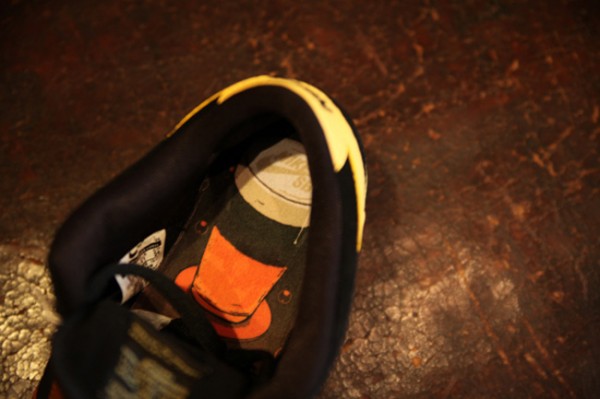
Nike Fails to Do a Google Search; Makes Guinness Shoes

Well, this is embarrassing--the home town shoe company seems to have committed an international gaffe:
The athletic apparel behemoth is releasing a new version of its SB Dunk Low, a popular casual shoe. It is black and tan-colored. And since we're getting close to Saint Paddy's Day, the shoe has a nickname that is apparently beer-inspired - the Black and Tan.

Brian Boyd [of the Irish Times]: "It has certain historical associations. The Black and Tans were a ruthless auxiliary force of the British army before we became independent in the 1920s. They were responsible for wide-scale massacres, butchering of people. You would not - we don't even - for example, in the U.S. you may go into a bar and asked for a drink called a Black and Tan."
The whole thing is wonderful and strange. First off, the idea of doing a beer-inspired athletic shoe is psychedelic. I have to think that the local beer culture seeped into the Nike campus and infected the minds of the shoe designers there. But that's not all: Nike has a version of the shoe with a tie-in to Guinness. It is, predictably, black, brown, and head-colored (what, beige?). The ultimate in cross-marketing, pulling in beer drinkers, sporty types, and holiday celebrants. Throw in March Madness and you've got the superfecta. I'm not sure whether to be proud or embarrassed. (Actually, I think they're pretty righteous sneaks. "Righteous sneaks"--is that what the kids still call them?)

By the way, while I would fault Nike for being boneheaded enough to let this shoe go out without having done a Google search to find out if "black and tan" meant what they thought it meant, I am going to exonerate them on the following point, voiced by that Irish Times reporter:
It's how the Americans view Saint Patrick's Day and view Irish culture and history. And it's the very fact that some people are saying that these are beer-themed sneakers, that the only way to celebrate a national holiday of a country with a very rich culture and a very rich history and literature, et cetera, is to pour massive amounts of alcohol down your body.
Look, Americans are culpable for an almost infinite number of sins of ignorance against other countries. We regularly insult vast swathes of the globe and should be held to account. But we get to celebrate St. Patrick's Day however we wish. St. Patrick's Day is now, as celebrated in America, fully American. Every culture gets mangled when it comes into the American melting pot, but that is our culture--a hodgepodge of reinterpreted traditions from around the world. So no dice on the you're-doing-it-wrong argument.

Monday, July 04, 2011

Happy Fourth

Two hundred thirty five years ago, porter-fueled idealists wrote a screed against a king. If one of those colonial not-quite-yet-Americans time traveled to this day, very little would seem familiar. The porter, though--in that he could take comfort. Raise a pint to them--

Friday, December 31, 2010

Best New Year's Hangover Cure

I am regularly asked, "Jeff, what's the best hangover cure?" I suppose my years as a blogger and my trustworthy look incline them to think I'd know the answer, and you know what?--they're right. I have spent years working on the best formula, poring through medical journals and running trials here at home. While there may be a little fine-tuning left, I am prepared to go public with my own cure. Follow it, and I guarantee you'll have no troubles.
  • Carrots. Researchers in Auckland were the first to stumble onto this important building-block in hangover prevention. Beta carotene, it turns out, binds to blood toxins, preventing body absorption. There is a slight downside: you must eat at least two pounds in any 12-hour period to gain the benefit, but with juicing and roasting, this can be a tasty proposition!
  • Wind sprints. Also important in the fight against hangovers are endorphins, those neurotransmitters responsible for calming sensations. A two-decade longitudinal study at the University of Nairobi has demonstrated the link between endorphins and lowered hangover levels. I recommend wind sprints as a way of quickly producing these. While running up and down your driveway on New Year's eve may provoke some curious glances by dog-walkers, you'll be happier in the morning.
  • Neil Diamond. Interestingly, hangovers may be as much as 89% mental creations; external causes generally contribute only a small amount of the toxic load you need to avoid. While music in general can be beneficial, neuroscientists at the University of West Calgary found amazing results in brain wave orientation as a result of the brassy baritone of Neil Diamond. Or perhaps the jazzy, nostaligic hooks are responsible. No one knows for sure.
  • Aromatherapy. While recordings of Neil Diamond alone produce remarkable outcomes, when coupled with aromatherapy, the results are astounding. The most effect scents are those produced by burning tires, but since this is unpleasant, lavender can be substituted with near-equal efficacy.
  • Avoiding alcohol. The link here is weak, but I thought I'd mention it. Anecdotally, many people have found a connection between alcohol consumption and hangover. We won't know more until the research is in, but every hangover cure has a certain measure of folk wisdom. Anyway, it can't hurt.
A lot of people drink on New Year's eve because it promotes sensations of euphoria and conviviality. Fortunately, I have discovered that a nice carrot binge followed by wind sprints and the soothing effects of Neil Diamond and lavender oil is every bit the equal to a Tom Collins or an imperial IPA. If you employ my five-part plan, I can virtually guarantee you great results. Good luck (and happy new year)!

Saturday, December 25, 2010

Merry Christmas One and All

When I lived in India for a couple of academic years, I enjoyed the regular religious celebrations there. Some were celebrated nationally--Holi, Divali, Christmas, Eid--and some were confined to local gods or religious communities. (I was once told, persuasively, that a third of the days in India are devoted to religious celebration, though I can't confirm this.) On holiday days, businesses might be closed, or government offices, or schools, or all or some. The rhythm of days was obscure to the non-Indian. But here's the thing: India celebrates only three national holidays--Republic Day, Independence Day, and Gandhi's Birthday. The rest are acknowledged publicly, but not as national holidays.

The nice thing about India is that there's a lot of slop-over. I have been invited by joyful celebrants into mosques, temples, homes, and even the sea to join religious celebrations. On Christmas, I was taken into the shrine room of a Tamil family by a woman who plucked up a toy Jesus from her alter. It had been resting amid the images of Hindu gods. She said brightly, "See, we celebrate baby Jesus' birth, too!"

Religion isn't the problem. It's the commingling of religious observances and bank holidays. Let us consider them separate issues and allow ourselves to acknowledge the day for what it is, Christmas, a good and fine day that even Hindus in Tamil Nadu celebrate. Or Buddhists like me.

Merry Christmas, folks--

Friday, December 24, 2010

Traditional Wassail - Don't Forget the Eggs!

In the "old" category of today's posts, we turn to Martyn Cornell, who offers several 19th-Century recipes for mulled ale concoctions. In one, preparation the proportions call for six pints ale along with a half pound of brown sugar--plus some sherry. Sounds tasty! (No, it doesn't.) There are others involving gin, oatmeal, and lots of spices. But the most intriguing is this, one of two employing eggs:

Many drinks in the “spiced heated ales” tradition feature eggs: here’s a typical mulled ale recipe:

1 pint of strong, lightly hopped ale
2 eggs
3 tablespoons of sugar
Quarter-teaspoon of nutmeg or ginger
1 tablespoon of rum or brandy

Beat the eggs, sugar, spices and spirits together in a two and a half pint jug. Heat the ale in a two and a half pint saucepan almost to boiling. Pour the hot ale into the egg mixture from a great height (to prevent the egg curdling). Rapidly pour the now creamy liquid from the jug to the pan and back in a long stream several times. Serve.

Most look as though they have adequate info to actually construct, so if you're looking for an interesting beverage to serve on Christmas Eve, you might consider the very old school. What they lack in appeal they gain in authenticity.

Monday, December 13, 2010

Holiday Buying Guide

Ah, Christmas, you sneaky devil. How is it that one minute I'm trying to squeeze the last dregs of heat out of a fleeting summer sun and the next there you, are, ringing a damn bell? Amazing. Well, in any case, here it is, the middle of December, and I am only just about to begin shopping. If you're like me, you'll be looking for a few ideas, pronto. Well, for that beer fan in your life, here are a few suggestions.

1. A beer cellar starter kit.
Everyone should have a beer cellar. Not everyone can--you do really need a stably cool place--but everyone should. It's a relatively cheap way to turn good beer into something more rare and special. Most people don't realize that beer ages, or that it changes when it ages. You can do someone a big favor by presenting him with a selection of aging-ready beer and instructions on how to manage them. Beer likes stable temperatures, preferably below sixty degrees. Suitable beer is stronger than 8%, and beer stronger than 10% is especially good. Dark beer generally ages better than light beer, and bottle-conditioned beer better than standard bottles. If the bottle is corked it's best to lay it down, but store it upright if capped. That's it--for thirty bucks you can set someone up with a half dozen great beers and the beginnings of a cellar program.

2. A Good Book
This was a great year for beer books. The market has been weak since Michael Jackson died, but it seems like publishers are finding good writers to do serious books now (rather than just cashing in on a fad, as they once did). Here are some of the titles I'd recommend:
  • Brewing With Wheat, Stan Hieronymus. This is a fantastic book for anyone interested in the history of beer. I have gone back to it time and again over the past year, and never to consult it for brewing info. A first-rate treatment of a number of world styles, and now an indispensable part of my library.
  • Yeast, Chris White and Jamil Zainasheff. More suited for the advanced beer geek--and probably mainly for those who brew. For that crowd, a wonderful resource, and a book I'll be revisiting regularly as fermentation questions arise.
  • Amber, Gold, and Black, Martyn Cornell. Those of you who read Zythophile know that Martyn Cornell is the go-to man on the history of British brewing. Cornell's account is painstaking and debunks a lot of the received wisdom about beer styles. Another must-own.
3. For the Aspiring Homebrewer
Every year, homebrew shops are inundated with wives and daughters buying homebrew kits for husbands and fathers. I'd say ditch the kits, though, and start with a book. Those kits get a beginner in the door, but they are designed to be low-cost and stripped down. Most homebrewers that stick with it overhaul all their equipment within the first year of homebrewing. Rather than dropping a hundred bucks on a bunch of extract equipment, get Dad a nice book and let him think about the system he wants. When he goes to the homebrew store, he'll be able go assemble the equipment himself. Best bets:
  • Complete Joy of Homebrewing, Charlie Papazian. This is still the best entry to homebrewing for the non-techie novice. It's easy to read and encouraging.
  • How to Brew, John Palmer. Palmer's guide is the recognized standard among homebrewing books. Far better for advanced techniques than Charlie's guide.
  • Designing Great Beers, Ray Daniels. For even more advanced brewers, with lots of technical information. Not for the beginner (unless she's an engineer--and even then, get Palmer's book, too.)
4. Beer
I know, it's obvious. But keep in mind that beer is a consumable, so drinkers constantly need new infusions. Your local bottle shop will provide you with numerous options, nearly all of which will be greeted with a smile when pulled from the stocking.

Sunday, October 31, 2010

Boo!

I will not be attending tonight's grand tour of 28th Ave (aka "Night of the Living Ales"), despite the fact (or because of?) that it's four blocks away. However, because I have been keenly interested in Ezra's peanut butter stout, brewed up special through the Coalator program at Coalition, I managed to score an early preview.

I first heard about this stout weeks ago, with Ezra cavalierly dismissing concerns about what the peanut oil would do to the yeast. I was impressed enough by his moxie to note it, but didn't think I'd get a chance to try it this quickly. If you are on the fence, definitely join the fun tonight and try it; you won't soon have the chance to try a similar experiment. (His full description of the process is here.) The beer is distinctly peanut-buttery, both in the flavor and thick body. You can even see, holding the beer up to light, its murky, river-water appearance (largely obscured by the dark malts, of course). It also affects the viscosity somehow. I'd like to sip a couple beers over the course of an hour to see how it affects the tongue; I couldn't tell if it was stickier or slicker, but it was somehow different. The nut flavor is more a minor note, and complements the stout's roastiness nicely. All in all, a strange and fascinating experiment.

Happy halloween--

Monday, September 06, 2010

Labor of Love

Let's imagine an alternative universe. In this universe, the craft beer movement never happened. Americans still drink beer--the rise of craft brewing didn't affect per capita consumption--but they only drink macro lagers. The big debate among beer drinkers is the modern version of tastes great/less filling: no one argues actual flavor.

A sad tale, but I tell it not because that bereft alternate universe is merely lacking in good beer. It is also a universe with fewer jobs--or anyway, fewer Oregon jobs. (I'll leave the economists to calculate how many more people are employed in our universe of craft brewing; it's more, because craft breweries are way more inefficient than macro plants and require more hands--but how much more I can't say.) Oregon breweries directly employ 4,700 people. These are good jobs, too--it's cool to work for a brewery! The industry also supports thousands of other jobs, too, in beer distributorships, hop-growing, pubs, beer magazines, and bottle shops. All of which adds up to a calculated $2.33 billion contribution to the state's economy.

(No doubt effects are substantial in other states, as well.)

So on this Labor Day, salute the Oregon beer industry for supporting so many good jobs. Cheers to you--

Thursday, August 05, 2010

International Beer Day

Surely you have big plans. I expect you'll be attending one of the many events around the country. I mean, today is International Beer Day, after all. What, you didn't know that?

Neither did I.

Inauspiciously, the website is currently down (9:09 am), but Wikipedia tells us this much:
International Beer Day (IBD) is an August 5 holiday invented in 2007 in Santa Cruz, CA. As opposed to Oktoberfest, which is in the cold months and largely European, International Beer Day is meant to be celebrated across the world while it's still warm enough for cold beer.

International Beer Day is celebrated by drinking beer, drinking beer with friends, and buying beer for others. While there are various other traditions, these seem to be the key attributes. The suggested way to greet someone on International Beer Day is to hand them a beer and say "I bring you the gift of beer". As a general rule, you can't refuse the beer.
I think "International Beer Day" was invented by students at UC Santa Cruz with rare and coveted access to the intertubes. Or maybe it's a put-on. This business about drinking beer "while it's still warm enough for cold beer" strikes me as ... suspicious. (The average high temperature in Santa Cruz in January is sixty degrees.) But if they are having us on, they've managed to get mass media coverage, so good for them. Hoodwinking a journo is its own reward.

In any case, I am prepared to be won over. I will accept gifts of beer all day long. Happy IBD!

Sunday, July 04, 2010

Forget Tea, Beer Made the Revolution

If it weren't for beer, would our quarters now sport the Queen? Maybe. Revolution was forged by homebrewers over pints of ale in Boston's Green Dragon Tavern. Sure, it's tea they dumped into Boston Harbor, but it was beer that fueled their seditious schemes. In honor of their pluck, I offer you a recipe from the man who does appear on the quarter--the first President, and truly a brewer patriot.
To make Small Beer

Take a large Sifter full of Bran Hops to your Taste. — Boil these 3 hours. Then strain out 30 Gallons into a Cooler, put in 3 Gallons Molasses while the Beer is scalding hot or rather drain the molasses into the Cooler & strain the Beer on it while boiling Hot. Let this stand till it is little more than Blood warm. Then put in a quart of Yeast if the weather is very cold, cover it over with a Blanket & let it work in the Cooler 24 hours. Then put it into the Cask — leave the Bung open till it is almost done working — Bottle it that day Week it was Brewed.
Cheers and happy Independence Day, countrymen!

_____________
Text and photo, New York Public Library

Sunday, May 30, 2010

Los Angeles Discovers Beervana

Based on the number of emails I received, I'm guessing you've already seen the fluffy travel piece in today's LA Times ("Achieving Beervana in Portland, Ore"). Nothing new in it, but it did cause random thoughts to fire inside my brainpan:
  • Both bi-coastal Times (NY & LA) ran stories about the beer scene in Portland in their print editions. Online polls or no, we definitely have poll position on beeriest city.
  • It doesn't hurt that we call the town "Beervana." Good branding.
  • If the Tugboat stepped up and brewed Beervana-worthy beers, it would be in a fantastic position to start making money hand over fist. As it is, every article that discusses the Portland beer scene mentions Tugboat--one of only two downtown breweries.
  • Upright gets amazing press.
  • Christian Ettinger is not Elvis. He's a member of the second wave--way too young to be the King (though he has the sideburns). I'd have called him Colin Meloy. I give the Elvis nod to John Harris.
Happy Memorial Day--

Thursday, April 08, 2010

Happy Birthday, Dad

Sometime in the 1970s, I was sitting next to my father watching TV. I'm terrible about associating events with my age, but let's say I was about seven for the purposes of this anecdote. Although Dad regularly had a can of Coors in his hand, for some reason on that occasion I asked to sample it. Beer had a bad reputation among my cohort--not as bad as coffee, but bad. It was one of those mystifyingly gross beverages adults drank. Yet I found it rather pleasant. Strange, but not anywhere near as bad as the coffee I'd sampled at the Presbyterian church basement.

Fast forward to 1984 and my sixteenth year. My friends and I had managed to acquire a six-pack of Budweiser, of which we drank three. A chaste one beer each. I was living in Salt Lake City and was the only non-Mormon in the group, so naturally it fell to me to stash the remainder. One day I came home from school and found my father there--an unprecedented event. I had a sense that all was not right, and when he dangled those three beers from their plastic rings, I saw why. He said, "Well, I always got caught, I don't know why you thought it would be any different." Ah, I thought, this is not the end of the world.

Indeed, the act of beer-drinking is something that has been handed down from father to son for centuries. My dad, who was born in 1930, never took to good beer. He's still a tin-can man, a partisan of whichever brand is on sale. I tried to convert him, but he never developed a taste for good beer. If he was in the mood for something stronger than Busch Lite, he went for Jim Beam. Still, beer is one of the many gifts he has offered me over the years, and I love him for it.

Gene Alworth is eighty today. Raise a glass with me and toast his good health.
______________
Share

Sunday, April 04, 2010

Opening Day

Certain phenomena defy explanation: Old Faithful, dark matter, German appreciation of David Hasselhoff. Another is the strange connection between Portland beer bloggers and the Boston Red Sox. Back in the old days (2007), we used to identify each other at beer events by chapeau. The Boston "B" might have stood for "blogger." I suspect the new infusion of beer writers has weakened this correlation, but for a few of us, the admiration we feel for Hair of the Dog's Blue Dot is rivaled only by our appreciation of a Big Papi walk-off homer.

Tonight the forces of goodness and light battle the dark lords of New York on the holy ground in Fenway. Easter Sunday, opening day, when the Sox hopes are risen. Stand now ye faithful, and pray for October.

Anyhoo, having blasphemed what is truly a sacred day (I'll call and apologize later, Mom), I leave you now with a final, transgressive image. Happy Easter and go Sox!


(If only I had a Harpoon, life would be full.)
________________
Share