You love the blog, so subscribe to the Beervana Podcast on iTunes or Soundcloud today!

Wednesday, April 25, 2012

The Power List

I get random emails.  Nearly all of them are so inappropriate/lame that I can delete them after seeing the first half of the first sentence in the inbox.  I almost hit delete on this one, but in a fit of caprice decided to click the link instead.
It’s been said here before that "power is the ability to make things happen. It’s authority, strength, muscle, swack, juice." And in the last two years we have identified food industry players — big names and otherwise — who met that description in terms of their ability to affect what and how and where we [drink].
They have these things for every profession--the Oregonian even does it for Portland sports figures--and I always think the same thing: what power?   We'll get to that, but have a look at the beer names (or those that affect beer) on the list first:
2.  The head of your state's alcohol agency.
7.  Carlos Brito, CEO of Anheuser-Busch InBev
8.  Jeremy Stoppelman, CEO of Yelp
11.  Larry Schwartz, President of Diageo North America
13.  Tom Long, CEO of MillerCoors
18.  Jim Koch, Boston Beer
20.  Charlie Papazian
25.  Debbie Weir, CEO, Mothers Against Drunk Driving
30.  Jason and Todd Alstrom, BeerAdvocate

There are actually some interesting names on that list.  I think CEOs are probably overrated, but obviously the chief at A-B InBev has a lot to do with what we drink.  Liquor boards may have something to do with our access (ask Mississippians), but that's a little lame, too.  But what about some of these others.  Yelp is definitely a major player in food, and I have to think they are a great accelerant to the success of good brewpubs.  Charlie's legacy is craft beer, but his current impact?  Maybe not so much.  Same with MADD--most of their influence is well in the past.  (Though it's interesting.)  I've never been able to assess RateBeer and BeerAdvocate except on one metric--creating furor around buzz beers like Dark Lord.  Do they actually affect consumer choices?  I wonder.

It's not actually a terrible list, especially if you just chuck most of the CEOs.  (For example, Stumptown's Duane Sorenson is on the list, and that's a great call.  Stumptown is the face of third wave coffee.)  Incidentally, there's only one critic, wine maven Robert Parker.  Since Michael Jackson's death, I would have to agree that there's no beer writer with even a fraction of Parker's power to affect purchasing decisions. 

In terms of beer, who'd they miss?

Tuesday, April 24, 2012

Cheers to Belgian Beers Wrap

Portland Cheers to Belgian Beers is one of the signature events by Oregon's breweries every year and about the only complaint I have is that the celebration is but one short day long.  It's far too little time to try all the beers--unless your stamina and liver are sturdier than mine.  The conceit of this annual gathering is simplicity at its finest: everyone brews a beer with the sme yeast.  They are brewed to different strengths and styles, and festgoers vote on their fave.  The winning brewer(s) take a victory lap, bask in the admiration of their peers, and select the yeast everyone will use the next year.

Seven breweries stood tall among the masses (Block 15, Breakside, Cascade, Double Mountain, Logsdon, Occidental, and The Commons) and the big winner was--for the second year in a row--Logsdon Farmhouse Ales.  Congrats.  My thoughts, in no particular order, are these:
  • Metalcraft Fabrication's plant is one gritty-ass place to hold a fest.  The venue works brilliantly, but it is one amazing industrial tableau.  The pen outside the massive warehouse is a gravel lot surrounded by a fence topped in razor wire and overlooks Interstate and the industrial zone beyond.  I love gritty-ass industrial scenes, but I'm guessing not everyone does.  (It is far, far better than the cavernous convention center which hosts the Spring Beer and Wine fest, though.)
  • The new breweries made quite a showing.  I got a kick out of Eugene's Falling Sky, which brought a 3.5% Mighty Mite called Summer Sprinkle.  My favorite came from a brewery called Solera which I couldn't place at the time.  A wonderfully silky, brightly lactic beer called Table Logic (it wasn't made with the appropriate yeasts, though).  Later I checked, and of course it's Jason Kahler's new joint.  Jason, you'll recall, used to work for Big Horse where he wowed folks--especially with his skill in tart beers.  Gigantic led with an appropriately huge "imperial black saison" which was more or less an imperial stout.  Finally, Dave Logsdon made his winning beer with the Roselare yeast (two breweries tied last year, so there were two strains).  It didn't taste much like a Flanders wood-aged beer, but it was complex and assertive without being punishing.  My favorite so far from the year-old brewery.
  • On the other hand, much as I want to love Hair of the Dog's Michael, I can't.  Michael is an homage to Michael Jackson, the writer who called Rodenbach "the most refreshing beer in the world."  Unfortunately, Michael the beer is nothing like Rodenbach--which is not itself a failure (especially for Alan Sprints, who copies no one).  It's just super heavy with brett, and in this case has become battery-acid harsh, with a grinding dryness.  (I wonder if it has to do with wine-barrel aging, where the beer is exposed to so much more oxygen than in Rodenbach's massive foeders.  The brewer there, Rudi Ghequire, told me that the ideal size are 180 hectoliters--a bit over 150 barrels.)
  • Special props to Coalition for making a dunkelweizen, a beer that more than any other showed the range of Unibroue's yeast.  It's extremely versatile--pretty much anything people wanted to make with it, they could.
My vote went to Solera for best in show, but of course, tastes vary.  A few pics in case you missed it:

Gritty.
The vast Metalcraft hangar.
More hangar.
The venue.
Rock star brewers playing deejay.

Monday, April 23, 2012

Random Quote: De Struise

I met with Carlo Grootaert of De Struise Brouwers when I was in Belgium last year, and I just came across this quote, which you might regard as fantastic or horrible, depending on your proclivity.
“We learned a lot from American brewers. We are traditional Belgian brewers, but we’re open minded, so we look beyond the Belgian borders. Due to the fact that we are very much in contact with beer geeks—people bring us beers, you can see plenty of bottles of Dark Lord and Pliny the Elder--and we’re always interested in discovering flavors. So we actually learned from the beers we got.”
Carlo Grootaert

Friday, April 20, 2012

Cheers to Belgian Beers Fest, Plus Some Rambling About Rodenbach

Tomorrow is one of my favorite fests of the year--Portland Cheers to Belgian Beers.  The conceit of the fest is simple: everyone gets the same yeast(s*) and brews a beer in one of four general quadrants of type (pale or dark, strong or weak).  People go, taste, and vote.  The winning brewery gets to select the yeast for next year.

As to that asterisk.  Last year, two breweries tied--Logsdon and Hopworks.  Consequently, there are two official yeast strains--Unibroue and Rodenbach.  Really, though, there's just one strain.  Rodenbach's is so hard to work with and takes so long to mature that the only breweries who have beers using it were already making beers with it (Logsdon and Hair of the Dog).

All the details, including a beer list, are available at the Oregon Brewers Guild.  See you there!


Slightly Related Commentary About Rodenbach

We have gotten a bit blase about the use of historic strains of yeast, but it's worth noting that the breweries aren't always cool with it.  When I visited Rodenbach last year, master brewer Rudi Ghequire expressed vehement disapproval about how Rodenbach's yeast had been reappropriated by American yeast companies.  His complaint is not entirely misplaced.

Rudi Ghequire zwickeling aged Rodenbach.
The first thing to note is that there is no Rodenbach "yeast."  The brewery makes a pretty standard, mid-strength beer with a regular (albeit ancient) ale strain.  This is not Rodenbach.  That beer goes into one of the 294 oak vats the brewery owns and there it sits for two years.  Each one of those vats is a separate ecosystem and the base beer changes inside.  Mostly what happens is lactic production--though there are brettanomyces in some of the vats, too.  (Indeed, when we sampled the beer straight from the vats, Rudi detected traces of brett in one of the pours--though I could not.)  This is where Rodenbach becomes Rodenbach.  At the end of the process, Rudi and a team of tasters blend together lots from the vats and then blend those together with fresh beer (25% for regular Rodenbach, 67% for Grand Cru).

Whatever could be harvested after fermentation will be like a slice in time.  It will necessarily have a unique colony of micro-fauna within.  More importantly--and I think this is what really chafes Rudi--the process is a huge part of the beer.  Those yeasts and bacteria that make Rodenbach evolve from the specific circumstances within each vat.  A big part of that has to do with the amount of oxygen that gets into beer, respiration that is determined by surface area (that is, tank size) and wood thickness.  If you wanted to make something like Rodenbach, you'd need more than the yeast--you'd need wooden vats and a couple years.  And even then, you'd have something distinctive that evolved separately, according to the conditions you had at your own brewery.

None of which is to say the Wyeast Roselare strain (pronounced Roos ah lare) can't make great beer.  Just a word to the wise: the yeast is only a part of the picture.  I'm excited to try Hair of the Dog and Logsdon's beer, but I don't expect them to be Rodenbach-esque.

Wednesday, April 18, 2012

Gluten-Free, But Full of Other Stuff?

File this under "Hmmmm." My post on the Omission line of gluten-free beers elicited comments worth bumping up to main posts. First off, Thornbridge's Dominic linked to a product listing for a foam stabilizer in response to my "how does a gluten-free beer form a head?" question. A little cheeky, but probably correct--foam stabilizers are pretty common. Then came this, from an anonymous commenter:
Dominic is close, but not quite right. I hate to post anonymously, but I know what Widmer is using in this product. The "science" is franken-science. The means of gluten reduction is via the addition of enzymes, which, according to the product's documentation, "in the producing micro-organism genes naturally present in the micro-organism have been multiplied using biotechnological techniques". Using genetically manipulated products in a "craft beer" isn't what craft is all about in my book. And the gluten free community isn't one to engage blissfully with GMOs, so I'll stick with "clean" beers for now.
It's unfair to credit an anonymous commenter as a source on anything, so I shot Widmer Brothers an email. Brady Walen responded this way:
You're not alone in wanting to know more about our process. While we're not currently revealing all details about the Omission program and brewing process, we can confirm that we are not using "hundreds of lab technicians dissecting malt grains and tweezing gluten molecules." That said, I also wanted to address the previous comment from Anynomous regarding GMOs: under definitions accepted by the US Government, Omission beers do not contain genetically modified organisms and are not brewed with genetically modified organisms. We do have plans to share additional details about the Omission program the coming weeks, which will help clarify similar questions and others that we’ve received since we launched Omission in Oregon, so stay tuned for those.
The plot thickens. It never occurred to me to ask what was added to the beer to replace that which was taken out. I think it's a perfectly reasonable question, but it looks like we'll have to wait to learn more. Caveat emptor. Perhaps rumors of millet beer's death were premature.

Your thoughts?

Tuesday, April 17, 2012

The Largest American Breweries in Context

Then annual Brewers Association list of the largest breweries is out, and based on a bit of the behind-the-scenes email I'm getting, breweries take it pretty seriously. But there a few things you should know in interpreting this list. The most important is that a list is about the crudest measure we could have. The difference separating the first and second breweries is larger than the difference separating #2 and #50 (on both craft and non-craft lists). Because the barrel counts are never divulged, I had to do a bit of spitballing for the following chart, but it should give you a sense of things:


Put another way, the difference between 41 and 42 is on the order of a few thousand barrels; the difference between 1 and 2 is hundreds of thousands.

Next, the really interesting thing about lists is movement, and for that you should check out Jay Brooks, who has put together his annual list of breweries and their movement. He didn't to it for craft breweries, though, so here's your Oregon movers:

5. Deschutes (no movement)
20. Full Sail (down 2 from 18)
25. Rogue (no movement)
32. Ninkasi (up 18 from 50)

BridgePort was in last year's list but axed this year, and Widmer was axed a couple years ago--both owing to definitions about ownership. You also shouldn't jump to the conclusion that a fall in position equals a fall in barrelage--it may mean a brewery like Full Sail just didn't grow as fast as others.

Monday, April 16, 2012

Calling Kelsey

Last week, I offered up a ticket to this Thursday's brewer dinner at the Oregon Garden and ultimately awarded it to Kelsey. But Kelsey hasn't emailed and I have no way to contact him (her?). Do it ASAP (the_beerax at yahoo dot com). Others still interested in the ticket should email as well--I may have to scramble to ensure it's not wasted.

Omission and the Future of Gluten-Free Beer

Note: reading this for the first time this morning (24 hours after posting), I see it has some egregious problems of grammar and diction. Some have been fixed.
_________

Whole grains contain the unattractively named "glycoproteins," gluten compounds that themselves contain oligosaccharide chains covalently attached to polypeptide side chains (essentially, a carbohydrate fused to a protein)--if the writers of the Wikipedia page got it right. To these glutens a little less than 1% of the population are allergic. That doesn't seem like a particularly ripe target for beer-makers, but it has been. Deschutes has made over 40 iterations of gluten-free beer, Portland's Harvester Brewing makes only gluten-free beer, and now Widmer Brothers Brewing, under the Craft Brewers Alliance (CBA) label, has introduced a new line called "Omission."

I don't understand the science of gluten in brewing, but I know its impact on beer. Gluten is an important structure-adding element, and without it, gluten-free beer is water-thin and susceptible to hop distortion. (If you ever wonder how powerful the hop is without balancing malt, boil a few flowers for just a minute in water and see how bitter it is. It'll melt your face off.) When breweries use grains like millet and sorghum to make gluten-free beers, they end up with thin, unbeery beers that are frankly terrible. Breweries have tried to augment this by throwing in various other body-enhancing ingredients, but the dozens of Deschutes experiments are a clue to how well that works.

CBA has followed Spain's Estrella Damm through door number two--removing gluten from barley and brewing it normally. No millet, no sorghum, just regular ingredients processed by removing the gluten. (CBA has lots of information and science behind the testing standards.) I'd love to know the process--I envision hundreds of lab technicians dissecting malt grains and tweezing gluten molecules, but as delightful as that image is, it's impractical and unlikely--but Widmer's not saying. There's other science here I'd like to know more about, like how the two beers, a pale ale and a lager, manage to raise a head without the gluten. Perhaps in time these secrets will emerge.

The Beers
Gluten-free beers have a captive audience and, like non-alcoholic beers, don't have to be very good to satisfy them. I am not so easy. Gluten-free beers are so terrible that I have heretofore subjected them to the Alworth Requirement: that they not be so offensive that I immediately dump them into the sink. So far, no gluten-free beer has passed the Alworth Requirement (I haven't tried many). For them to be considered something other than the orthopedic shoes in world of fashionable Nikes, however, they must pass a further test: that they are tasty enough that I, a gluten-lover, would buy them in spite of the fact that they are gluten free. Call it the geek bar.

CBA has introduced Omission (currently available only in the Oregon) in two flavors: lager and pale ale. These are "classic template" beers designed to fill the broadest swathe of need in the celiac world. The pale ale's a classic Cascade-hopped beer, and the lager is helles-like. How do they stack up?

Pale Ale
It pours out in a perfect facsimile of a pale ale: good color, almost ruddy, with a nice and fairly sustained head. A whiff of gently citric hopping in the nose. The true test comes as it washes across the tongue: not bad! It is thinner than a regular beer, and there's a tannic, tinny character hiding inside. You can actually get a good sense of the role malt plays in boosting hop flavors because here the Cascades feel a bit hard-edged and lifeless. Still, the beer easily clears the Alworth Requirement and I finish it without complaint. As for the geek bar: would my hand drift toward Omission at the grocery store when I'm considering Mirror Pond, Sierra Nevada, and Caldera--my regular go-tos? Nope. It's light years ahead of millet beer, but it's not ready to compete head-to-head with the best, glutin-rich pales.

Lager
Next came the lager, which again would rouse no suspicions based on its perfectly beer-like appearance. Which is quite nice: bright straw with a lively bead. The aroma is spicy and lacily delicate. The tongue test is where all is revealed. Like rays of light shining through glutinous clouds, Omission is a revelation. A perfectly made helles, it has the delicacy you want when hops and malt are working in harmony. Perhaps owing to the type of beer and my expectation of less body and sharper crispness, the absence of gluten is completely invisible. And damned if it isn't a pretty tasty beer. The hoping begins seeming spicily noble, but drifts a bit toward the fruity and citrusy in a wink to home-country fans. Not only did I not dump this beer in the sink, but I relished it and would happily buy another sixer. It will be a fine addition to my summertime lineup.

Needless to say, gluten-free all-barley beers are the future of the movement. Millet is dead.

Saturday, April 14, 2012

Beervana Stories 2 & 3

There's a movie theater downtown that doubles as a restaurant, and the theaters themselves are cozy, slightly upscale, and now no more expensive than the abominations down the street run by Regal Cinemas. You can take food from the restaurant into the theaters or, if you didn't order beforehand, they'll bring it in for you. Of course, this is Portland, so they have beer.

Used to be it was just four taps, but they recently doubled that. They're well-selected and wholly local. Nevertheless, this is still a movie theater--there's a separate line for where you buy food if you're going to watch a movie, and they sell popcorn and candy. So tonight, while waiting to order up a couple cold ones, the woman in line in front of us asked about the IPAs. She was about fifty years old and dressed stylishly and expensively.

The cashier, paraphrasing: "The Amnesia is sweeter and more caramelly, and the Ninkasi is hoppier and zesty." It was one of the best parsings of beers I've heard anywhere, and it was in the line at a movie theater.

The middle-aged woman: "Oh, I'll have the hoppy one."

Cashier, also a woman: "Yeah, I like the hoppy ones best, too."

Inside the theater, a quite elderly couple spied our light-colored beers and asked about them. (The gorgeous, warm day called for pilsners in our view.) We struck up a nice conversation and turned them onto Bayern, which has carved out quite a niche in Portland.

Thursday, April 12, 2012

A Catastrophe for Publishing--and Ultimately, Writers and Readers

This is slightly off the beaten path, but I hope you'll indulge me. Thumbnail context: on Wednesday, the Justice Department sued five publishers and Apple, contending that they colluded to fix e-book prices. They had forced Amazon, the US's major e-book retailer to accept the "agency model," which allowed them to set prices on e-books. Previously, Amazon set them at very low prices to corner the market--sometimes taking a loss. Why should you care?

The Times pick up the story:
Amazon, which already controls about 60 percent of the e-book market, can take a loss on every book it sells to gain market share for its Kindle devices. When it has enough competitive advantage, it can dictate its own terms, something publishers say is beginning to happen.
Because Amazon not only sells books but the device on which to read them, they could keep prices low enough that traditional publishers get put out of business or are forced to drastically cut back on the services they provide. What people don't realize is that the cost of a book has very little to do with the ink and paper (or bytes) that constitute its physical existence. The real cost is in the editorial and design oversight that goes into a book.

The process begins with an acquisitions editor--someone who goes out and finds the writer. This person may work with an author's idea or generate the idea herself and then find the author. In the case of both The Beer Bible and the Beer Tasting Toolkit, the ideas came from the publisher. This person shepherds the book through the contracting stage and gets the writer on his way, helping to shape the structure and concept.

Once the manuscript is completed, someone (or ones) edit the thing. This is huge. Having done a lot of internet writing, I can tell you that the stuff that comes from my fingers and straight to you is substantially inferior to that which gets a thrice-over by editors. Editing is an advanced professional skill (quite different from writing itself) and it makes a huge difference. If we end up in a self-published world, we'll have nothing but misshapen, incomplete works.

Finally, there's layout, design, and promotion. It's possible for self-published books to find an audience, but not damned likely. It's much harder for niche books that require elbow grease to get in front of the right readers. After The Beer Tasting Toolkit was complete, two nice gentlemen from Chronicle Books called to tell me what they were going to do to sell the book. They'd already had early success, finding buyers in the UK and Sweden. Oh, and they're taking care of the Swedish translation, too.

It's already very hard for writers to make enough money writing books to live, and Amazon driving prices down will make it even harder. If they manage to destroy the infrastructure supporting the publication of professional books--a job that requires a team, not just one writer--it won't be long before the effect will trickle down to the reader. A guy like Michael Jackson could not exist through self-publishing, and obviously, guys like Michael Jackson are very important to have around.

This isn't just theoretical. The toll has already begun. Publishers are having to cut way back on things like editors, fact-checkers, and publicists. Books are demonstrably less professional, less polished, than they were a generation ago. If Amazon gets its way, things are going to get a lot worse in the next decade. Let's hope that doesn't happen.

Wednesday, April 11, 2012

A Winner, a Beer List, a Wandelpad

The Oregon Garden Brewfest has a taplist and you can find it at Sanjay's. It is, as I hoped it would be, a showcase of middle-Oregon breweries: 10 Barrel, Block 15, Calapooia, Cascade Lakes, Flat Tail, Gilgamesh, GoodLife, Oakshire, Pale Horse, Ram, Rusty Truck, and Seven Brides. It also has two beers from Gigantic and other assorted goodies.

As a side note, Block 15 is bringing Wandelpad, Nick's take on the absolutely sublime Westvleteren Blond. It's named for a cool little path beside the monastery that takes you to a clearing and a very cool shrine inset into an outcropping of rocks. The name of that path? Wandelpad:


Now, to the great Brewers Dinner competition. I didn't get an overwhelming number of entries--perhaps not surprising given the time- and location-specific parameters--but the ones I got were compelling. My mom was lobbying this morning for Leavy23, whose case was indeed strong. But since I'm a communist who was once too poor to attend events like this, my heart was swayed by Kelsey:
Me! I'm volunteering four hours on Saturday and enjoying with friends at night. I like food and beer and am too poor to go otherwise.
Kelsey, if you show up in a top hat and monocle: lightning bolts of fury. Anyway, shoot me an email at the_beerax (at) yahoo (dot) com and I'll get this set up. Congrats! May you have a wonderful time!

The Knowledge Curve

On my almost-daily constitutional yesterday, I was walking down Belmont Ave when I looked up and saw a Hoegaarden neon sign in a cafe window. It bore the legend (paraphrasing) "Belgium's original witbier." I continued down the road, arguing to myself with the sign. It's actually not the original--far from it. Hoegaarden is a revival, and one quite separate from the beer made by spontaneous fermentation in the town of the same name back in the 19th century. In fact--

And then I stopped. In this little narrative in my brain, I was haranguing some poor imaginary person--probably Sally--who would have, at that moment in my tirade, have given subtle clues that she did not care. It is a wonderful thing to write a book about beer, to immerse yourself so deeply into a topic that you understand particulars on a granular level far finer than even the average beer geek will ever have the interest to go. There is a downside to spending too much time digging into this minutiae (beyond irritating family and friends): it can drain the subject of its vital energy. A rule of thumb: if you're arguing with imaginary wives about the history of Belgian witbier as you walk down the street, you're not having fun with beer.

In economics, there's a disputed (discredited) concept called the Laffer Curve that purports to identify the ideal amount of taxation to both generate revenue without suppressing economic activity. While the Laffer Curve is more an advocacy concept than explanatory, I postulate a similar curve that measures the ideal amount of knowledge about beer and its appreciation. Imagine a line from complete ignorance to god-like omniscience about the history, methods, science, and stylistic multiplicity measured against the pure joy of drinking a beer. We all remember how learning enhanced the experience. Understanding the difference between an ale and lager, beginning to recognize esters and phenols, knowing a bit of the history--it deepens and enriches the act of tasting beer.

But there's also a point at which you've become so stuffed with details and facts that they, and not the sensual aspects, begin to dominate the experience. Stephen Beaumont has another of the "do styles really matter?" posts up at his blog, and it provokes this kind of reflection. Where styles inform the experience, they're useful. Where they become the gladiatoral arena for mortal combat about the importance of extremely fine distinctions, not so much.

I'm not really going anywhere with this except to say that I look forward with relish to a time where I can set a lot of what I've learned lately aside. I want to be able to walk down a street in Portland without having to argue about beer with myself.

Tuesday, April 10, 2012

Blogger Giveaway: Oregon Garden Brewers Dinner

The Oregon Garden is an 80-acre botanical garden in Silverton, an hour south of Portland. In it you can find a water maze, an oak grove with a 400-year-old specimen, and Oregon's only Frank Lloyd Wright home--among other beguiling features. I was unaware of all of this. Every year for the past seven it has also the home of a beer festival, a fact that also escaped my notice (as so many things outside Portland do). You may have seen it on some of the blogs (see here and here) a sure sign that Chris Crabb is on the case.


That beer fest will enjoy its eighth iteration on April 27 and 28. Let us first detail some of the basic facts before getting to the transactional business. Per Chris's press release:
This year's event will take place April 27 and April 28 from noon to 11 p.m. each day at The Oregon Garden's J. Frank Schmidt Jr. Pavilion, 879 W Main St. The festival will feature more than 90 handcrafted beers and ciders from 45 different breweries spanning from Silverton's backyard to across the Atlantic.
There's live music, something called connoisseur tasting at 2pm on Friday and package deals at the Oregon Garden Resort that includes rooms and fest tickets. All info (except, frustratingly, a beer list) is at the website.

Now, relevant to our purposes, I'm giving away one ticket to the brewer's dinner happening the Thursday night before the fest, April 26th. The back story and notice of disclosure is this: I was offered a Very Special Invitation* to attend the brewers dinner on the house. Sally thought she might like to go--actually, she was the one who lobbied me to go to the event at all, even knowing that I have no time for such things now--so we bought an extra ticket to the brewer's dinner, a $40 value. And then she realized she had a conflict. So now I have a bonus ticket to the shindig, which features, among other things, one course with a saison from Gigantic. It's six courses long, and the Fest dangles this additional lure: "After dinner, head into the Fireside Lounge to mingle with the featured brewers and redeem your dinner ticket for drink and food specials at the bar." Will Van Havig, Ben Love, Dave Logsdon, Rob and/or Kurt Widmer, Tom Bleigh and others be there? Who can say? You'll have to come and find out.

There is exactly one caveat: you must go to the event. Indeed, I have to let Chris know who the person is so she can let them in, since my name's on the ticket. So no blowing me off unless you want to bring down my lightning bolts of fury. (Oh, I suppose there are other things like having to be 21--the usual legal issues.)

In the (I hope very likely) event that more than one person would like to cash in on this giveaway, I'll make a tiny contest of it. In comments, tell me why you want to go. Special but not exclusive preference to those who plan to attend the fest as well--but I'm capricious and willing to be won over by engaging entreaties. I will announce a winner at noon tomorrow.

___________________
*I have no idea if it was special or not, never mind very special. A little dramatic touch.

Monday, April 09, 2012

More Microcasting

News from Minnesota:
[T]he Brooklyn Park-based craft brewer has concocted its own special new brand just for the ballpark. Just in time for today's game, Surly has unveiled Bandwagon, a West Coast-style I.P.A. that was added to its lineup as a pinch hitter for Furious, the company's flagship beer.
It's called, appropriately, Bandwagon.

Saturday, April 07, 2012

Two Sessions to Consider

Today is Session Beer Day. (Whinge: I would like to suggest a moratorium on bloggers selecting random styles and random dates and declaring them national days of celebration. But now I'm starting to sound like Andy Rooney Crouch.) It's a project of Lew Bryson, who walks with angels in his effort to promote the virtues of low-alcohol beer as tasty counterpoints to imperialization. On this front we march in unison.

Yesterday was also the Session, a group event in which I have failed to participate 60 previous times. The topic: "what drives beer bloggers?" I will say this: no one cares. The tiny group of people who read blogs--the real heroes--just want engaging, funny, thoughtful, and informative content. I fail on this score more often than I succeed (I may well be mid-fail now), but it is my goal. Writing a book turns out to be a bit bad for blogging, especially in terms of having the time to make the words fun to read and doing more than a cursory study of what's happening in town. But I'll keep trying.

Happy session day--

Friday, April 06, 2012

When Bands Make Beer, Not Music

Hmm, this gives me an idea:
London-based Signature Brew is on a quest to provide concertgoers with unique craft beers, one band at a time. The company, which launched in August 2011, works with musicians to create custom brews tailored to the artists’ specific tastes....

The idea behind Signature Brew is simple: Let a band sample a range of beers, write down what its members like and don’t like, and then create a brew specifically for them. McGregor doesn’t have professional brewing experience so he partnered with Titanic Brewery, a microbrewery in Staffordshire, U.K., which gamely creates whatever suds the rock stars request.
You see the problem, right? The quality of the beer is dependent on the band.
British guitar pop band The Rifles volunteered to be the company’s guinea pig. They taste-tested more than 20 beers and then took a trip to Titanic Brewery to learn about the beermaking process. The band pointed to Beck’s and Blue Moon as their top hops influences, then made their request.
The idea that comes to me, which, if you've read this far has no doubt come to you, too, is obvious. Find a place where the bands are likely to know good beer and then try this experiment. I am an old man who knows very little about the Rose City's current music scene (Quarterflash still rockin' it?*), and yet I know that there is a homebrewer among the Decemberists. I suspect James Mercer is a porter man. The Thermals are musical and political--surely they like beer.

In any case, I believe the possibilities are richer in Portland than almost any city in the US based on the good band:brewery ratio. Someone should get on this. Gigantic, perhaps? I envision excellent double entendre and cross-marketing possibilities.

On a slightly more serious note, it would really cool to see what kind of beer local bands would come up with.

______________
*A joke. Even I'm not that old. Okay, I am, but I have better taste than that.

Thursday, April 05, 2012

Random Thursday, Japan Edition

Thanks to the eagle eyes of one Matthew DiTullo, we are alerted to this product. Which is definitely not unnecessary. I must get my hands on some of this, immediately.

Kirin Brewing will add frozen draft beer to its Ichiban Shibori lineup for restaurants starting March. The beer itself isn’t frozen, the head of it is. Kirin has developed a special tap that will chill/freeze the head of the beer at 23 degrees Fahrenheit. The frozen part acts a lid to keep the beer cold for up to 30 minutes, and can be eaten as a sorbet. Ichiban Shibori frozen beer will be available in close to 1,000 restaurants in Asia by the end of the year.

The foam machine seen in the video below produces the head by a method called “Frozen Agitation.” Air is blown into the beer to fluff up the head, and then flash chilled. It’s dispensed much like soft serve ice cream.


The genius of scoring the add to "New York, New York" requires no comment.

Wednesday, April 04, 2012

Random Wednesday

Outsourcing content today to Angelo De Ieso, who boldly offers his 50 must-try hoppy beers. I notice the locution suggests that they are must-try, not necessarily the best ... and yet he numbered them. Of course, the only reason for these lists is discussion, and Angelo's getting some. (My comment: more foreigns, please: Senne's Taras Boulba, Thornbridge Jaipur IPA, Saison Dupont, Van Eecke Poperings Hommel Bier, Belhaven Twisted Thistle, and so on.) Your list?

Also, I got an email from a PR firm alerting me to what may be the most unnecessary beer accessory ever created: the Krups BeerTender. It's a beer-dispensing devise made for the little mini-kegs Heineken sells. It sets you back $150 and does exactly what the little mini-kegs already do. So if you want to drop a bill and a half so you can serve exactly three different beers (Heineken, Heiney Light, and Newcastle Brown Ale) on a device you don't need, here's the link.

Tuesday, April 03, 2012

Are Flagships Doomed?

Two decades ago, this was how you built a successful craft brewery: find a market niche that wasn't being exploited, plant a flag with your "flagship" brand, and start buying fermenters to prepare for meteoric growth. Indeed, this has been the American model for decades. A beer is associated with its key brand: High Life, Blitz, Budweiser. The effort to introduce new brands (Genuine Draft, Henry Weinhard's, Bud Light) were extremely slow ventures--and often doomed. In craft brewing, once a company had seized a style, it was very hard for other breweries to do more than chip away at the market. Deschutes grabbed porter, Sierra Nevada pale, Sam Adams lager, and New Belgium amber.

That model is a dinosaur.

A couple weeks ago, it all crystallized for me when I was on an expedition to try the Widmer's most obscure beer. This is the Widmer Brothers who, in the old model of business, seized hefeweizen. The Brothers invited me and a few bloggers to witness this beer in its native environment: a low-ceilinged, claustrophobic room in the depths underneath the Rose Garden. Fortunately, the evening began with a Blazer game (though it was that Milwaukee debacle on March 20, which wasn't ideal). The rare species was not available to plebes in the arena, though.

Instead, after the game, we had a pint at some secret restaurant that only those privileged with extremely good, court-side-type tickets have ever seen. Those VIPs can enter the place privately, away from the rabble, dine finely in soft pools of light while the masses team rowdily above. (I caught sight of Paul Allen roaming outside the restaurant after the game.) I trust this kind of lifestyle is not in my future.

Then we were off to the press room, that aforementioned claustrophobic den. This is where beat reporters cover the blazers and post their stories to the papers back home. And this is where the Widmers offer Off the Record Pale Ale, made exclusively for the press. And it was there, sipping that beer that will never, for love or money, be available to the general public, that I had my moment of clarity.

This year Widmer Brothers will release 23 different bottled beers. Or, put another way, 22 beers not named Hefeweizen. Twenty three beers! (Draft-only, festival beers, and Collaborators are not included in this tally.) If you think about those old companies that raced to early success with their flagships, none of them is close to a single-beer brewery. Sam Adams, Sierra Nevada, and New Belgium all dominate certain segments of the craft market, but they also have vast lines of 48, 17, and 25 beers, respectively.

Brands are still very important. The value of Sierra Nevada Pale, Widmer Hefeweizen, Fat Tire, and Boston Lager is immense. But these brands are sort of like the macro brands--they don't boast the kind of dynamic growth potential of specialty beers. In order to grow, breweries can't depend on a beer that accounts for 80% of production. They need legions of small-sellers, beers that account for a few percent of their total sales, to boost growth. One of the great virtues of beer is its infinite possibilities: a brewery can create a product for a market as tiny as a few beat reporters. Atomization is the nature of US culture, though. No one gets their news, entertainment, or products from the same few titans. For the near future, anyway, niche is the way.

___________________
Full disclosure: the Widmer Brothers paid for the whole thing--tickets to the game and beers at the game and secret restaurant afterward. They also gave us pints of Off the Record Pale when we finally descended to the press room after the game.

Monday, April 02, 2012

Deep Thought: Tripels and Double IPAs Are First Cousins

This is an odd connection to make, but since I've recently examined both abbey ales and American strong ales in my other project, I couldn't help notice how close they are in construction. Consider:
  • Both use pale malts and sugar to achieve a light body, great strength, and high attenuation;
  • Both downplay or eschew caramel malts to create a more candy-like sweet base;
  • Both highlight hops, though of course, in tripels the balance point is in a far different place.

The goals are a little different, but not entirely. In terms of the kind of experience they're meant to produce--a reflective, special treat--they have something in common. I had a Westmalle Tripel on Friday to remind myself just how hoppy it is. Perhaps this is a personal thing, but if I had bottles of Pliny the Elder, Westmalle Tripel, a stout, a pale ale, a pilsner, and a lambic in the fridge, when I got in the mood for it, I would have a hard time deciding between the Pliny and Westmalle. They scratch the same itch.

Your thoughts?

Sunday, April 01, 2012

Full Sail Introduces Albino Porter

In an intriguing trend-reversal, Full Sail announced today that it planned to brew the world's first Albino Porter. Brewmaster Jamie Emmerson, musing on the trend in black IPAs wondered, "why not a pale porter?" Albino Porter (known to the brewing team under its codename Ghost Porter) is a remarkable fusion of a roasty note lurking inside a pilsner-light pale ale.

"If you close your eyes and have a sip, you'd swear it was an inky black beer. The roast is just intense," said Barney Brennan, who helped Emmerson perfect the recipe. "Craft brewing is pretty much all gimmicks now. Belgian lagers, dark pale ales, beer cocktails--it's all about novelty. We thought Ghost Porter would appeal to the dark beer drinkers who wanted to look like they were drinking an IPA. You can still drink your porter, but look like you're sucking down a 300-IBU IPA."

The beer arrives amid some controversy, as People for the Ethical Treatment of People with Albinism (PETPA) have raised concerns. The London-based group worries it may provoke hostility to a misunderstood condition. "PETPA is reserving judgment until we see a label. It could be Full Sail are treating the subject seriously." Full Sail is considering donating a portion of the sales to PETPA to raise awareness about Albinism. Emmerson says he's also considering going back to Ghost Porter, but wonders if it will be as commercially oxymoronic as "black IPA."

Look for the beer in May.

Update: Note the date.

_________________________
PHOTO: EVERYDAY DRINKERS

Friday, March 30, 2012

Thursday, March 29, 2012

Retro Gone Too Far

Pabst-itis gone wild:
Adrian Grenier, star of HBO's "Entourage," has teamed up with a Portland designer and two local homebrewers to bring back a way of drinking beer not seen since the era depicted in another cable hit: "Mad Men."

Over dinner at downtown Portland's Clyde Common in 2010, Grenier and former Nike designer Justin Hawkins got to talking about flat top beer cans, the metal cans your dad would open by puncturing two holes in the top with a steel opener called a churchkey. Popular throughout the 1940s and 50s, the flat top disappeared in the 1960s with the invention of the pull-tab.

On Monday, Grenier and Hawkins' brewery, Churchkey Can Co., canned its first batch, a pilsner recipe developed by Portland homebrewers Lucas Jones and Sean Burke. Hawkins says Churchkey's beer will pop-up in Portland beer shops and bars -- including Southeast Grand Avenue's Dig A Pony -- by early April. A recyclable steel churchkey is included with each six pack.
I fear this is a marketing idea in search of a beer. In an age of micro-computing and digital innovation, the young folks have fallen ever more nostalgic of a time of steel and factories. Breweries have used that nostalgia in an effort to sell regular, modern cans--which come on lines vastly cheaper than comparable bottling systems. I get that; you make a virtue out of necessity. But the cans sucked. They required you to use an opener, and this resulted in sharp edges and, if I understand history correctly, could contribute to a metallic taste. They were made of much heavier steel, which was a waste of resources (no idea how the current cans are made, but they are steel). There was a reason cans evolved: the new ones are better. It's like going back to old-school refrigerators because they looked cool.


This looks like yet another case of Sally's rule: beware a company selling packaging, not beer.

Wednesday, March 28, 2012

How Breweries Serve Monks

The Sainte Marie du Mont des Cats abbey in France has played an interesting role in the history of brewing. In 1831, monks from Mont des Cats (which my mind really wants to translate "mountain of cats"--it's not) joined a hermit and founded Sint Sixtus in Wesvleteren. Fifty years later, fearing repression from the French government, the abbot sent an envoy to scout a possible location to land should they have to pack up and flee quickly. That monk located a sheep barn in Koningshoeven in the Netherlands that somehow struck his eye as ecclesiastical.

Add another six score and ten and look at those two monasteries and how they relate to brewing. In the case of La Trappe (Koningshoeven), the brewery is operated by a secular brewery (Bavarian, a Dutch company despite the name) inside the walls and is regularly derided (I think unfairly) as the most commercial Trappist. They were even booted from the club for awhile. On the other hand, at Westvleteren, the monks seem to do everything they can to inhibit sales. Customers have to go to the monastery but they are limited in the amount they can buy. Although the demand outstrips production by probably ten to one, the Westvleteren monks will not step up production.

In both cases, the monks subscribe to the same religion, the same order, and the same, strict, sub-order. They are monks, which means that even within the Church they have a particular orientation toward religious practice. And yet they have chosen nearly opposed models for the way the breweries will serve their missions. I realize I've wandered from beer here--it's the old religious studies major in me--but I find this fascinating. Trappist monks are a severe lot--they have chosen to remove themselves from society in order to focus on their relationship to God. Their order demands strict adherence to rules that are nearly 1500 years old and enforce the circumstances to support and protect this mission. Beer, on the other hand, is the most worldly of beverages. It's a social drink, a drink of the masses, a drink more than any other of the world. The reasons it made sense to brew in 850 AD are not so relevant now. (They don't grow their own barley, malt it, or need beer as a safe alternative to deadly water.) Yet here they are, brewing beer.

Monks are seriously on the decline. Twenty-somethings aren't signing up, and these famous monasteries house just a handful of monks. I wonder what the future holds, and how, if the monks fail to replenish their ranks, we may lose Trappist beer altogether. Anyway--


Update. Reviewing my notes for Orval, I was reminded of their system, which is slightly different than either Westvleteren or La Trappe. At the outset, the monks set up a private company to operate the brewery, but all the shares were held by the monks themselves. Indeed, the purpose was to help fund the construction of the monastery. They built the brewery within the monastery's walls, but they've never worked in the brewery (though they oversee all aspects of the business). The brewery is enormously profitable for them. They can take 45% of what they earn and wholly support maintenance of the abbey--the other 55% goes to support charitable organizations. The first brewer was a German, the second a Belgian with experience brewing in England, and the result is a dry-hopped mixed-fermentation beer of singular design.

Tuesday, March 27, 2012

Are You Afraid of Heights?

Then don't look at the trend line for craft beer growth--it's as steep as a Himalayan mountain. From the annual Brewers Association report:
Craft brewers saw volume rise 13 percent, with a 15 percent increase in retail sales from 2010 to 2011, representing a total barrel increase of 1.3 million. In 2011, craft brewers represented 5.68 percent of volume of the U.S. beer market, up from 4.97 in 2010, with production reaching 11,468,152 barrels. With 250 brewery openings and only 37 closings, the BA also reported that 1,989 breweries were operating in the U.S. in 2011—an 11 percent increase from the previous year.
A few things to add context:
  1. Craft beer is a narrow definition and does not include all good beer. The Craft Brewers Alliance is excluded, for example. It doesn't include good imports. It doesn't include non-lager beers like Blue Moon or Shock Top, which, however much you may dislike them, are not macro lite beers. So the BA numbers substantially low-ball a more expansive definition of the ascent of "good beer."
  2. Numbers like 13% growth are now routine, but keep in mind that 13% growth this year means more beer than 13% growth would have last year. Here's the absolute growth in barrels by year since 2005: 800,000, 900,000, 500,000, 600,000, 1,o00,000, 1,500,000. Craft brewing has nearly doubled in barrels since 2006.
  3. Overall beer sales declined 1.3% last year, which will hasten the exodus toward Shock Top-like brands. The US may not be a minority light-lager country in the next few years, but long term? It could easily happen.
  4. The BA reported 9,950,000 barrels last year and then revised the total up to 10.1 million. Could be that the growth has been even more pronounced.
The beer world, it is a'changin'.

Monday, March 26, 2012

The Beer Goddess Reports

I will confess that part of the reason I took the week off was because I was doing some work with a nonprofit over the weekend. While I was gone, Lisa Morrison ("the Beer Goddess (TM)") reported both the name of former Deschutes brewmaster Larry Sidor's new brewery (Crux Fermentation Project) as well as this bigger scoop:
Change is in the wind for Full Sail’s Portland-based brewmaster John Harris. Harris says on Monday, he told his Full Sail bosses, Irene Firmat and Jamie Emmerson — along with the other employee-owners of Full Sail — that he was leaving the brewing company to pursue his dream of opening his own brewpub in Portland. Harris says he will work at Full Sail through April.

Harris says he has raised “about half” of the money he feels he needs to set sail with his dream, already has found brewing equipment and is now looking for a space.
Harris is, of course, the brewer who started at McMenamins in their earliest years, was the founding brewmaster at Deschutes (Mirror Pond, Black Butte, Jubel), and then spent fifteen plus years at Full Sail.

Wow.

Monday, March 19, 2012

Toxic Beer Syndrome

It is Sunday night as I write this, and barring some remarkable incident, I expect to hit "post" tomorrow morning. I'm taking the week off. I've had to spend too much time thinking about beer lately. For the first time in six years writing this blog, I am just tired of it. I may actually enjoy a beer in the next week--I hope to--but I won't blog about it.*

Meantime I'll leave you a picture of Portland's diviest of dive bars (more here if you're in a mood), the Pirate's Cove on Sandy Blvd. (Click to enlarge, which I recommend for the full experience.) It was originally called the Sandy Jug because, if you shape your pub like a moonshine jug, you're pretty much not into subtlety. When I stopped by to snap this pic, a guy tried to sell me scratch lottery tickets out front. I declined, and for good measure, waited for him to disappear back into the tavern before I took the shot. It's wrong to judge people, but he didn't look like the kind of guy who wanted his picture taken. I believe it does a nice job of capturing toxicity, so.


See you next week--

______________
*Unless, of course, I do. Bloggers are shifty and unreliable, so I wouldn't trust this statement if I were you.

Thursday, March 15, 2012

Newsy Bits

Great news from the New School: Double Mountain is expanding and will be bottling by the end of summer:
The building next door is 5,000 sf, and the plan we're working on calls for about 25% of it to be dedicated to extra taproom seating, along the windows on Fourth Street. We'll also convert our garage space into full-time taproom space, and expand our kitchen, too. The other 75% of the new building will be used for packaging and warehousing. We've put money down on a new 12-valve bottle filler from GAI that will be arriving from Italy in a month or two, and we're getting an automated keg line as well. Our goal is to have the expansion/remodel and new equipment installation completed by the beginning of the summer tourist season, with bottles to follow sometime later in the summer.
Very good news indeed. Incidentally, the Double Mountain fifth anniversary bash is this Saturday at the brewery. They somehow scored the Meat Puppets as musical guests, which is an amazing blast from this geezer's past.

A competing event that looks mighty fine happens at Occidental on Saturday:
This is a bit last minute, but we're having an event to release our barrel-aged doppelbock this Saturday, for which we're also smoking a whole pig that was raised on our spent grains. We'll be pouring the barrel-aged Lucubrator and our regular beers. $15 bucks gets you a glass of the limited edition Doppelbock and a pork sandwich. 6635 N. Baltimore Ave., Portland, OR 97203. 1-6 pm.
Finally, I alert you to an event you can't go to--unless you live in the Bay State or nearby. It's called "The Artisans" and the idea is to feature small breweries from around the world. Looks like the Portland/Seattle International Fests, but the selection is, top to bottom, really impressive. It's sort of the "beer geeks greatest hits" fest. Wish I could go.

Wednesday, March 14, 2012

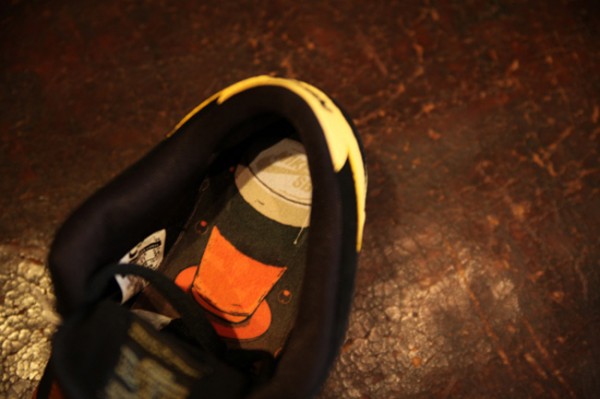
Nike Fails to Do a Google Search; Makes Guinness Shoes

Well, this is embarrassing--the home town shoe company seems to have committed an international gaffe:
The athletic apparel behemoth is releasing a new version of its SB Dunk Low, a popular casual shoe. It is black and tan-colored. And since we're getting close to Saint Paddy's Day, the shoe has a nickname that is apparently beer-inspired - the Black and Tan.

Brian Boyd [of the Irish Times]: "It has certain historical associations. The Black and Tans were a ruthless auxiliary force of the British army before we became independent in the 1920s. They were responsible for wide-scale massacres, butchering of people. You would not - we don't even - for example, in the U.S. you may go into a bar and asked for a drink called a Black and Tan."
The whole thing is wonderful and strange. First off, the idea of doing a beer-inspired athletic shoe is psychedelic. I have to think that the local beer culture seeped into the Nike campus and infected the minds of the shoe designers there. But that's not all: Nike has a version of the shoe with a tie-in to Guinness. It is, predictably, black, brown, and head-colored (what, beige?). The ultimate in cross-marketing, pulling in beer drinkers, sporty types, and holiday celebrants. Throw in March Madness and you've got the superfecta. I'm not sure whether to be proud or embarrassed. (Actually, I think they're pretty righteous sneaks. "Righteous sneaks"--is that what the kids still call them?)

By the way, while I would fault Nike for being boneheaded enough to let this shoe go out without having done a Google search to find out if "black and tan" meant what they thought it meant, I am going to exonerate them on the following point, voiced by that Irish Times reporter:
It's how the Americans view Saint Patrick's Day and view Irish culture and history. And it's the very fact that some people are saying that these are beer-themed sneakers, that the only way to celebrate a national holiday of a country with a very rich culture and a very rich history and literature, et cetera, is to pour massive amounts of alcohol down your body.
Look, Americans are culpable for an almost infinite number of sins of ignorance against other countries. We regularly insult vast swathes of the globe and should be held to account. But we get to celebrate St. Patrick's Day however we wish. St. Patrick's Day is now, as celebrated in America, fully American. Every culture gets mangled when it comes into the American melting pot, but that is our culture--a hodgepodge of reinterpreted traditions from around the world. So no dice on the you're-doing-it-wrong argument.

Tuesday, March 13, 2012

More Synchronicity

Last night, Sally and I shared one of the last bottles of beer I toted back from Europe--Worthington White Shield. Unless you read English blogs, there's little chance you've heard of this beer (though I did write about it once). I love this beer and I've been reluctant to drink it, but I was also determined not to let it go stale--a character flaw of mine.

The occasion was a screening of The Sweeney, a television show you're even less likely to have heard of. Sally and I were turned onto it after watching the English original of Life on Mars. (Which, if you haven't seen it, I can't recommend highly enough. The first season--sorry, series--I would place among the ten best ever made for broadcast.) The character Gene Hunt, one of the indelible figures in television, was modeled on DI Jack Regan. Both are boozing, corrupt, manly figures who seemed to have completely died out by about 1983. In any case, Netflix finally made a few discs available, and it seemed like a nice pairing.

And then, about half-way through the episode, there's a bar fight and the shot flashes on Regan (it's a little convoluted to explain why he's standing in a bathrobe in the middle of a bar fight--but it does give you a sense of the show's flavor) standing in front of ... a Worthington mirror. Amazing.


So anyway, today I'm thinking very deeply about money and later I'm going to go buy a lottery ticket.

Monday, March 12, 2012

On Flavor

It seems like the world operates on a freaky kind of synchronicity such that when I am thinking deeply about a subject, it seems like others are, too. More likely, it's just that I happen to notice when other people are talking about the same things I've been thinking.

Today's synchronicity: flavor. Let us begin with a wonderful book published in December called Neurogastronomy by Gordon Shepherd. Shepherd is neurobiologist at the Yale School of Medicine and an oenophile foodie. This book collects together the scientific thinking to date on the way humans process and construct flavor from what turns out to be a staggering variety of inputs. (Shorter Shepherd: flavor is mostly retronasal smell, humans have evolved, perhaps uniquely to appreciate flavor--we're born foodies--and our sense of flavor is modified by emotional cues, color, hunger, and mood. Our brains are highly evolved to detect and process scent, and it's inaccurate to think of this sense as subservient to sight.)

Every well-read beer geek should have a dozen or so titles in her collection like Tasting Beer, Brewing With Wheat, Amber, Gold and Black, Good Beer Guide to Belgium, and so on. I would place Neurogastronomy on this short list.

On cue, Alan McLeod broaches the topic from another angle, taking the idea of food and beer pairings to task:
One of the main reasons I don't like the idea of matching and pairing is that everything pretty goes with pretty much everything else in the right combination.
This is less a declaration than a paradox: how can everything go with everything else in the right combination? They are interchangeable or they require the right combinations, seems like. But never mind. What's more interesting is the resulting discussion thread, which includes our own Ben Edmunds, and you should go have a look.

Food and beer pairings are my white whale, a topic I intend to pursue maniacally in the coming year. I harbor the idea that it's possible to come up with a system that allows diners to select appropriate beers for their meals. I further harbor the idea that the key has nothing to do with styles and everything to do with flavor elements in beer. Texture, effervescence, attenuation, strength, and taste/scent compounds--somehow these should line up with food flavors. It will never be as simple a prescription as red-wine-with-red-meat (at least a partial fraud, by the way), but it could at least be consistent. Maybe.

Thursday, March 08, 2012

Friday Flick(s): Full Sail and Guinness

Today in Flicking, I offer you two good ones. Both are essentially ads, but extremely well-done. In the first, Full Sail has put together a little promo vid about their barrel-aging process (one I discussed here). It's clearly not an objective documentary, you get a nice sense of the brewery. For fans of Barney's ESB, you also get to see the brewer behind the beer.

(Incidentally, when I was at the brewery, Jamie Emmerson slipped me four beers from their personal stash of aging porters/stouts. A few nights back, we tried the '08 Top Sail and '06 Black Gold--both aged in bourbon barrels. These beers age beautifully. The Top Sail was remarkably fresh--not a trace of oxidation--and the flavors had sharp, clear edges. But the '06 was insane. Again, very little evidence of age except in a melding of elements along with the tiniest hint of vinous tartness. If you're buying these for the cellar, you're in for a future treat.)

The Art & Science of Bourbon Barrel Aged Beer from Full Sail Brewing on Vimeo.


Next up, for St. Paddy's, we have a really funny Guinness ad produced, I assume for the English market. When sketch comedy works, it's surreal and sublime. This works. Also, geezers who remember ads from the '70s will appreciate what appears to be an homage to, or at least unintentional resonance with, those old Rainier ads Gordon Bowker put together.


The Most-Discussed Breweries? You Might Be Surprised

I was trying to track down some information on a brewery a couple days ago, and I could find next to nothing when I consulted the Google. This then reminded me of my post last month about New Belgium, wherein I commented on their social media strategy. And these two things together gave rise to a question: if I search for a brewery name, how many results will I get? The result doesn't give you a perfect snapshot of the amount of discussion happening about a brewery's beer (the amount of time a brewery's been kicking around matters, as does its distribution), but it ain't bad. And the results were fascinating. You've probably already scanned down, but if you haven't, stop to guess: which brewery did best?

Methodology. Brewery names are problematic. Kona, for example, gets you tons of results unrelated to Kona brewing. But putting the brewery name in quote marks "Kona Brewing" is also problematic because names like "Rogue Ales" may well never be used on pages discussing these beers. So to clarify things and make them roughly equivalent, I went with the common brewery name and beer and put them in quote marks under the assumption that any discussion about the brewery would include the word beer. So, "Kona beer," "Rogue beer," and so on.

Without further ado, here are the results for the largest craft breweries. A few comments follow.


That percentage in the far right column are the number of results of the max brewery's total. So Boston Beer has about half Widmer's total, Sierra Nevada a stunning four percent of the Brothers' total. Clearly, the correlation between brewery size and Google results is not great. Breweries like Redhook and Lagunitas could really improve getting their name on websites. And MacTarnahan's? Absolutely pathetic. "Beervana blog" gets you 2,400 results. Beervana blog!

More grist for the internet mill.

Tuesday, March 06, 2012

In Tasting, Advantage Beer

As the science of tasting becomes more well-understood, we must confront certain uncomfortable truths: in particular, we aren't so great at it. In blind taste tests, people perform no better than chance at distinguishing good expensive wine from rotgut. Hell, even experienced tasters can't distinguish whether a wine is red or white. So it's no surprise that a new study confirms that people stink at recognizing subtle flavors:
A new study by researchers at Penn State finds that when it comes to appreciating the subtleties of wine, experts can taste things many of us can't. "What we found is that the fundamental taste ability of an expert is different," says John Hayes of Penn State.
(The good news: scientists think this is mostly a matter of training and experience, not a function of faulty taste buds or olfactory nerves.) That quote is from NPR, who had a piece on the new study this morning. As I was listening to it, I was reminded of what a huge advantage beer has over wine in terms of flavor articulation. The difference between a poor-quality wine and a good wine (let's leave price out of it) are a cluster of very similar qualities. The clarity and balance of a pinot noir grape makes a good wine, but you still have to contend with pinot noir grapes.

In beer, the range is orders of magnitude bigger. Part of the thing that makes people lose confidence in wine (aside from the fact that they're gambling with thirty bucks a pop) is that they fear/know it all tastes pretty much the same. If someone suggests to you that there's some blackberry in the glass, sure, you can swish until you find it. It's difficult to feel like you're just faking it. The whole thing can feel like a game of three card monty. Or a modern art exhibit.

Beer, not so much. For one thing, style variation is tremendous. Is there any product with such an expansive range of flavors? But even within styles, tastes are usually pretty easy to distinguish. Put five IPAs in a blind flight and have people taste them, and they'll be able to tell the difference. In beer, blind tasting is heartening for this reason. Unlike wine, the flavors are different enough that even a rank novice would be able to tell. (And trying to conceal a stout among them--good luck with that.) Not every style is as easy, but I don't think anyone would argue that beer is a lot more obvious than wine.

Plug. By the way, you could buy my Tasting Toolkit if you wish to test this hypothesis. It's educational and fun for the whole family. You could even test wine, too, just to see how much more distinctive beer is.

Monday, March 05, 2012

Ghosts of Breweries Past

The 1948 Jimmy Stewart movie Call Northside 777 was, remarkably, the first ever filmed in Chicago. It was based on a real murder case, and producers thought the verisimilitude of the actual Windy City would lend itself to the documentary feel. They were right. Chicago was a gritty, working-class town emerging from the stockyard past but nowhere near the shiny Sears Tower stage. At one point, Stewart's character, a reporter, has to go into the Polish part of town to find a shadowy figure who has gone into hiding. As he roams the real Chicago streets, ducking into bar after bar, he passes these two signs:
(That's him almost obscured in shadows entering the bar.)


As it turns out, Fox DeLuxe and Kingsbury were both real breweries. Fox was a Grand Rapids, MI brewery that survived for just 11 years, while Kingsbury had a much more illustrious life. Founded in Manitowoc, WI in 1847, it was one of those 700-odd breweries that managed to hang on through Prohibition, lasting until 1963 when Heileman gobbled it up. (The name had a zombie life, like so many other American brands, and apparently there's still a non-alcoholic beer that bears the name. Sad.)

As I watched the names flit by, I felt a dual wave of sadness: first that so many American breweries have vanished (I know, the virtuous churn of capital and all that), but second because, by using LA as a stand-in for all other American cities, we have lost these kinds of records. How many more signs might we have of flickering neon breweries if movies had been filmed in Pittsburgh, Cleveland, and Detroit?

Friday, March 02, 2012

Friday Flick: St. Bernardus (Plus One Events Item)

The Lucky Lab Beer Hall is where big beer fans want to be today and tomorrow for the annual Barleywine Big Beer Festival. Matt Wiater has the full run down.

Apropos of that event, I offer you a brewery-produced virtual tour of the St. Bernardus brewery in Watou, Belgium. It's a bit over-produced, but you get a sense of what a typical traditional brewery looks like. (Elements of it remind me of Rochefort, Dupont, and St. Feuillien.) The brasserie at Westvleteren is one of the most intensely loved by beer geeks, but for my money, St. Bernardus makes beer of equal quality and far greater breadth--and I would probably put Prior 8 in my list of top twenty beers in the world. And hey, it's a good brewery for Lent, too (though not for everyone).