You love the blog, so subscribe to the Beervana Podcast on iTunes or Soundcloud today!

Showing posts with label pilsner. Show all posts

Monday, August 15, 2016

When the Original is the Outlier

Beer styles, like grammar, are at best uneasy agreements about what is considered "typical." English grammar comes with so many asterisks, exceptions, and disclaimers that it seems to have been invented solely to thwart non-native speakers. Beer styles aren't as bad as that, but the curious fact remains that in several cases, the original, classic example of a style is out of step with all the other beers that followed. Schneider's weisse is substantially darker than is considered typical; Dupont is hoppier, more stripped-down (no exotic grains or spices), and more phenolic than most saisons; and Pilsner Urquell is far less attenuated and in possession of far more diacetyl than would be accepted in any other pilsner. Which is why when I came across this "pilsner showdown," I was amused to see poor Urquell coming in 23rd of 24 pilsners sampled:
A reference pilsner entered the showdown, and thankfully wasn’t in a green bottle. We thought it looked great, like a bar of GOLD!! Smelling it, we caught diacytel. While that’s to style when it’s “restrained” we thought it was not restrained at all and it really put us off the beer. Matt successfully nailed it and called the beer, but the off flavors put the whole group off enough to rank it one of the lowest in the showdown.
It even fared more poorly than several lightstruck examples. The indignity!

Diacetyl factory.


Truth is, writers of style guidelines don't know how to handle Urquell. This is the "Bohemian-style pilsener" entry from the 2016 Brewers Association style guidelines, the one used to judge beers at the GABF (bolds mine):
Very low diacetyl and DMS aromas, if perceived, are characteristic of this style and both may accent malt aroma.... Very low levels of diacetyl and DMS flavors, if perceived, are characteristic of this style. 
The folks judging pilsners may well have been looking at these very words while they sampled Urquell, because one thing is for sure: the diacetyl note* in that beer is not "very low." It's huge and aggressive, and because Urquell, a světlý ležák (12° beer), is so under-attenuated--it's just 4.4% ABV--that diacetyl really comes through as sticky and sweet. Budvar, by contrast, is also a 12° beer, but it's 5% ABV. 

Writers of style guidelines have never known what to do with this, because breweries typically don't like their beers to taste of diacetyl. And no one would roll out a beer like Urquell now--it's just too weird and un-pilsnery. Indeed, German pilsners, which form the far more common template for international pale lagers, are specifically prohibited by style guidelines from having diacetyl. In my two trips to the Czech Republic, I managed to sample maybe two dozen pale lagers. I would not therefore forward myself as any kind of authority, but within that sample I rarely encountered diacetyl, and never anything like what you find in Urquell. The Czechs are very deferential to the first pilsner, and my guess is that they don't want to appear to be aping the original.

In conclusion, we should probably write style guidelines that say things like, "if your pilsner is awash in what seems like inappropriately slicky, buttery diacetyl, we'll consider it a fault unless the sample came from Pilsner Urquell." Splitting the baby and saying it's okay in low levels accounts for neither the way diacetyl appears in Pilsner Urquell (where it's massive) nor in most other pilsners (where it's absent). Otherwise you end up in a situation where people are eliminating the original pilsner from pilsner competitions because it's not brewed to style.

___________________
*Diacetyl is slick on the tongue, a bit full, and tastes like butter or butterscotch. It's so buttery, in fact, that it's commonly added to foods to make them taste like butter.

Tuesday, April 26, 2016

What Makes a Good Pilsner?

No, they're not pilsners; I claim poetic license.


After I posted a link to my Sherpa recommendation for Block 15's Gloria! pilsner on Facebook yesterday, Jonathan Aichele added his own link--and promptly sparked 397 furious comments. He directed us to a blind tasting the Oregonian did with Oregon pilsners that resulted in the selection of ... an infected one as Oregon's finest. (Verbatim tasting notes from the "winner": "is this infected?," "good, clean fun," "tart, gose-y," "not very pilsner-y.") This demonstrates that, while style sometimes blinds us to a beer's true nature, ignoring it while comparing beers doesn't make a lot of sense, either. It's like selecting a schnauzer as the best tabby because you don't like cats.

Which leads us to an obvious question: okay, smarty pants, then what is a good pilsner? In anticipation of yet another pilsner-related post for later this week, I'm really glad I asked.

Pilsners Generally
Pilsners are pale lagers that originally came from--spoiler alert--Pilsen (or Plzeň in the Czech), Bohemia. In the United States, we say there are two variants, Bohemian and German, and this is dead wrong. These are actually separate beers. German pilsners have evolved on a separate track from the Czech line and bear Bavarian hallmarks. (German helles is far closer to German pils than the later is to Czech světlý ležák--what we now call Czech pilsner.) Nevertheless, the entire category, as European lagers, do share some similarities that are very distinct from the American tradition, and they're important.

In the United States, we commonly build beer from a foundation of generic two-row pale malt--a "base malt"--so generic its variety isn't even mentioned, and layer on specialty malts for flavor. In both ales and lagers, yeast plays a diminished role. In ales particularly, hops are the diva at the center of the performance, and the other elements are supporting characters. Pilsners, by contrast, sing in harmony, with three actors playing equal roles:
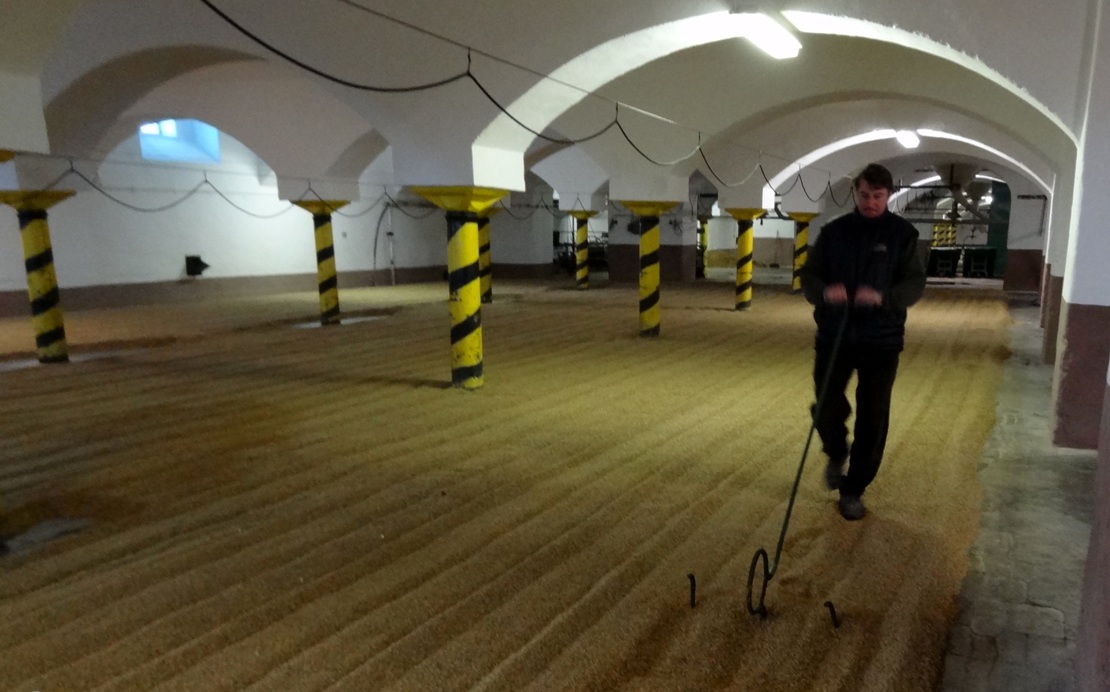
  • Aromatic, flavorful base malts. Pilsners are made with basically one malt, and yet they have  incredible malt character. This comes from the base malts, which are prepared in such a way at the malthouse that they produce distinctive aromas and rich flavors. Dozens of malthouses are scattered across Bavaria, and they prepare the pilsner malts differently, accentuating different characteristics. Some tend toward honey, others grain, others rustic breadiness. In the Czech Republic, the malts may even still be made in traditional floor maltings, and in any case, the strain of barley--as in England--plays a big role. (Many breweries favor either Moravian or Bohemian-grown malts, too.) Again, the Czechs are looking for unique aromas and flavors that come just from these malts. Because no specialty malts are used for flavor, the base malts have to be distinctive.
  • Delicate herbal hops. Continental hops are not uniform, but they do share a kind of delicacy that's critical to a pilsner. Those malts need to shine through, so the hops have to add a dose of flavor and aroma without overwhelming them. European hops aren't so strongly flavored, so even when used to produce high levels of bitterness, they don't overshadow those malts. Ideally, they'll harmonize with malt flavors, too, so that the honey or bread play nice with the black pepper or tarragon coming from the hops. 
  • Clean, crisp yeasts. Lager yeasts don't contribute fermentation characteristics like phenols and esters--they let those malts and hops shine through transparently. What they do add is a smoothness of palate and, particularly, a crisp snap at the finish that makes these among the most moreish of all beers. 
Sladmistr David Mares at the Ferdinand brewery/malthouse.


This tripartite balance point is essential to the style. There are a lot of ways to make great beers, but the thing that makes pilsners work is when all of these elements are expressed simultaneously. It is often said that pilsners are the hardest beers to make because they don't hide anything. I think that's wrong. They're the hardest beers to make because each of these elements is subtle, and when you're trying to make them sing in harmony, the slightest off note is immediately evident. They test a brewer because she must find a way to take three delicate elements and bring them together so that they wow a drinker. When it works, it looks like magic.

Regional Differences
A quick word on why German and Czech pilsners are not really the same style. It is true that in 1842 and for decades thereafter Bavarians were the ones leading the lager renaissance in Bohemia (Josef Groll, who brewed the first pilsner, was Bavarian). But that was a long time ago. Two world wars and a cold war interceded, and the two countries spent the 20th century brewing separately. Germany's tradition followed technology, while the Czech tradition, for long decades imprisoned behind an iron wall, languished. Qualitatively, this means German lagers are more refined and polished. They're often thinner of mouthfeel and drier. Czech lagers are more assertive and fuller. There are reasons for this.
  • Decoction mashing. This old German technique is mandated by law for any beer that wants to be called "Czech beer." Many Bavarian breweries still do it, too, especially in the countryside, but it's getting less common. Decoction mashing is used (now) to create melanoidins that help build richness. Think less of the process,though, and more of the result--that richness. This isn't a priority in German pilsners, but it is in good Czech ones.
  • Hopping rates. In the US, basically the only distinction we acknowledge between Czech and German pilsners is that the former uses Saaz hops. They're basically the marker for Americans. And important they are! But there's also an issue of intensity. That richness that builds up with the malts can withstand a bit more bitterness, and Czechs take advantage. In neither tradition does late- or aroma-hopping play much of a role, but the Czechs do something interesting to create a "softness" to their hopping...
  • First wort hopping. This is a technique where you put the hops into the kettle while the beer is coming in from the lauter tun and being raised to a boil. It is said to create a delicacy, a softness to the bittering that helps keep all the elements in balance, even with stiff bitterness. I suppose there are breweries in the Czech Republic that don't do this, but I didn't encounter them. Conversely, I've never heard of a German using the technique. (Which doesn't mean none do, but.)
  • Other oddities. Some Czechs do other funny things from time to time, too, like using open fermentation, using long boils, and conducting extra-long lagering. These things can probably be found in farmhouse breweries and rustic village breweries in Bavaria, but that's the thing--they're rustic. In the Czech Republic, breweries like Budvar still do weird things like lager their beer for three months. It's considered normal.
We don't get many Czech pilsners in the US and the ones we do--Budvar and Urquell--are regarded as slight oddballs in the Czech Republic. So you may have to take my word on this one. Side by side, the differences between a Czech and German pilsner are anything by incidental.

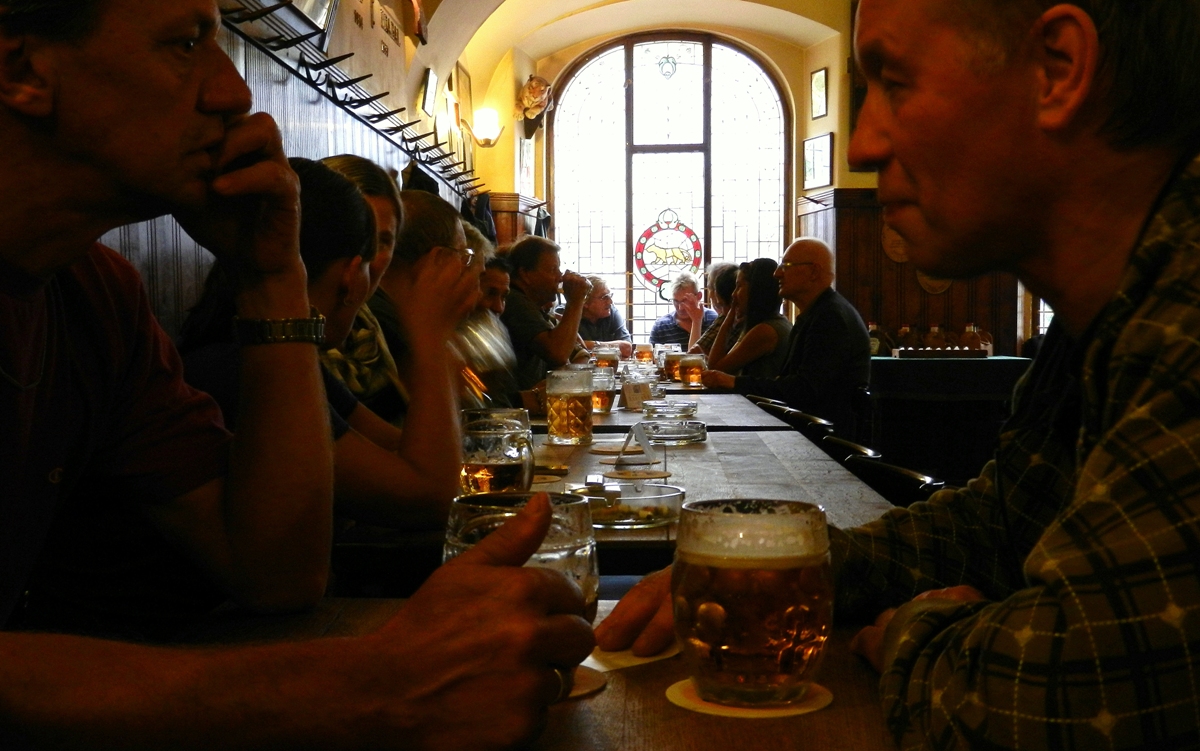
These are pilsners--or rather, světlý ležáks.

Saturday, July 12, 2008

The Livin' is Easy (Schwelmer Pils)

I went to a mid-July barbecue after work last night, that most languid and familiar celebration of the heat and length of days. People had brought an equally familiar range of beers along: Deschutes Mirror Pond, Full Sail Session, Sierra Nevada Pale. There were even a few Private Reserves floating around. These are all good beers (even the Hanks, in which the sweet flavor of nostalgia overwhelms the more insipid qualities of the lager), and compared to what you'd have found a generation ago on back porches, we certainly have nothing to complain about.

This is not a climate of extreme heat, though, and even our mildest beers are cloaked in the malt and hops that will satisfy on cloudy 60 degree June days. As a result, we have failed to exploit one brewing niche that brewers some hot regions offer--the German-style pilsner.

The original Bohemian (Czech) pilsners are fairly serious beer--and one of my favorite styles. They generally weigh in at just 5%, but they have fairly high residual sugars, giving the beer body and heft. And then of course, there are the famous spicy Saaz hops, generally as sharp as we like them here on the West Coast. An amazing style, but like our summer beers, they are not ideal for a back yard session.

German pilsners differ in that they are drier and slightly less hoppy. They are no less strong, but lack the body of the Czech cousins and so seem lighter. The hopping is generally milder, too--definitely strong enough to delight the tongue but, like our pale ales, not aggressively bitter.

A summer beer needs to be no less flavorful than any other beer, it just needs to be light and refreshing. But so often, to get the "light," breweries offer a watery, uninteresting beer. It's fine on a hot day, and maybe even preferable to something heavier and tastier, but it's not ideal.

I recently tried a Schwelmer Pils, and in it found exactly the beer I wish was readily available in sixers here. It would have been perfect last night. It is light, but wonderful rich with flavor and aroma. The nose is floral almost to the point of being perfumy; I even detect a note of honey, which enhances the overall summery vibe. The malt is perfectly clean (it's a German beer, after all), but there is just the smallest touch of biscuity, honeyish sweetness. The hops are not strong but varied, with herbal notes, peppery spice, and that floral quality evident in the noes. It is crisp and dry at the finish, which is where the beer earns its hot-weather stripes. Heavier beers end with a fuller note--sometimes resinous, if they're hoppy--and this does not cool and refresh.

We have grown accustomed to thinking of light pilsners as a compromise, a product of marketing rather than brewing. But it doesn't have to be this way. Make a beer like Schwelmer Pils, and barbecuers will beat a path to your door.

Wednesday, July 19, 2006

Deschutes Anniversary Pils and Elysian Jasmine IPA

Pardon me for grouping, but I've got a pile of reviews cluttering my inbox, so here's a twofer on a couple of second-tier beers from first-tier breweries.


Anniversary Pilsner - Deschutes
Deschutes celebrates its 18th with a summer special in their Bond Street series. You may know this beer under its previous (and future?) name--Pine Mountain Pils. It took gold in last year's GABF in the European-style pilsner category, sort of the European Bud category--but with predictably more character (akin to Bitburger, for example).

Deschutes' version certainly looks the part. It is certainly one of the palest beers I've poured out of a bottle of Oregon craft brew--misleadingly of an industrial lager hue. As with an industrial lager, it has a nice head and effervescence. Actually, if you don't have the same visceral reaction I do to extremely pale lagers, it's quite attractive.

But somewhere in the transparent depths resides a true Northwest beer--hoppy, hoppier, hoppiest. It's a pilsner for beer drinkers who like IPAs and wish they had a tin-can beer they could tolerate. It is in fact a mildly-alcoholic beer, but it packs a lot of spicy Saaz bitterness. I'm shocked it won anything at the GABF--it's the kind of beer the folks in Colorado usually scorn with a dismissive "way out of balance." It is, and that's good.

(And thanks to Stumptown Girl, who offered the beer as a housewarming gift.)

Stats
Hops: "mostly" Saaz; malt: 100% pilsner malt.

Rating: good.


Jasmine IPA - Elysian
A lesser brewery, experimenting with dried jasmine petals, might simply dump them into a regular beer. Not Elysian, which leaves Immortal IPA alone and creates a wholly new recipe for its Jasmine variety. That's a good start, because Immortal's a bit rugged for the delicate essence of jasmine. But perhaps even the toned down recipe Elysian uses here is too brawny.

It's a straightforward-looking beer--a typical golden with a relatively quickly-dissipating head of fluffy white. The nose is floral, as you would predict, but rather mildly so. It's readily detectable (someone would identify it who didn't know it was the Jasmine IPA), but it's mild enough that it comes across as generically floral.

The flavors are even subtler. Malt notes come forward and, appropriately, hops take a backseat so as not to overwhelm the delicate floral essence. Still, the jasmine merely accentuates the malt, commingling in the palate, to seem like a flavor by-product of malts. A nice beer, but something of a novelty. I would love to see how jasmine would compliment a lighter beer, likesay a kolsh or helles bock.

Stats
Hops: Chinook, finished with Glacier and Amarillo; Malt: English Pale, German Munich, plus small amounts of German Carahell and English Crystal; Original Gravity: 1.062; Alcohol: 5.6% abv; Other: jasmine flowers added to the boil and hopback.

Rating: average.

Sunday, June 11, 2006

The Beers of Summer - Pilsner Urquell

Among beer afficianados, no story is more familiar than pilsner's (except in Oregon, possibly, where IPAs are king): in 1842, a newly-founded brewery in Plzen, Bohemia shattered convention by introducing a clarion gold beer. Until its release, all beers had been dark and murky, suitable for serving in ceramic steins. The new, straw-colored beer captured the imagination of beer drinkers with its bright clarit, spread across the globe like a virus, and now is produced in nearly every country on the planet. It is one of the most popular products in world history, and certainly the most popular beer. That newly-founded brewery was Pilsner Urquell--literally "the original beer from Pilsen."

Due to their ubiquity, pilsners have some backsliding in quality. Beers like Singha, Kingfisher, Panama, and Pabst may be interesting national variants, but they don't really match the original, which is one of the few pilsners still widely available across the world--and rightly so. It's also a very nice beer to crack on a sunny afternoon.

Tasting notes
Pilsners are remarkably fragile. They are sensitive to light, heat, and age, and by the time any of their golden essence arrives in America--worse, Oregon, way over on the west coast--they have inevitably degraded somewhat. I have heard tales--uttered in uniformly hushed tones--of freshly-racked kegs taken from the brewery to waiting planes and airlifted (chilled, of course) directly to waiting Americans. The beer described in these stories apparently cures disease, reverses aging, bestows enlightenment. (Variants of the story, in which pilgrims tell of fresh beer pulled from taps in the Czech Republic, are equally as glowing.)

I can't speak to that beverage--I have only tasted the beers available to American mortals, which is absurdly shipped in a green bottle, an aid the forces of degradation. Still, when handled gently, it is nevertheless an extraordinary beer. As beautiful today as in 1842, it bursts with the pepper of Saaz hops and Bohemian yeast--an aroma unique in the beer world, and one of the most familiar.

The palate is simultaneously soft and dry, effervescent and--in a surprise to people who think Budweiser is a pilsner--intensely hoppy. The beer is triple-decocted, which may be one reason it's so gentle (though the decoction debate is an ancient and hotly-contested one).

In much the way that alder-smoked beer remind people of salmon, Saaz hops give pilsners their "pilsner" flavor--that earthy, spicy, peppery quality that typifies the style. Pilsner Urquell is the most aggressively hoppy of any exported Czech pilsner, and if you're looking for a study in the hop style, go no further. Plzen water is reported to be very soft, but I detect a slight quality of mineral in the beer--perhaps from the effervescent carbonation. A wonderful beer.

(Finally, a note on the "skunky" flavor. When light hits the iso-alpha acids from hops, the acids undergo a chemical change that give beer a skunky flavor. Darker bottles protect beer somewhat, but green or clear bottles offer almost no protection--and Pilsner Urquell comes in a green bottle. The lighter and hoppier the beer, the more susceptible it is to becoming light struck, and at least half the bottles of Pilsner Urquell I've purchased from grocery stores have been so fouled. And even the flourescence of the beer case is enough to turn the beer. So, if you do buy it from a beer case, dig around in the back of the case where its shadowy and hope for the best--that's improved my odds. And let it be known that that skunky flavor is not "European" or characteristic of pilsners. It's bad.)

Stats
Hops:Saaz
Malts: Two-row Bohemian and Moravian (proprietary strains)
Alcohol By Volume:4.4%
Original Gravity: 1.048, 12 degrees Plato
BUs: 40

Rating
Oh, come on.