Some of you may have been readers of Jeff Bell's blog (aka "Stonch"). He was sort of a gonzo blogger back in the day--but then he bought a pub in London and the writing became less gonzo-y. Well, now he's shutting it down altogether. It was a nice run, Jeff.
Along inverse lines, Ezra Johnson-Greenough (aka "Samurai Artist") has taken his various beer-related work (Belmont Station, label art, Upright) and focused it on a new blog: The New School. Coming out of the gates hard with an interview with Brian Maher of Mt. Tabor Brewing. (Fun fact: their flagship pale will be brewed with a native Chinese hop. Fascinating.)
Welcome, Ezra, to the international brotherhood of beer bloggers, Portland local 503. May you flourish and battle your nemesis entertainingly.
Update. In comments, regular commenter Jason notes that he has also joined the brotherhood. I will (eventually) update the blogroll accordingly.

Monday, January 04, 2010


About Blogads
If you look to the left column, you will see a small gray box that says "advertise on this blog." Look down the page and you'll see that Google Ads are gone. I'm trying something new: Blogads. In order to recoup some of my time on this blog, advertising seems like a decent way to go (and Adsense isn't getting it done). Moreover, in about two weeks, the federal grant that has paid my salary for the past five years comes to an end and I join the ranks of the unemployed--and I have to figure a way to avoid resorting to Pabst.
Note to Readers
Like Google's Adsense, Blogads have an important virtue. I won't be selling the space--anyone can go buy a week, and I won't know until it appears. I won't be selling ads and I won't be doing any kind of quid pro quo. You might see a Budweiser ad, for all I know. (I do have the option of rejecting an ad I find inappropriate or offensive.) On the politics side of things, I know that Blogads are often sold to people advertising for the opposite team, so for example, you might see an ad for Sarah Palin's book on a liberal site. This often enrages the readers, but it's actually a very good thing. By removing myself from the ad side, I maintain the same relationship to breweries I've always had. The advertisers (should there be any--and I hope there are!) will be Blogad's clients, not mine.
Note to Potential Advertisers
I do hope you consider advertising on the site. My traffic's not amazing, but I do have a perfectly-targeted audience of beer geeks. Trying to raise your brewery's profile, promoting new releases or events--this is a good site to find eyes interested in that info. I have no idea what a competitive price is, so I'm starting it out at $15 a week, which doesn't seem bad. The price of three pints (or a couple six-packs) is all it will set you back.
That is all.
Blogads. In order to recoup some of my time on this blog, advertising seems like a decent way to go (and Adsense isn't getting it done). Moreover, in about two weeks, the federal grant that has paid my salary for the past five years comes to an end and I join the ranks of the unemployed--and I have to figure a way to avoid resorting to Pabst.Note to Readers
Like Google's Adsense, Blogads have an important virtue. I won't be selling the space--anyone can go buy a week, and I won't know until it appears. I won't be selling ads and I won't be doing any kind of quid pro quo. You might see a Budweiser ad, for all I know. (I do have the option of rejecting an ad I find inappropriate or offensive.) On the politics side of things, I know that Blogads are often sold to people advertising for the opposite team, so for example, you might see an ad for Sarah Palin's book on a liberal site. This often enrages the readers, but it's actually a very good thing. By removing myself from the ad side, I maintain the same relationship to breweries I've always had. The advertisers (should there be any--and I hope there are!) will be Blogad's clients, not mine.
Note to Potential Advertisers
I do hope you consider advertising on the site. My traffic's not amazing, but I do have a perfectly-targeted audience of beer geeks. Trying to raise your brewery's profile, promoting new releases or events--this is a good site to find eyes interested in that info. I have no idea what a competitive price is, so I'm starting it out at $15 a week, which doesn't seem bad. The price of three pints (or a couple six-packs) is all it will set you back.
That is all.
Sunday, January 03, 2010
Something Different
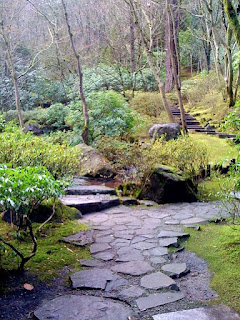
Feeling cooped up after a long period of indoor socializing, we went to the Japanese Garden yesterday. Wonderful.

Saturday, January 02, 2010
Blogger Down
More out than down, actually. Expect little activity through the weekend. Not a lot to blog about, and I also need a brief period of battery-recharge. See you Monday.
Wednesday, December 30, 2009
Grandaddy Ale for the New Year
This is cool. I should try to score some before the Ducks thump the Buckeyes.
Rogue just tweeted that it's on tap now ... but only in Oregon.
In honor of the University of Oregon Ducks going to the Rose Bowl, Nate Sampson, our Head Brewer here at Eugene City Brewery has brewed a beer with 2 lbs of red rose petals.Craig Nicholls used to brew a beer called Spring Rose Doppelbock for that period around Rose Festival. I believe I would prefer a doppel to a lightly-hopped golden, but hey, I need a time travel machine to get a rose doppel, and the car will get me to Rogue's rose.
Since the Rose Bowl is referred to as the “Granddaddy of Them All,” we’ve named this one-time beer Granddaddy Ale. It’s a lightly-hopped golden ale with a floral aroma provided by the 2 lbs. of red rose petals that are added to the brew at the end of the boil.
Only 11 kegs of Granddaddy Ale were brewed and they will debut on tap at Eugene City Brewery, Green Dragon and Rogue embassies in Newport, Portland and Astoria starting December 28th.
Rogue just tweeted that it's on tap now ... but only in Oregon.
The Year in Beer
I understand why the year 2000 had such a pull on us and why, despite the math, we decided to celebrate the new millennium then. But I refuse to submit to the tyranny of the the masses and do a review of the decade in beer until next year--when it properly ends. However, it does appear we've come near the end of 2009, so here's a few observations.
The Crisis That Wasn't
Back at the start of the year, it looked like a sure bet that breweries and pubs were going to be in big trouble. I even ran a couple of polls (here and here) to see how purchasing habits were changing with the intention of tracking the trend by quarters. But at mid-year, the numbers started coming out and surprise of surprises--the industry was still growing. I don't doubt that some breweries--and definitely some pubs--saw business decline. But the category five hurricane turned out to be just a little rain.
Saison Season
Every year there's a mini-boom (a boomlet?, a pop?) in some style. Last year it was Belgian golden ales. This year, saisons. Locally, we had Upright doing a wave of them, plus a couple nice examples by Full Sail and Standing Stone. I saw lots of national versions too, from The Bruery's to Boulevard and Goose Island.
The Gose revival was constrained to just two breweries, but let's hope that's a preview of coming attractions.
Barrel Madness
It hardly bears mentioning the trend in barreling beers, save to note that it now looks like a standard practice, not a trend. I haven't run any numbers, but surely well over half the bottling breweries and a large percentage of brewpubs have barrel-aging programs underway (at least locally). One nice element of this trend is that it's expanding beyond bourbon barrels. In the last year, wine barrels were on the move, as were previously unused barrels (what do you call those, "fresh?"). Bourbon adds a wonderful note to some beers, but by no means all. Yet barreling a beer can add wonderful character, whether or not you're trying to leach residual alcohol into the beer.
Looking Forward
I mentioned in my Satori Award post that 2009 was in some ways a year of rest for the industry. A wise year of rest, given the uncertainty. But given beer's surprising resilience this year, I see signs of enthusiasm about new projects going forward. Right off the bat, we have something on the order of 8-10 breweries scheduled to open in 2010. One of them is focusing on gluten-free beers, evidence of some of the potential micro-markets within craft brewing. Look for a rock and roll year.
Finally, I'll leave you all with a prediction, one that is more advocacy than actual prophesy: 2010 will be the year of small beer. We've done big beer, we've done hoppy beer, we've done sour beer. Of all the extremes left to explore, small beer may be the final frontier. Let it be so!
Tuesday, December 29, 2009
People's Choice Winner (*)
Over the holiday weekend, I ran my annual people's choice award, somehow oblivious to the fact that we live in a fully Facebook age. (And Twitter.) Last year, no breweries were able to funnel their fans to my site, and so it pretty accurately reflected the views of my regular readers. Because I sprang it over Christmas, that almost happened again. Almost!
As it turns out, both Upright and Ninkasi got announcements out before last night's deadline. As a result, Spring Reign squeaked out a win. What's interesting to me is that before Ninkasi discovered the poll, they were getting absolutely killed. Before Upright rang in, I had about 200 votes. Deschutes Fresh Hopped Mirror Pond was out in front, followed by Widmer Drifter and Upright (which had tied itself for third place). In the end, Deschutes only finished five votes out of the lead. So, while this poll was never scientific, I think it's safe to say that without lobbying, it would have been the clear fave. Still, we can't reward counterfactuals, so Ninkasi Spring Reign takes the gold cup.
A few interesting lessons did emerge. First, if Deschutes was thinking of not repeating the fresh hopped Mirror Pond experiment in 2010, I'd like to to offer this poll as an argument for its popularity. I was nonplussed by it, but clearly, a lot of you were mighty impressed. Similar note to Hair of the Dog regarding Michael. Despite a very, very limited run, it managed to get a solid 20 votes. Finally, my choice, Upright Four, got a respectable 24 votes. Twenty three of you out there are pretty smart! :-)
Lesson two is that the bigs are doing a good job making beers that appeal to the serious beer geeks. Widmer Drifter got an unaided 40 votes. Mac's Grifter got 18 votes as did Session Black. Given that these beers were pitched at a broader market, I'd say they hit the mark.
Lesson three? Somehow I'll have to figure out how to foil brewery promotion if I do this again. Meantime, congrats Ninkasi--they loves you.
Monday, December 28, 2009
Satori Award 2009: Upright Four
The Satori Award
In Zen Buddhism, satori is the moment of sudden enlightenment when the mind realizes its own true nature. The Satori Award, now in its fourth year, honors the beer that in a single instant allows the drinker to realize brewing magnificence. It is that moment when the sheer force of tastiness produces a flash of insight into the nature of beer. I award it for the beer released in the previous year (roughly) by an Oregon brewery (roughly) for a regular or seasonal beer. The inaugural winner was Ninkasi Believer followed by Full Sail Lupulin in 2007 and Cascade Apricot Ale in 2008.
In the past few years Oregon witnessed a furious storm of novelty--new lines, new styles, new releases, and new breweries. Correspondingly, my job in trying to select a single winner has been agonizing. Last year I had the horrible task of choosing among Cascade's Apricot Ale, Deschutes' Dissident, and Double Mountain's Kriek (amazing, if little tasted).
Fortunately, it seemed like the industry stopped to catch its breath a little in 2009. The number of things new was almost manageable. And although there were again a number of impressive new beers (list here) this year, the decision was relatively easy. The debut of Upright Brewing was made with such confidence and brio that I have known since May its beers were the one to beat. So while there were some very good beers this year, none were as fascinating or important as those brewed by Alex Ganum.
It is rare that breweries enter the market with fully conceived visions. Generally they aim for good beer and worry about their brewing vision later. Not Upright. Nearly a year before it opened, Alex already knew what he intended to brew:
For decades, you have been able to find more good beer in Portland than other cities (local and otherwise), and for the past few years you could find some of the best and most innovative food, too. But in an agonizing missed opportunity, mostly these two never got together at the restaurant table. If this changes--and there are finally some indications that it might--Upright will be part of the reason. With a range of styles that seem designed to complement different courses, Upright may finally help muscle pinots out of the way.
The Satori Award, however, is given for a single beer, not a brewery, and my favorite of the regular Upright offerings is the estimable Four, a modestly-strengthed tart ale that blew me away when I first tried it at Cheers to Belgian Beers. Here's what I wrote about Four in May:
Congratulations to Alex and all the folks at Upright.
In Zen Buddhism, satori is the moment of sudden enlightenment when the mind realizes its own true nature. The Satori Award, now in its fourth year, honors the beer that in a single instant allows the drinker to realize brewing magnificence. It is that moment when the sheer force of tastiness produces a flash of insight into the nature of beer. I award it for the beer released in the previous year (roughly) by an Oregon brewery (roughly) for a regular or seasonal beer. The inaugural winner was Ninkasi Believer followed by Full Sail Lupulin in 2007 and Cascade Apricot Ale in 2008.
_______
In the past few years Oregon witnessed a furious storm of novelty--new lines, new styles, new releases, and new breweries. Correspondingly, my job in trying to select a single winner has been agonizing. Last year I had the horrible task of choosing among Cascade's Apricot Ale, Deschutes' Dissident, and Double Mountain's Kriek (amazing, if little tasted).
Fortunately, it seemed like the industry stopped to catch its breath a little in 2009. The number of things new was almost manageable. And although there were again a number of impressive new beers (list here) this year, the decision was relatively easy. The debut of Upright Brewing was made with such confidence and brio that I have known since May its beers were the one to beat. So while there were some very good beers this year, none were as fascinating or important as those brewed by Alex Ganum.
It is rare that breweries enter the market with fully conceived visions. Generally they aim for good beer and worry about their brewing vision later. Not Upright. Nearly a year before it opened, Alex already knew what he intended to brew:
Imagine combining the spirit and methods of rustic French and Belgian style farmhouse brewing with the positive energy and downright beautiful ingredients the Pacific Northwest offers us. These are beers inspired by historical records and the dedicated few who have kept traditions alive, drawing from our city and region for resources and raw materials. In addition to the year-round brands expect to see several unusual special releases including barrel-aged beers, sour beers, fruit beers, smoked beers, and many other distinct brews.It is a testament to this vision that, with the brewery now open only since May, it has already become a fixture in Portland's landscape. We think of Portland as a town in love with hoppy beer, but this is only part of the picture. For a long time breweries have been shifting palates toward Brussels, and with his open fermenters, French saison yeast, and locavore mentality, Ganum has thrust Upright into the center of the this movement (full brewery review here).
For decades, you have been able to find more good beer in Portland than other cities (local and otherwise), and for the past few years you could find some of the best and most innovative food, too. But in an agonizing missed opportunity, mostly these two never got together at the restaurant table. If this changes--and there are finally some indications that it might--Upright will be part of the reason. With a range of styles that seem designed to complement different courses, Upright may finally help muscle pinots out of the way.
The Satori Award, however, is given for a single beer, not a brewery, and my favorite of the regular Upright offerings is the estimable Four, a modestly-strengthed tart ale that blew me away when I first tried it at Cheers to Belgian Beers. Here's what I wrote about Four in May:
A cloudy wheat beer (50% of the grist) Four is made with a sour mash, which gives it a lip-smacking tartness. I'd put this halfway between a weissebier and a Berliner weisse. It lacks the banana/clove quality of a weisse, but isn't as sharp as a Berliner. Rather, it's cleanly tart and acidic and very quaffable. The wheat is evident, as are the Hallertauers. It's a very classic-tasting, accomplished beer. We didn't have any cheese or a salad to pair with Four, but I bet they would have gone wonderfully together.Four is a truly original beer, though its lineage is long. I suspect that a time-traveler could take this beer to Southern Belgium in the 1880s and, with its wheat and lactic zing, it would be recognizable to the locals who loved tart, rustic beers. Nothing like it is regularly available in Oregon, and it is a great addition to our slate of regular beers. I'm pleased to call it my Satori Award winner for 2009--and I hope it will continue to be brewed here for a good, long time.
Congratulations to Alex and all the folks at Upright.
Saturday, December 26, 2009
People's Choice Poll
As we start winding back up post-Christmas (hope everyone had a great time), I leave you with the people's choice award, which I'll close down at the end of the weekend. Cheers--
Friday, December 25, 2009
Thursday, December 24, 2009
Three Fine Beers
So for this Christmas eve, I offer you shorty reviews of three nice beers I've recently tried. All recommended as appropriate partners for your roast beast on Christmas day.
MacTarnahan's Goose Bump
"Wow. That's a little over the top for me."
Sally got to her half of our 22-ounce Goose Bump before I did, and when she offered her first reaction, I considered it a very good sign. When was the last time you heard someone describe a Mac's as "over the top?"
Goose Bump is an imperal stout saturated with a mighty infusion of coffee. When I saw brewer Vasilios Gletsos at the Holiday Ale Fest, he mentioned that it had been made with cold-brewed Stumptown coffee. The idea there is to extract the purer, tastier essences of the coffee been, leaving behind some of the harsher, more bitter compounds. Still, use enough coffee, and you get a mouthful of java, and that's apparently what Mac's did. This is absolutely not a beer for those who don't like coffee. Even for those who do, it's pretty aggressive. The most impressive element of this beer is its mousse-like structure, an amazing creaminess in the mouth. The beer employs oats to this end, but I wonder if the coffee didn't add something, too. A beer that won't be for everyone, which is a great credit to the brewery. For those who do like it, they'll really like it. I'll go a B+ on the ratings scale, partly just because the coffee flavor is so intense it will eliminate a fair number of drinkers from the picture. (Bonus: video of Vasilios talking about Goose Bump.)
Hopworks Kronan the Barbarian and Abominable Winter Ale
I finally made it down to Hopworks for a pour of Kronan the Barbarian, a Baltic Porter. This no-longer-so-obscure style is one of my faves, and I hadn't had a chance to try Kronan at the Holiday Ale Fest. It's a pretty nice version, too. A burly beer with lots roastiness and all the flavor you want out of a Baltic. If I were to ding the beer, it would be on the grounds that it's pretty ale-y. The Baltics I've tried distinguish themselves from porters and stouts by a smooth lager character. Some are so bitter they tend toward sourness, and there's little in the way of ale fruitiness to rescue the beer from this tendency. In a blind tasting, I'm not sure I would have identified this as a Baltic. A very tasty beer on its own merits, however, leaving aside style considerations. Also a B+.
The Abominable, though, was the real winner. Put it squarely in the Fa La La La La camp of exquisite extreme hopping. From the first whiff (evident at 12 inches) to the first sip, this thing is all hops. I scoured the intertubes, but found no mention of the varieties of hops used (Hopworks is in danger of joining Roots for most out-of-date website)--a pity, because I'd like to know how they achieved the almost lemon-intense citrus tang. For a beer of this heft, the hops are remarkably clean and articulated. Not for nothing, but it's also a damn pretty beer, too. Maybe the best beer I've ever had from Hopworks. I'll go an A- here, though that's a little Grinchly of me. If it's this good next year, Abominable will earn top marks.
MacTarnahan's Goose Bump
"Wow. That's a little over the top for me."
Sally got to her half of our 22-ounce Goose Bump before I did, and when she offered her first reaction, I considered it a very good sign. When was the last time you heard someone describe a Mac's as "over the top?"
Goose Bump is an imperal stout saturated with a mighty infusion of coffee. When I saw brewer Vasilios Gletsos at the Holiday Ale Fest, he mentioned that it had been made with cold-brewed Stumptown coffee. The idea there is to extract the purer, tastier essences of the coffee been, leaving behind some of the harsher, more bitter compounds. Still, use enough coffee, and you get a mouthful of java, and that's apparently what Mac's did. This is absolutely not a beer for those who don't like coffee. Even for those who do, it's pretty aggressive. The most impressive element of this beer is its mousse-like structure, an amazing creaminess in the mouth. The beer employs oats to this end, but I wonder if the coffee didn't add something, too. A beer that won't be for everyone, which is a great credit to the brewery. For those who do like it, they'll really like it. I'll go a B+ on the ratings scale, partly just because the coffee flavor is so intense it will eliminate a fair number of drinkers from the picture. (Bonus: video of Vasilios talking about Goose Bump.)
Hopworks Kronan the Barbarian and Abominable Winter Ale
I finally made it down to Hopworks for a pour of Kronan the Barbarian, a Baltic Porter. This no-longer-so-obscure style is one of my faves, and I hadn't had a chance to try Kronan at the Holiday Ale Fest. It's a pretty nice version, too. A burly beer with lots roastiness and all the flavor you want out of a Baltic. If I were to ding the beer, it would be on the grounds that it's pretty ale-y. The Baltics I've tried distinguish themselves from porters and stouts by a smooth lager character. Some are so bitter they tend toward sourness, and there's little in the way of ale fruitiness to rescue the beer from this tendency. In a blind tasting, I'm not sure I would have identified this as a Baltic. A very tasty beer on its own merits, however, leaving aside style considerations. Also a B+.
The Abominable, though, was the real winner.
 Put it squarely in the Fa La La La La camp of exquisite extreme hopping. From the first whiff (evident at 12 inches) to the first sip, this thing is all hops. I scoured the intertubes, but found no mention of the varieties of hops used (Hopworks is in danger of joining Roots for most out-of-date website)--a pity, because I'd like to know how they achieved the almost lemon-intense citrus tang. For a beer of this heft, the hops are remarkably clean and articulated. Not for nothing, but it's also a damn pretty beer, too. Maybe the best beer I've ever had from Hopworks. I'll go an A- here, though that's a little Grinchly of me. If it's this good next year, Abominable will earn top marks.
Wednesday, December 23, 2009
People's Choice Poll
Okay, folks, here's the people's choice poll. Same criteria as for the Satori Award--an Oregon beer released in 2009 that will be a regular or regular seasonal beer. Also, note that for Upright, I selected the two most widely-available beers, Four and Five. I know some of you will like some of their other beers better, but it seems unfair to penalize a debut brewery by splitting the vote among several beers. My sense is that Four and Five have the biggest followings, so I hope this is a good compromise.
Happy voting--
Happy voting--
Tuesday, December 22, 2009
Defining "World Class" Beers
This is the time of year when we think of superlatives, chained as we are in uncreative servitude to the theoretical finality of the calendar. (No one thinks of top ten lists in June.) Okay, fair enough. Sunday is the time we think of God. In some ways, it's easier to think of things when we're all thinking of them together. In this vein, I like Stan Hieronymus' methodical consideration of what constitutes a "world class" beer, taking his cue from Michael Jackson. (To follow the thread, start with this post, then read this one and this one.)
Stan's concern is epistemological: is the term even valid--can we know what it means to be world class; what are the qualities that describe world class; which beer can legitimately be described as world class. To this end, he quotes Jackson's definition:
My interest is slightly different, but related to this. I wonder about the mobility of world classics--how does a beer move on or off the list? One of Jackson's world classics is Anchor Steam. My guess is that this is a bit of bone-throwing. America had become a real hotbed of brewing, but he wasn't about to displace Paulaner Salvator, say, with a new-world doppel. So he gave us the signature example of an indigenous style.
Generally speaking, that's a good way to go. Let a beer wear for a while, see what the brewery does with it. If, after two or three decades, it remains one of the regular islands in an archipelego of regularly-changing examples of the style, that's worth a lot. Yet I wonder, is it possible for the gears of history to turn enough--however slowly--so that an immigrant brewery, the decendant of a venerable classic, may one day supplant the old country's hold on the style? Is it possible for a New Jersey pilsner to take the mantle from Pilsner Urquell? (We know how that old-world standard has declined.) This is not a question for judges, of course. These designations are much more anthropological. We commend classic status by slow cultural agreement.
Guinness is definitely not the tastiest draft Irish stout, but it is of course the world classic. A New Jersey pilsner? Maybe. I'm not holding my breath.
Stan's concern is epistemological: is the term even valid--can we know what it means to be world class; what are the qualities that describe world class; which beer can legitimately be described as world class. To this end, he quotes Jackson's definition:
“. . . no one can deny that a Premier Cru Bourdeaux is likely to have more complexity and distinction than a jug wine (Or, in the British phrase, “plonk”). A beer rated ***** [five stars] is a world classic either because it has outstanding complexity and distinction or because it is the definitive example of the style, and no matter whether everyone is capable of appreciating it; some people probably don’t like first-growth Bordeaux, either.”In these formulations, there's some benefit to chronology. So long as a beer has stood as the exemplar of style long enough, it doesn't actually have to win every single blind-tasting competition. Never mind how good Allagash's lambics become, they will not displace Cantillon's as the exemplar of style any time soon. We credit history.
My interest is slightly different, but related to this. I wonder about the mobility of world classics--how does a beer move on or off the list? One of Jackson's world classics is Anchor Steam. My guess is that this is a bit of bone-throwing. America had become a real hotbed of brewing, but he wasn't about to displace Paulaner Salvator, say, with a new-world doppel. So he gave us the signature example of an indigenous style.
Generally speaking, that's a good way to go. Let a beer wear for a while, see what the brewery does with it. If, after two or three decades, it remains one of the regular islands in an archipelego of regularly-changing examples of the style, that's worth a lot. Yet I wonder, is it possible for the gears of history to turn enough--however slowly--so that an immigrant brewery, the decendant of a venerable classic, may one day supplant the old country's hold on the style? Is it possible for a New Jersey pilsner to take the mantle from Pilsner Urquell? (We know how that old-world standard has declined.) This is not a question for judges, of course. These designations are much more anthropological. We commend classic status by slow cultural agreement.
Guinness is definitely not the tastiest draft Irish stout, but it is of course the world classic. A New Jersey pilsner? Maybe. I'm not holding my breath.
Monday, December 21, 2009
News: Gosefest 2009 and Q4 Beer Price Index Numbers
Victory Bar and Brewpublic are hosting a rare event tonight: Gosefest 2009. Gose was a lost style as recently as 20 years ago. An ancient German product, goses (possibly pronounce Goh-suh) were made with an addition of lactobacillus and finishes off with salt. For those of you who have had the Indian salted yogurt drink lassi, this is something like the German versions. In my visit with Ron Gansberg recently, he said that the description of the lacto being added during the boil was probably wrong (which I intuit to mean he added his later).
There are only two extant versions currently being brewed in Germany, and they're both revivals. Now we have two more breweries making them here: Cascade and Upright. Ron has three versions, a light summer edition that is a take on the original, and then two more for autumn and winter. Upright's I know nothing about save the beautiful label. At this event tonight, you can try one of those, plus all four Oregon versions. I hope to be able to make it (though this is bad timing--come on folks, what are you doing scheduling these things right before Christmas!?!), but since I've had all but Alex's, I may miss it. YOU SHOULD NOT. Seriously, this is an extremely rare and cool thing that no other place on the planet has the good fortune to witness.
There are only two extant versions currently being brewed in Germany, and they're both revivals. Now we have two more breweries making them here: Cascade and Upright. Ron has three versions, a light summer edition that is a take on the original, and then two more for autumn and winter. Upright's I know nothing about save the beautiful label. At this event tonight, you can try one of those, plus all four Oregon versions. I hope to be able to make it (though this is bad timing--come on folks, what are you doing scheduling these things right before Christmas!?!), but since I've had all but Alex's, I may miss it. YOU SHOULD NOT. Seriously, this is an extremely rare and cool thing that no other place on the planet has the good fortune to witness.
Gose TastingThe second bit of news comes from Bill at It's Pub Night. (I may start calling him Bill Night for short.) As you recall, he has taken it upon himself to create a "Beer Price Index" that charts the rise and fall of beer prices in Portland. (The complex methodology is described at the post for those who are concerned about fidelity.) The upshot though? Prices actually fell marginally over the past three months on two of three types of package, and was unchanged on the third. Huh. Whooda thunk?
Victory Bar, 6-9pm
SE Division at 37th
A Few Words About Roots
On Friday, I had the pleasure not only of sampling a five-year vertical flight of Roots Epic Ale, but speaking at length with Craig Nicholls. It's been a long time since I've checked in with Craig, and in the meantime, I've been hearing lots of reports of troubles at the brewery (poor service at the pub, drastically declining tap handles around town, a management change). It was good to finally hear a horse's-mouth report.
Roots was originally founded by Craig and fellow brewer Jason McAdam. They are both great brewers, and my sense of things is that their partnership followed the lines of a rock band. At a certain point, they were pulling in different directions. Craig went into great detail about this period, but since I haven't spoken to Jason, I think it's best to say that the partnership dissolved and leave it at that. Jason moved on (he plans to open up a new brewery called Alchemy) and Roots is all Craig's.
The past two years have been rough financially. The conflict between Jason and Craig happened just as Roots expanded--and just before the economic downturn. The brewery came close to insolvency, it sounds like more once. Fortunately, things have stabilized now. Roots has shifted strategies, focusing more on 22s now, instead of draft sales. Heather and Pale will soon be added to the bottled line-up. Along with increased business at the pub, Roots has apparently weathered the rough times (knock on wood).
So, whew. I didn't realize it had gotten so tight. I'll be heading down more often for a pint, just to make sure the calm weather continues. (Blazer fans take note: as soon as the NFL's regular season ends, Roots will be showing games, and possibly offering that burger and a pint for $10 deal.)
Epic Vertical
Now, the main event. I credit Craig with having the foresight to save some kegs of Epic so we can do these vertical tastings. I'm not sure why other breweries don't do this, too? Wouldn't it be wonderful to do a vertical tasting of 20 years of Old Knucklehead or Old Boardhead? (Yes, that was a hint.) Aged beer is fascinating because not only does it change over time--it becomes more oxidized, the flavors meld and mellow--but it changes unpredictably and unstably. In a single batch, hops may fade away and then come back; flavors and aromas shift and change, vanish and reappear. The character of aged beer is not fixed, and only in vertical tastings do you get a sense of just how mutable things are.
Epic Ale is a truly hand-made beer. The long process begins when Craig smokes a small proportion of Munich malt (small by percentage, but 55 pounds in total) over cherry wood that has been soaked in Glenlivet, cognac, and cherries. The final beer finishes out somewhere around 14%. The beers were so different in the vertical tasting that I wondered if he had changed the recipe. No. (Though of course, barley and hops do change from year to year, so to keep the recipe consistent, he did have to adjust things--all breweries do this, though.) Yet because that smoking process is done by hand, there's definitely going to be variability.
Here are the notes I took on the various vintages, but don't take them too seriously: the next time you taste these beers, they'll taste different.
Also, as he sat down with a pour of the '09, he admitted he hadn't tasted it before it went on tap that day. "I'm superstitious," he confessed. This is one of the reasons I love Craig. I don't know any brewer who would host a major release for one of the brewery's most important products without trying it first. Craig operates by feel. It's why some people disparage the beers, but it's why others, like me, love them. There are 100 other breweries in the state, and a lot of them do chemical analyses in preparation for their beers' releases. Leave me one guy who still brews like it's 1647.
Roots was originally founded by Craig and fellow brewer Jason McAdam. They are both great brewers, and my sense of things is that their partnership followed the lines of a rock band. At a certain point, they were pulling in different directions. Craig went into great detail about this period, but since I haven't spoken to Jason, I think it's best to say that the partnership dissolved and leave it at that. Jason moved on (he plans to open up a new brewery called Alchemy) and Roots is all Craig's.
The past two years have been rough financially. The conflict between Jason and Craig happened just as Roots expanded--and just before the economic downturn. The brewery came close to insolvency, it sounds like more once. Fortunately, things have stabilized now. Roots has shifted strategies, focusing more on 22s now, instead of draft sales. Heather and Pale will soon be added to the bottled line-up. Along with increased business at the pub, Roots has apparently weathered the rough times (knock on wood).
So, whew. I didn't realize it had gotten so tight. I'll be heading down more often for a pint, just to make sure the calm weather continues. (Blazer fans take note: as soon as the NFL's regular season ends, Roots will be showing games, and possibly offering that burger and a pint for $10 deal.)
Epic Vertical
Now, the main event. I credit Craig with having the foresight to save some kegs of Epic so we can do these vertical tastings. I'm not sure why other breweries don't do this, too? Wouldn't it be wonderful to do a vertical tasting of 20 years of Old Knucklehead or Old Boardhead? (Yes, that was a hint.) Aged beer is fascinating because not only does it change over time--it becomes more oxidized, the flavors meld and mellow--but it changes unpredictably and unstably. In a single batch, hops may fade away and then come back; flavors and aromas shift and change, vanish and reappear. The character of aged beer is not fixed, and only in vertical tastings do you get a sense of just how mutable things are.
Epic Ale is a truly hand-made beer. The long process begins when Craig smokes a small proportion of Munich malt (small by percentage, but 55 pounds in total) over cherry wood that has been soaked in Glenlivet, cognac, and cherries. The final beer finishes out somewhere around 14%. The beers were so different in the vertical tasting that I wondered if he had changed the recipe. No. (Though of course, barley and hops do change from year to year, so to keep the recipe consistent, he did have to adjust things--all breweries do this, though.) Yet because that smoking process is done by hand, there's definitely going to be variability.
Here are the notes I took on the various vintages, but don't take them too seriously: the next time you taste these beers, they'll taste different.
- 2005 vintage. This was my fave. The most oxidized of the aged beers (two--half--of which exhibited very little at all), it had a rich, plummy nose. The palate is deep and resonant with dark fruit and alcohol, and the finish is wonderfully smooth, almost gentle. Not a sharp edge anywhere.
- 2006 vintage. Only barely oxidized. The nose is roasty and a touch smoky, but the palate has more obvious candied sweetness. There's also the roastiness, which doesn't exactly pair well with the brandy-like sweetness of the malt. The alcohol is sharper and more obvious in this vintage, which warms appreciably going down.
- 2007 vintage. Epic is brewed at 80 IBUs, which isn't actually overmuch for a beer of this heft and sweetness. Somehow, though, the hops come through on the '07, to wonderful effect. Also oxidized a bit, but the hops are evident on the nose. They're really obvious on the tongue, and are strangely fresh and green. I don't know why they pair nicely with the sweeter notes of the malt, but perhaps it's because the oxidation creates enough of a bridge. The aftertaste is all sticky resin. No surprise that this was the crowd fave.
- 2008 vintage. The sweetest of all the vintages, but less a fruit than malt sweetness. It had the characteristic barleywine aroma, though doesn't taste like a barleywine. I was getting an insistent cherry flavor along with some pepper. Sally found it too sweet, but I was enjoying it. Give it a few years.
- 2009 vintage. This year's batch was surprisingly mellow. For me, the '09 was the sweetest. It had a melon aroma and flavor that I wasn't so hot on. (Honeydew maybe?) It's hard to know how I would react to this beer straight up, and I'd like to go back and have another pour. These beers are meant to be aged, and compared to the older vintages, this green edition just couldn't stand up.
Also, as he sat down with a pour of the '09, he admitted he hadn't tasted it before it went on tap that day. "I'm superstitious," he confessed. This is one of the reasons I love Craig. I don't know any brewer who would host a major release for one of the brewery's most important products without trying it first. Craig operates by feel. It's why some people disparage the beers, but it's why others, like me, love them. There are 100 other breweries in the state, and a lot of them do chemical analyses in preparation for their beers' releases. Leave me one guy who still brews like it's 1647.
Saturday, December 19, 2009
Roots Epic Release in Pictures
Had a great time last night at the Roots Epic release party. I had the chance to chat with Craig Nicholls for a long time, and I have some news on the brewery, in addition to reflections on vertical tasting. But for now, busy as you all probably are this weekend, all I have time to do is post pics. (Though I should also mention that you might hustle down to the pub and see if there's any of the vintage Epic still on tap. My recommendation: the '05, which is plummy and smooth from age and oxidation, and the '07, which still has a robust layer of green, strangely fresh, sticky hopping. And you can pick up a bottle for the cellar, too.)
 That's the '08, '07, and '06, left to right.
 The '05 and my bottle (#94).
 Craig Nicholls, treated to my characteristically
poor photography
 Sally took this one, evidence of why I try
to avoid the buisness end of cameras.
 That's the '08, '07, and '06, left to right.
 The '05 and my bottle (#94).
 Craig Nicholls, treated to my characteristically
poor photography
 Sally took this one, evidence of why I try
to avoid the buisness end of cameras.
Friday, December 18, 2009
Roots Epic Release Tonight
Man, crappy timing. But for those of you who can make it, go check out the latest vintage. Ezra did a great job with the labels.

Brewpublic has the details.

Brewpublic has the details.
Challenge: Five Beers in Portland
A blogger writes:
1. Adam, Hair of the Dog Brewery. If you give Alan Sprints a heads up, you can visit the Hair of the Dog brewery, which is always a treat. I've selected Adam as my choice cut, but if you go, Alan is very likely to offer you something interesting while you're there. Drink that. Permissible substitution: Four, Upright Brewing. Upright has a tasting room, which is actually just the brewery (that's a plus, incidentally). It's only open afternoons on the weekend, but my guess is that you could contact brewer Alex Ganum beforehand for a tour if you couldn't make those times. Same advice as with HotD: you may be offered something interesting while you're there so don't be slavish with this recommendation: try whatever's on offer. In both cases, you can buy a bottle of Adam and Four to go. [UPDATE: Hair of the Dog has moved to a snazzy new place at 61 SE Yamhill Street, and you no longer have to call ahead; it has a tasting room.]
2. Bachelor Bitter, cask, Deschutes Brewery. Bachelor Bitter is a triumph of understatement, and few beers taste as good on cask--and how could you go to a beery locale without trying something local on cask? Permissible substitution: ESB, cask, BridgePort (either NW or Hawthorne). Another beer that sings most purely on cask. These are two pillars of my regular rotation, and my go-to beers when I want a cask tipple.
3. Black Lab Stout, Lucky Lab. This isn't the best stout in the city, but it's the best stout in the most pleasant pub in the city. I think it's just wrong for someone to come to Beervana and miss the Lucky Lab. Permissible substitution: Imperial Stout, Roots. This is actually one of the best beers in the city, never mind the groovy, laid-back warmth of the pub, which is also a draw, and comparable in ways to the neighboring Lab. Yes, I've heard the recent complaints about Roots, but it will be a cold day in hell before I abandon Craig Nicholls. [Update: Roots has gone out of business, so try a Shakespeare Stout at the Rogue on NW Flanders instead.]
4. DOA, Hopworks. Actually, if I were heading there myself, I'd try Kronan the Barbarian Baltic Porter, for I haven't had the luxury yet. But of the regular Hopworks beers, I like this kind of crazy, strong comfort meal of a beer. It's in one of the newer brewpubs, a must for anyone who wants to get a sense of the local ethos. Beer and bikes--a classic Portland combo. Permissible substitution: Workhorse IPA, Laurelwood. Laurelwood was founded by Christian Ettinger, who went on to found Hopworks, so this is all in the family. I select Workhorse IPA because last year it beat 63 other IPAs across the nation in a blind-tasting tournament. And when in Oregon, you should try an IPA--it's easily the state's fave style. In Ettinger's absence, Chad Kennedy has stepped in to produce some of the most reliably good beers in the city.
5. Younger's Special Bitter, cask, Horse Brass Pub. There is no more important shrine to beer than the Horse Brass, which has been serving good beer since before it was brewed here. Rogue made this beer especially for the founder and local beer legend Don Younger, and nothing tastes finer with a scotch egg than a cask pour of the house brew. Permissible substitution: There are so many fine beers bars in this city that you should probably find the time to step into one and order the tastiest local offering you see. Any of these places are guaranteed to have something special on tap: Bailey's Taproom, Belmont Station, Concordia Alehouse, Eastburn, Green Dragon, or Saraveza.
I know I've already cheated and gotten ten recommendations for five slots, but I'm not done cheating. I would have recommended going to Cascade for some sour ales, but they don't have them on tap. You could still head out and buy one of the bottles (this year's Kriek was exceptional; the Apricot Ale is always fantastic), or grab one at Belmont Station (also a bottle shop).
Finally, you didn't mention anything about needing to eat, but if you do, you could try Higgins, a landmark restaurant that pioneered local cuisine and which has 20 taps and 100 bottled beers, the Pilsner Room, a joint project of McCormick and Schmick's and Full Sail, where happy hour will get you a $3 half-pound burger, and the regular menu will get you wonderful local seafood, or the Widmer Gasthaus, where you'll find great beer not available in grocery aisles along with tasty, hearty German food.
Addresses and directions for all of these places can be found at the Beer Mapping Project.
I believe I have failed the challenge, but perhaps visitors will appreciate that. Others feel free to weigh in--what would you recommend?
A challenge: Say someone (like me, perhaps) will be in Portland for a week around Christmas. What are the top five can't-miss Oregon beers for an out-of-state visitor? I thought this might make for a good blog post for you. I would disregard the beers widely distributed out of state, like Black Butte Porter, for example.This is the kind of thing beer geeks enjoy--barking out recommendations someone may actually heed. Okay, here goes. If a person comes to Beervana, my recommendations will be based on a belief that no beer tastes as good as when its served on tap (or cask) at a warm, pleasant pub. Therefore, my suggestions involve ferrying yourself around Portland. Hey, you asked.
1. Adam, Hair of the Dog Brewery. If you give Alan Sprints a heads up, you can visit the Hair of the Dog brewery, which is always a treat. I've selected Adam as my choice cut, but if you go, Alan is very likely to offer you something interesting while you're there. Drink that. Permissible substitution: Four, Upright Brewing. Upright has a tasting room, which is actually just the brewery (that's a plus, incidentally). It's only open afternoons on the weekend, but my guess is that you could contact brewer Alex Ganum beforehand for a tour if you couldn't make those times. Same advice as with HotD: you may be offered something interesting while you're there so don't be slavish with this recommendation: try whatever's on offer. In both cases, you can buy a bottle of Adam and Four to go. [UPDATE: Hair of the Dog has moved to a snazzy new place at 61 SE Yamhill Street, and you no longer have to call ahead; it has a tasting room.]
2. Bachelor Bitter, cask, Deschutes Brewery. Bachelor Bitter is a triumph of understatement, and few beers taste as good on cask--and how could you go to a beery locale without trying something local on cask? Permissible substitution: ESB, cask, BridgePort (either NW or Hawthorne). Another beer that sings most purely on cask. These are two pillars of my regular rotation, and my go-to beers when I want a cask tipple.
3. Black Lab Stout, Lucky Lab. This isn't the best stout in the city, but it's the best stout in the most pleasant pub in the city. I think it's just wrong for someone to come to Beervana and miss the Lucky Lab. Permissible substitution: Imperial Stout, Roots. This is actually one of the best beers in the city, never mind the groovy, laid-back warmth of the pub, which is also a draw, and comparable in ways to the neighboring Lab. Yes, I've heard the recent complaints about Roots, but it will be a cold day in hell before I abandon Craig Nicholls. [Update: Roots has gone out of business, so try a Shakespeare Stout at the Rogue on NW Flanders instead.]
4. DOA, Hopworks. Actually, if I were heading there myself, I'd try Kronan the Barbarian Baltic Porter, for I haven't had the luxury yet. But of the regular Hopworks beers, I like this kind of crazy, strong comfort meal of a beer. It's in one of the newer brewpubs, a must for anyone who wants to get a sense of the local ethos. Beer and bikes--a classic Portland combo. Permissible substitution: Workhorse IPA, Laurelwood. Laurelwood was founded by Christian Ettinger, who went on to found Hopworks, so this is all in the family. I select Workhorse IPA because last year it beat 63 other IPAs across the nation in a blind-tasting tournament. And when in Oregon, you should try an IPA--it's easily the state's fave style. In Ettinger's absence, Chad Kennedy has stepped in to produce some of the most reliably good beers in the city.
5. Younger's Special Bitter, cask, Horse Brass Pub. There is no more important shrine to beer than the Horse Brass, which has been serving good beer since before it was brewed here. Rogue made this beer especially for the founder and local beer legend Don Younger, and nothing tastes finer with a scotch egg than a cask pour of the house brew. Permissible substitution: There are so many fine beers bars in this city that you should probably find the time to step into one and order the tastiest local offering you see. Any of these places are guaranteed to have something special on tap: Bailey's Taproom, Belmont Station, Concordia Alehouse, Eastburn, Green Dragon, or Saraveza.
I know I've already cheated and gotten ten recommendations for five slots, but I'm not done cheating. I would have recommended going to Cascade for some sour ales, but they don't have them on tap. You could still head out and buy one of the bottles (this year's Kriek was exceptional; the Apricot Ale is always fantastic), or grab one at Belmont Station (also a bottle shop).
Finally, you didn't mention anything about needing to eat, but if you do, you could try Higgins, a landmark restaurant that pioneered local cuisine and which has 20 taps and 100 bottled beers, the Pilsner Room, a joint project of McCormick and Schmick's and Full Sail, where happy hour will get you a $3 half-pound burger, and the regular menu will get you wonderful local seafood, or the Widmer Gasthaus, where you'll find great beer not available in grocery aisles along with tasty, hearty German food.
Addresses and directions for all of these places can be found at the Beer Mapping Project.
I believe I have failed the challenge, but perhaps visitors will appreciate that. Others feel free to weigh in--what would you recommend?
Gathering Satori Hopefuls
For the past three years, I've been citing just one "best" of the year--the Satori Award. It honors the best beer released that year that is designed to be a regular beer for the brewery (seasonals allowed). It must have been released in Beervana or at least Greater Beervana (I would poach an exceptional Washington beer, possibly). Last year I did a kind of people's choice satori award, too, which was fun. (My pick was Cascade Apricot, yours was The Dissident.)
Anyway, I was looking through the archive to see if I could get a list of eligible beers. Below is a list of releases this year--not all of which qualify. Some were single releases, and I did a poor job of documenting single-release beers for brewpubs. Have a look and see if you can remember what I missed. These are all the releases I could recall; the bolded beers are Satori-eligible.
Hair of the Dog Michael
MacTarnahan's
Humbug'r/Goose Bump/Lipstinger/Grifter
Double Mountain Vaporizer
Full Sail
Saison a Pleine Voile/LTD 03/Chris's Summer D-Lite Berlinner Weisse/Session Black/Keelhauler
Ninkasi
Radiant/Spring Reign
Standing Stone
Double IPA/saison (Probably not new last year, but new to me)
Hopworks Secession
Cascade Gose*
Widmer
Double Alt/Cherry doppel/Drifter/W 09
Upright
Four/Five/Six/Seven (plus many one-offs)
Bend Rocksy Stone
Three Creeks Stonefly Rye (2008, but some allowances may be made for breweries outside my usual catchment area)
BridgePort Fallen Friar/Highland Ambush
Roots Flanders Red
_________________
*Recurring, I think
Thursday, December 17, 2009
Vaguely Depressing
For the last couple weeks, Genesee Brewing has been carpet bombing me with emails about their latest project ... to cover beer tanks with vinyl wraps that look like beer cans. They are very excited about the project:

Reason 397 why I'm happy to live in Beervana.
For the first time ever, three 35,862,784 ounce tanks that stand about three stories high carry the look of The Genesee Brewery’s flagship beers: Genesee, Genny Light and Genesee Cream Ale. Vinyl graphics that stretch 55 feet wide by 43 feet high now cover the tanks, making them look like oversized cans of beer. Located outside of the brewery, the tanks store the equivalent of approximately 124,523 cases of beer. People can clearly view them from the St. Paul Street side of the brewery.This is a venerable, regional brewery that apparently makes decent enough beer. But when it comes to promotions, they're reduced to stunts like this.

Reason 397 why I'm happy to live in Beervana.
Subscribe to:
Posts (Atom)